Connect Globally

Trusted by Millions

Chile Travel Guide: From the Atacama Desert to the Edge of Patagonia

Chile welcomed 6,004,567 foreign tourists in 2025, marking its biggest post-pandemic travel boom yet. With the launch of their new 2026 ‘You Will See’ campaign, the country is shifting focus to raw, authentic experiences that will eat you alive if you try to wing it.

I’ve spent months navigating this 2,600-mile strip of South America. This practical Chile travel guide will ensure you don’t make rookie mistakes, whether you’re climbing geysers or dodging Santiago’s slickest street scams. Sound complicated? It isn’t.

Quick Facts — Chile

Currency
Chilean Peso (CLP)
Language
Spanish
Time zone
GMT-3 (Santiago)
Plug type
Type C & L
Best time to visit
October to April
Visa
Free on arrival for most (Australians visa-free as of Sept 2025)

Unmissable Chile: From Deserts to Island Mysteries

Chile’s geography is ridiculous. It’s a thin sliver squeezed between the Andes and the Pacific, meaning you can go from the driest desert on Earth to glacial fjords in a single trip. But don’t try to see it all in a week—that’s a classic rookie mistake.
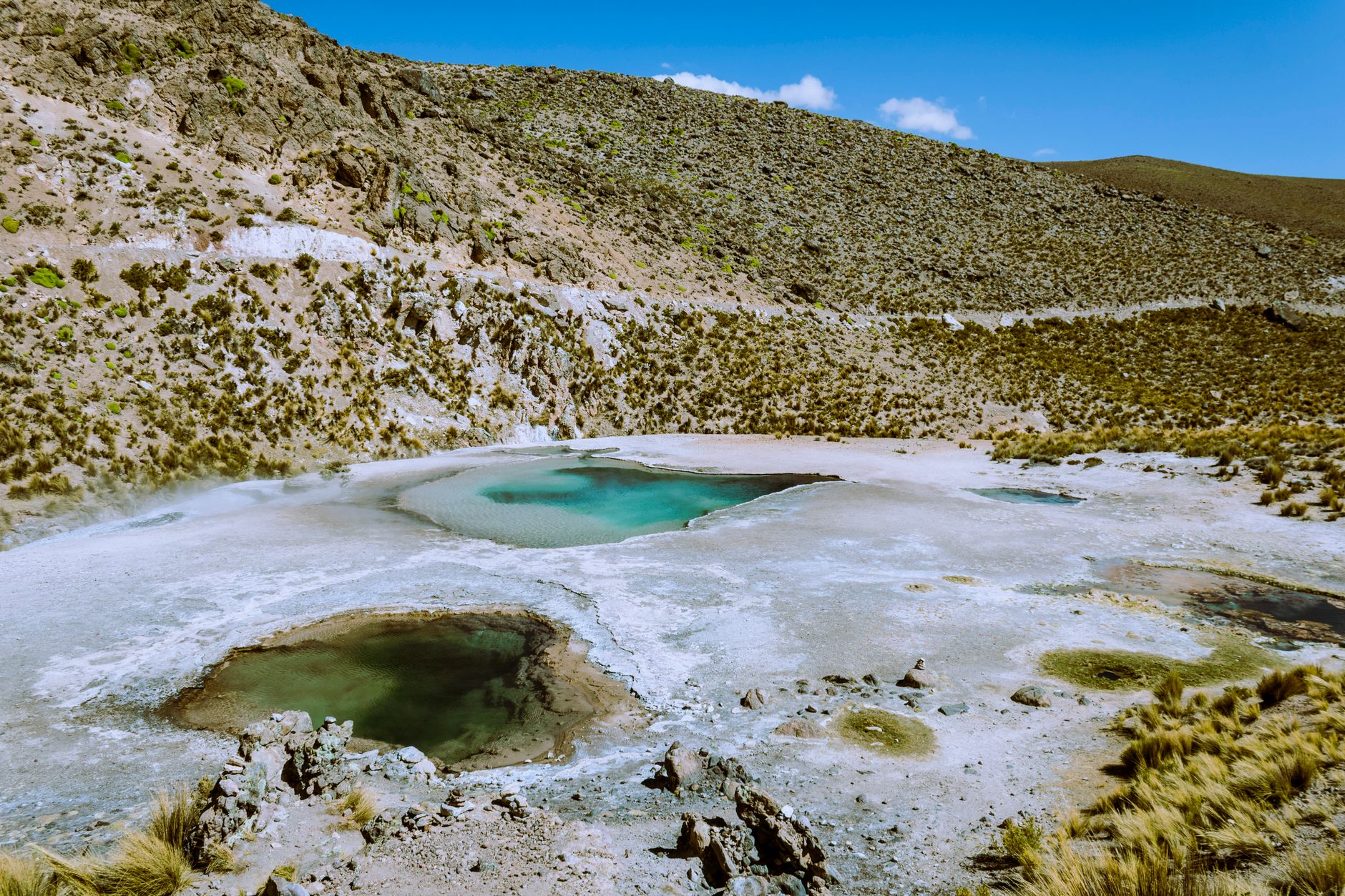
El Tatio Geysers in the Atacama Desert surrounded by mountains
El Tatio Geysers, the highest geyser field in the Southern Hemisphere.

El Tatio Geysers (Atacama Desert)

Sitting at 4,320 meters above sea level, this field features over 80 active geysers. Skip the freezing 6:00 AM sunrise rush with the tour buses; have a late breakfast in San Pedro instead and arrive around midday to have the entire warm geothermal field to yourself.

Moai statues standing on Rapa Nui Easter Island under a blue sky
The iconic stone Moai of Rapa Nui National Park.

Rapa Nui National Park (Easter Island)

Home to nearly 1,000 monumental stone Moai statues. You must pre-purchase your $99 USD ticket online and hire an accredited local guide to enter; key sites like Rano Raraku only allow a single entry per ticket, so plan your time carefully.

La Vega Central (Santiago)

This massive, chaotic market is the real heart of Santiago. Arrive around 11:00 AM when the vendors sit down for lunch, and head straight to the ‘La Vega Chica’ section for cheap, home-style plates of cazuela. Bring small CLP bills, because cards won’t work here.

What to Eat: Santiago’s Best Street Food

Chilean food isn’t about tiny portions or delicate plating. It’s hearty, heavy on the avocado, and designed to keep you moving. Here are three things you absolutely cannot skip.

Completo Italiano

A massive hot dog loaded with diced tomatoes, sauerkraut, mashed avocado, and a mountain of homemade mayo. Grab one at Dominó near Metro Tobalaba for CLP 1,500 to 3,000.

Lomito Italiano

A colossal sandwich of tender, slow-cooked sliced pork shoulder piled high with avocado, tomato, and mayo on a soft bun. Get it at the legendary Fuente Alemana near Plaza Baquedano for CLP 8,000 to 12,000.

Pastel de Choclo

A sweet and savory corn gratin baked in a clay bowl, layered with ground beef, onions, olives, and hard-boiled egg. Look for it in the traditional ‘picadas’ of the Ñuñoa neighborhood for CLP 5,000 to 9,000.

Scams to Avoid: Don’t Get Caught Off Guard

Santiago is generally safe, but opportunistic thieves are highly creative. If you aren’t paying attention, they will swipe your gear before you even realize what happened.

The Airport Taxi Credit Card Scam

At SCL Airport, unlicensed drivers with fake badges will quote a fair price but use tampered card readers that hide the screen to add extra zeros—charging you $2,600 USD instead of $26. Only book and pay at the official counters (like Transvip) inside the baggage claim area.

The Mustard / Liquid Spill Scam

Common in Plaza de Armas and Valparaíso’s hills. Someone spills liquid on your bag, and a polite stranger immediately helps you clean it. While you’re distracted, their accomplice walks off with your phone or wallet. Firmly say “No, gracias” and walk away to clean it yourself indoors.

The “University Student” Poem Donation Scam

On Santa Lucía Hill, people claiming to be struggling students will hand you a printed poem and aggressively demand a “donation.” They exploit your confusion with the peso exchange rate to extract large sums. Refuse to take the paper and keep walking.

Logistics: Navigating Chile Like a Local

Getting around and paying for things in Chile is straightforward once you know the quirks. Here are three rules to live by.

Chile Travel Hacks — step by step

1
Get a Bip! Card
You must buy a physical Bip! card for CLP 1,550 at a metro station to use Santiago’s buses and trains. Load it with cash, as card readers at smaller stations are notoriously unreliable.
2
Avoid ATM Fees
Most Chilean ATMs charge a brutal CLP 7,000 to 8,000 fee per withdrawal. Stick exclusively to Scotiabank or Banco del Estado ATMs to withdraw cash fee-free.
3
Save 19% on Hotels
Foreign tourists are exempt from Chile’s 19% IVA (Value Added Tax) on accommodations, but only if you pay in US dollars or with a foreign credit card.

Tipping (propina) is simple. In sit-down restaurants, a 10% suggested tip is automatically added to the bill. When paying by card, the waiter will ask “¿desea agregar la propina?”—just say yes.

You don’t need to tip taxi drivers. Just round up the fare to the nearest 500 or 1,000 pesos.

Frequently Asked Questions

Do Australians need a visa to enter Chile?
Effective September 17, 2025, Australian citizens no longer require a visa or reciprocity fee to enter Chile as tourists. You only need a valid passport, which will be stamped on arrival.
Can I apply for residency while visiting Chile as a tourist?
No. Under Chile’s updated migration law (Law No. 21,325), you cannot change your immigration status from tourist to resident from within the country. All residency applications must be completed at a Chilean consulate abroad before you enter.
Is there a catch to using a local physical SIM card in Chile?
Yes. If you use a local physical SIM card for more than 30 days, you are legally required to register your phone’s Imei with the Chilean Subtel database. If you don’t, your device will be blocked on all local networks.
Why do some Chilean websites ask for a RUT number?
The RUT is a Chilean national ID number. Many local public WiFi portals and online booking sites require one to log in or complete purchases, which can make using local sites incredibly frustrating for foreign travelers.

Chile has surprisingly fast mobile infrastructure, with over 10.16 million active 5G connections recorded as of January 2026. While you’ll get blazing-fast speeds in Santiago and Valparaíso, expect massive dead zones in remote parts of the Atacama Desert or along Patagonia’s Carretera Austral. To bypass the headache of registering your Imei with Subtel or getting locked out of local sites by the RUT system, grab a Chile eSIM from Galactic Roam before you land. It gets you connected instantly without the airport kiosk queues.

Get your Chile eSIM


India Travel Guide: Essential Tips for First-Time Visitors

India Travel Guide: How to Navigate the Chaos Like a Pro

India’s railway network carries 22 million passengers every single day. If you try to wing a trip here without knowing how this massive machine works, it’ll eat you alive. I’ve spent months navigating India’s chaotic transit, hidden alleys, and complex bureaucracy to build this definitive India travel guide. If you are planning a broader journey across South Asia, be sure to also check out our pakistan travel guide. With Diwali arriving on November 6, 2026, bringing the peak winter travel rush, you can’t afford to make rookie mistakes.

Quick Facts — India

Currency
Indian Rupee (INR / ₹)
Language
Hindi, English, regional languages
Time zone
GMT+5:30
Plug type
Types C, D, and M
Best time to visit
November to February (15°C–25°C)
Visa
e-Visa required for most passports
22M
Daily Train Riders
₹1,200
Min. Daily Budget
₹1,100
Taj Mahal Entry
13k+
Daily Trains

The Train Booking Hack You Need to Know

India’s railway network operates over 13,000 passenger trains daily. Trying to book a ticket as a foreigner can feel like an Olympic sport because trains sell out weeks in advance. But there’s a backdoor: the Foreign Tourist Quota (FT Quota).

While locals can only book 60 days out, the FT Quota lets international travelers book premium AC classes up to 365 days in advance. To use it, register on the official Irctc website (irctc.co.in) and pay a one-time verification fee of ₹100 plus GST. You’ll need to verify your international phone number via OTP and upload your passport details, but it’s worth every rupee.

Three Crowd-Free Spots Worth the Detour

Most people stick to the standard tourist trail and end up staring at the backs of other people’s heads. Skip the crowds with these three insider locations.
The Taj Mahal viewed from across the Yamuna River at sunset
The Taj Mahal viewed from across the Yamuna River at Mehtab Bagh

Mehtab Bagh, Agra

This 25-acre Mughal garden sits directly across the river from the Taj Mahal, offering a symmetrical, crowd-free rear view. Go on a Friday. The Taj Mahal itself is closed to the public on Fridays, meaning you can photograph it from here with absolutely zero tourists on the grounds.

Ancient stone temple ruins surrounded by green palms in Hampi
The ancient stone ruins of Hampi seen from Matanga Hill

Matanga Hill, Hampi

Worth the climb? Absolutely. Climb this hill 30-40 minutes before dawn for a 360-degree view of Hampi’s ruins. Scramble onto the roof of the ruined two-story stone Mantapa at the summit, but watch your step around the sacred Shiva lingas on the floor, and skip the climb if it rained the night before.

A crowded market street in Old Delhi with vendors and shoppers
The intense, crowded street market of Kinari Bazaar in Old Delhi

Kinari Bazaar & Naughara, Old Delhi

This historic market street is famous for bridal wear, spices, and intense chaos. Walk to the very end of Kinari Bazaar to find Naughara, a quiet, dead-end cul-de-sac with nine colorful 19th-century Jain havelis (mansions) and a white marble temple. It’s a silent oasis just steps from Chandni Chowk, and a must-visit spot on any delhi travel guide itinerary.

What to Eat: From Street Food to Feasts

Indian food is regional, complex, and cheap. A budget traveler can comfortably eat well on a daily budget of ₹1,200 to ₹3,500. Here are two dishes you can’t leave without trying.

A close-up of a traditional Indian street food snack on a plate
A delicate street food snack prepared fresh in Old Delhi

Daulat Ki Chaat

This cloud-like winter dessert is made of whipped milk froth whisked under the cold winter dew, topped with saffron, pistachios, and bhoora. It melts in your mouth and collapses back into liquid if exposed to daytime warmth. Find it from street vendors in Chandni Chowk from November to February for ₹50–₹90.

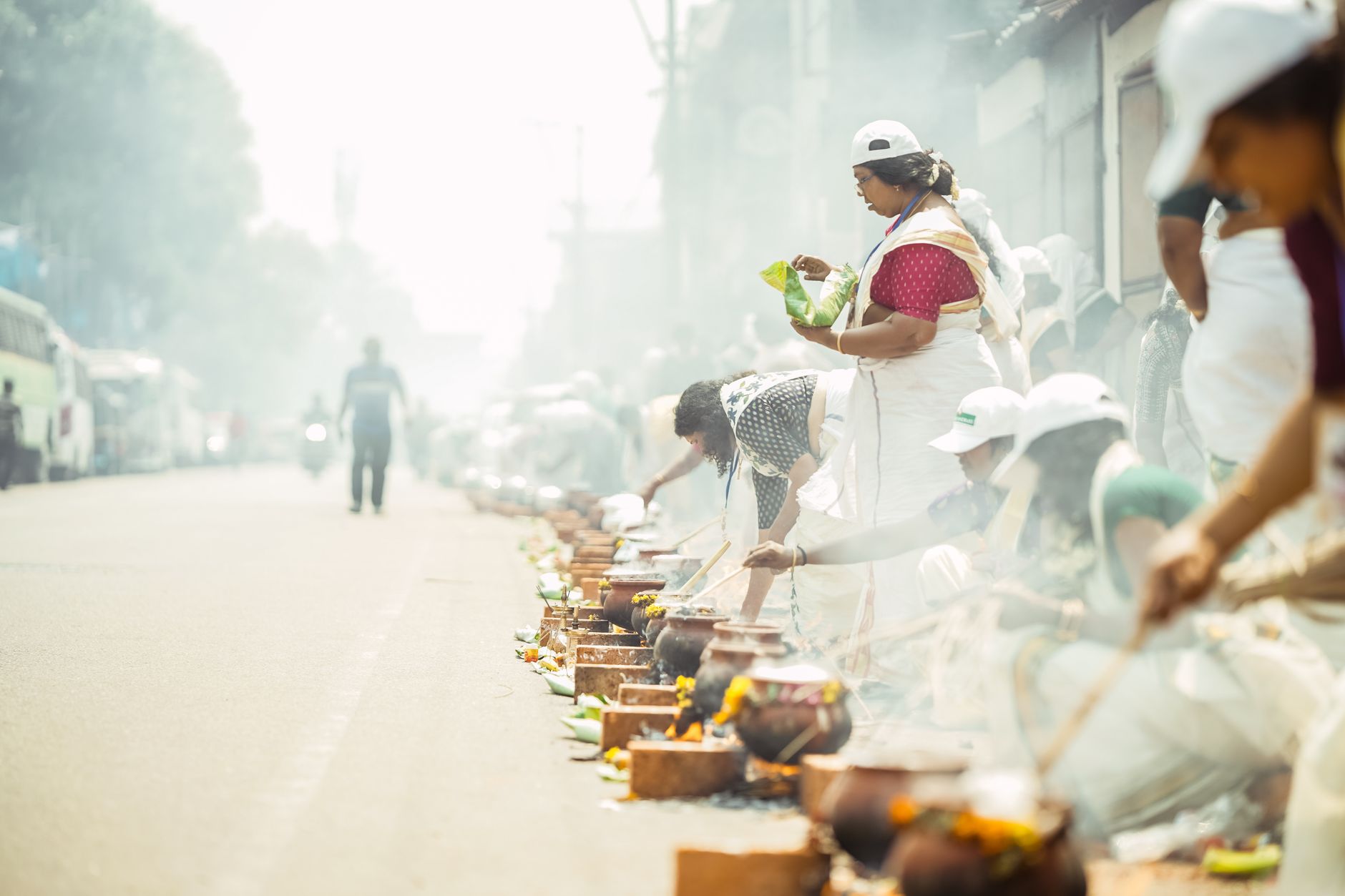
A large outdoor cooking pot over an open fire at a street festival
Traditional preparation of a multi-course feast in South India

Sadhya

A traditional Kerala vegetarian feast served on a banana leaf, consisting of 24–28 dishes like Sambar, Avial, and Payasam. Eat it traditionally with your right hand at local messes in Fort Kochi for ₹150–₹300.

Scams to Watch Out For

India is generally safe, but the tourist hubs are crawling with professional hustlers. If you’re not careful, they’ll take you for a ride—literally.

The “Hotel Closed” Scam

Common around New Delhi Railway Station. Drivers will claim your hotel is closed due to a protest or fire, then drive you to a fake “Government Approved Tourist Office” to rebook. Ignore them, verify on Google Maps, and demand your original destination.

The Airport Prepaid Taxi Scam

At Delhi Airport (DEL), touts will approach you claiming the official prepaid booth is closed. Ignore them completely. Only book cabs through the official Delhi Police or Meru counters inside the terminal, or use Uber/Ola pickup zones.

The QR Code UPI Scam

Scammers in busy markets might send you a QR code to “receive” a refund or split a bill. In India’s UPI system, you never need to scan a code or enter your PIN to receive money—only to send it. If someone asks you to scan to receive, walk away.

Frequently Asked Questions

How do I hire a certified tour guide in India?

To legally work as a guide, individuals must complete the Incredible India Tourist Facilitator (Iitf) Certification Programme managed by the Iittm. Always ask to see their official digital credentials before agreeing to a tour.

Can I use digital payments in India as a tourist?

While India runs on UPI, setting it up without an Indian bank account is incredibly difficult. Carry ₹2,000–₹5,000 in cash daily for street food, auto-rickshaws, and small markets.

What are the tipping customs in India?

Tipping is highly appreciated but not mandatory. Tip private drivers ₹300–₹500 per day, local guides ₹300–₹500 per half-day, and hotel porters ₹100 per bag. In restaurants, a 10% tip is standard if no service charge is added.

Staying Connected Without the Bureaucracy

Sorting out your phone connection in India can be a bureaucratic nightmare. Strict Trai KYC regulations mean buying a physical SIM requires your passport, visa copies, a live photo, and sometimes a local reference’s OTP. It can take up to 24 hours to activate, and public WiFi is useless because it requires an Indian number to receive a login OTP.

If you’re heading to high-altitude border regions like Ladakh, standard prepaid tourist SIMs won’t work at all—only postpaid Bsnl or Airtel cards have coverage there. For the rest of the country, you can bypass the paperwork entirely by setting up an India eSIM from Galactic Roam before you land, giving you instant data the second your plane touches down.

Get your India eSIM


Cyprus Travel Guide: How to Explore the Mediterranean’s Island of Aphrodite

Cyprus welcomed 4,534,073 tourists in 2025, making it one of the Mediterranean’s busiest escapes. But winging a trip here without understanding the island’s unique geopolitical quirks and transit traps will eat you alive. I’ve spent weeks navigating the divided capital of Nicosia, driving on the left, and dodging rental car scams. This Cyprus travel guide cuts through the brochure fluff to show you what’s actually worth your time.

Quick Facts — Cyprus

Currency
Euro (€)
Language
Greek, Turkish
Time zone
EET (UTC+2)
Plug type
Type G (UK style)
Best time to visit
May to June, September to October
Visa
EU member (non-Schengen)

The Border and the Rules

Cyprus is an EU member, but it is not part of the Schengen Area. This is great news for long-term travelers: your days here do not count toward your Schengen 90-day limit. But the island remains politically divided by a UN-monitored Buffer Zone known as the Green Line.

You can cross the Green Line on foot at Ledra Street in Nicosia using a valid passport. However, you must enter the island via official Republic of Cyprus ports like Larnaca or Paphos airports. If you fly into Ercan Airport in the north, the Republic considers it an illegal entry, and guards will deny you crossing to the south.

If you plan to drive a rental car across the Green Line into the north, you must obtain written permission from your rental company first. You will also need to purchase separate third-party insurance at the border kiosk for approximately €35, as standard southern insurance is completely invalid there.

Driving and Safety Warnings

Cyprus drives on the left side of the road. Rental cars are fitted with distinctive red license plates so local drivers can easily identify tourists and give them extra space. It is a helpful system, but it also paints a giant target on your back for thieves.

Rental Car Break-ins

Thieves target red-plated cars at beach parking lots like Nissi Beach in Ayia Napa or Aphrodite’s Rock in Paphos. Never leave bags, electronics, or passports visible on your seats. Lock everything in the trunk before you walk away.

Green Line Photography Arrests

Taking photos or videos of military checkpoints, barbed wire, guards, or military installations along the UN Buffer Zone is illegal. Police enforce this strictly, and tourists are regularly detained for questioning.

Airport Taxi Overcharging

Drivers at Larnaca and Paphos airports frequently try to quote inflated flat rates. Insist that they turn on the taximeter before you leave, or pre-book the Kapnos Airport Shuttle online for €10–€15 to get to Nicosia or Ayia Napa.

What is Actually Worth the Trip

Many tourists spend their entire trip on the crowded beaches of Ayia Napa. That is a mistake. The real magic of Cyprus lies in its ancient ruins and rugged interior.

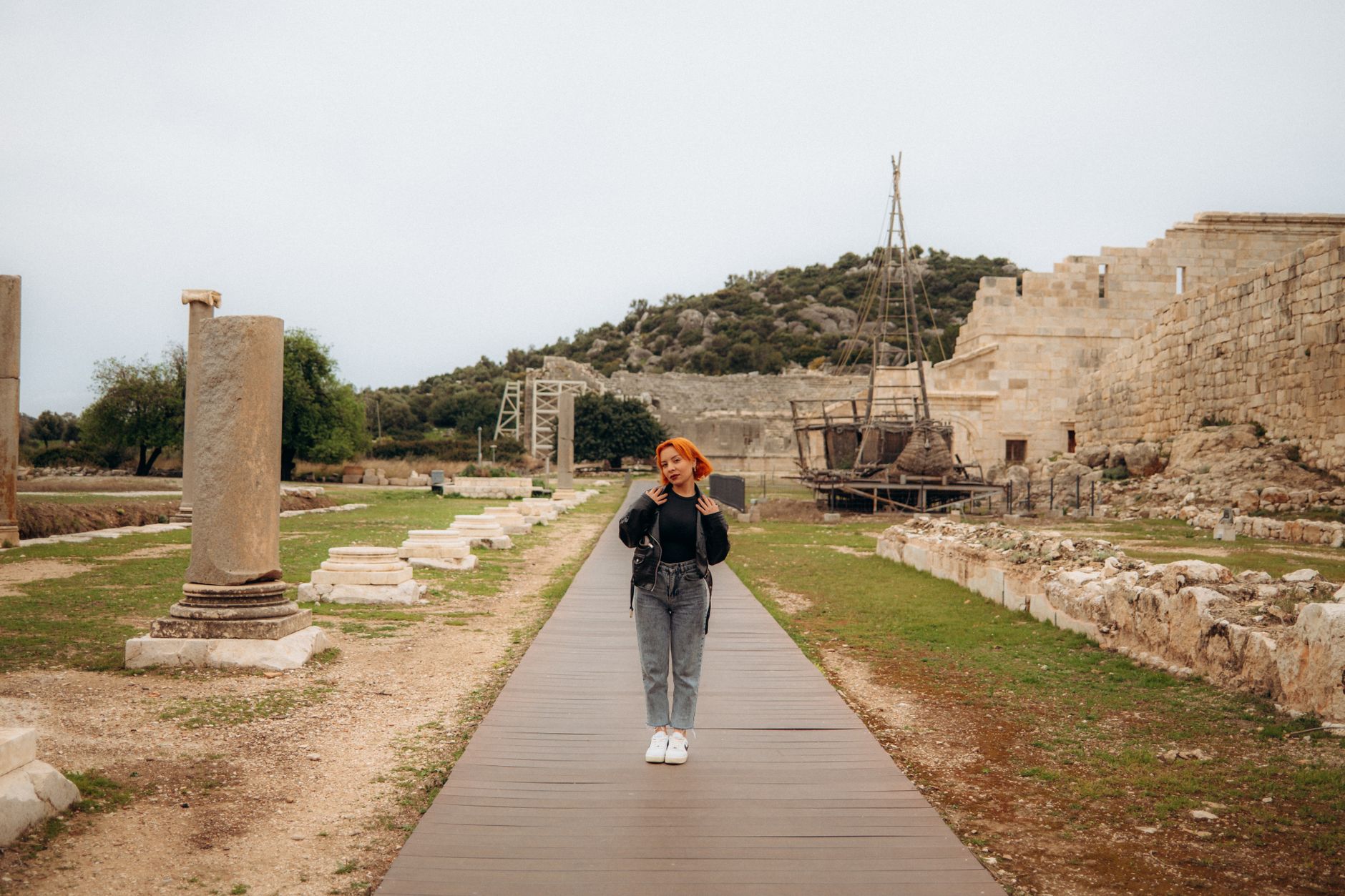
Kourion Archaeological Site Cyprus
Ruins of the ancient city-kingdom of Kourion perched on a cliff

Kourion Archaeological Site

This spectacular ancient city-kingdom features a fully restored Greco-Roman amphitheater and intricate 5th-century mosaics. Go in the late afternoon to watch the sunset directly from the amphitheater seats, then head down to Chris Blue Beach below for fresh seafood.

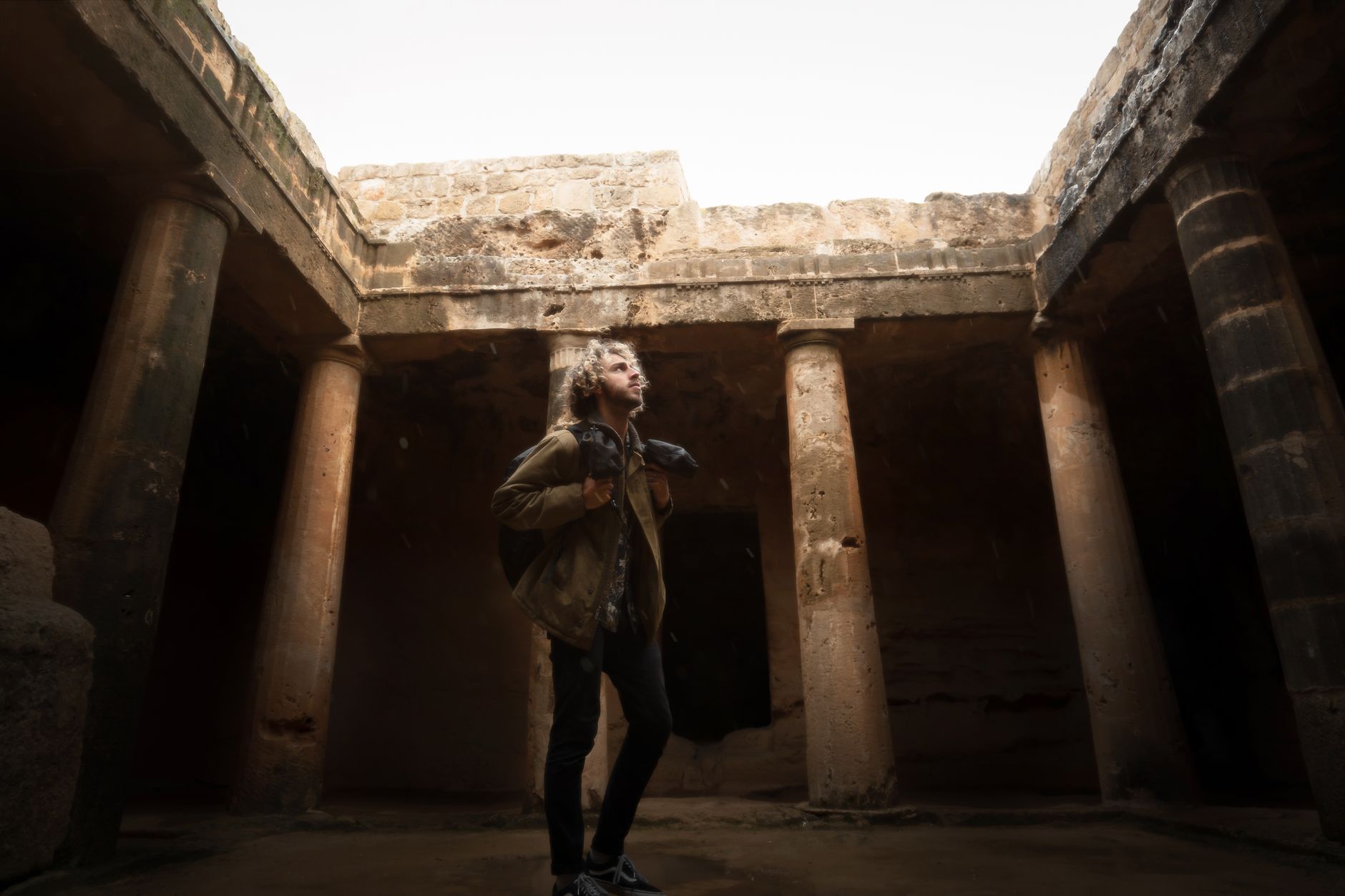
Tombs of the Kings Cyprus
Underground peristyle atrium at the Tombs of the Kings in Paphos

Tombs of the Kings

These monumental underground tombs in Paphos were carved out of solid rock in the 4th century BC. There is absolutely no shade on-site, so arrive exactly at 8:30 AM to beat the heat, and explore the impressive underground peristyle atriums of Tomb 3 and Tomb 4.

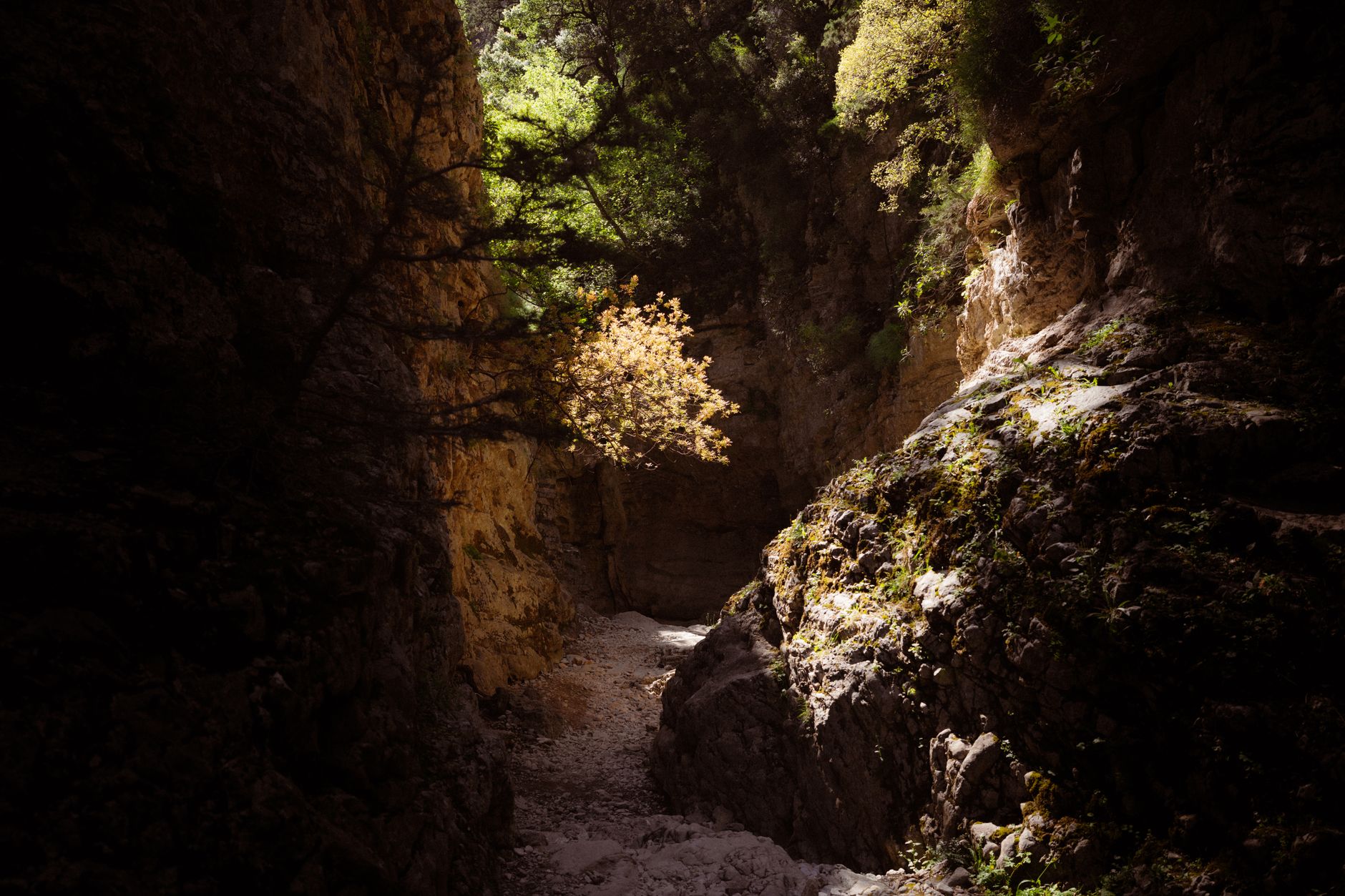
Avakas Gorge Cyprus
Towering limestone walls of Avakas Gorge on the Akamas Peninsula

Avakas Gorge

A dramatic, narrow canyon carved by a stream in the wild Akamas Peninsula, featuring towering 30-meter limestone walls. Wear sturdy, slip-resistant water shoes to navigate the wet, mossy boulders, and combine the hike with a lunch booking at Viklari (The Last Castle) nearby.

Where to Eat

Cypriot food is a heavy, slow-paced affair. Do not expect to eat quickly; a proper meal here is an event that takes hours.

Traditional Cypriot Mezze Cyprus food
A traditional Mediterranean mezze spread with fresh dips and olives

Traditional Cypriot Mezze

A feast of 15 to 25 small plates starting with tahini and warm halloumi, moving to grilled meats, and ending with sweets. Head to Mousikos Taverna in Sotira for their legendary house-made halloumi and traditional taro (€18–€30 per person).

Sheftalia Cyprus food
Spiced sausages grilling over hot charcoal

Sheftalia

Spiced minced pork and lamb sausages mixed with onions and parsley, wrapped in caul fat and grilled over hot charcoal. Grab a pita wrap at Piatsa Gourounaki in Nicosia Old Town for €5–€7.

Kleftiko

This slow-baked lamb is cooked for hours in sealed clay ovens with bay leaves and potatoes until the meat literally slides off the bone. Try it at Ta Fanaria tis Maroullous in Agios Epifanios for Sunday lunch (€14–€20).

Frequently Asked Questions

Is Cyprus safe for tourists?

Yes, Cyprus is exceptionally safe with very low violent crime. Your main concerns are rental car break-ins at beach parking lots and taxi drivers refusing to use meters at the airports.

Can I drive a rental car across the Green Line?

Yes, but you must obtain written permission from your rental company first. You will also need to purchase separate third-party insurance at the border kiosk for about €35, as southern insurance is invalid in the north.

Do I need a visa for Cyprus?

Cyprus is an EU member but not yet part of the Schengen Area. Most Western travelers can enter visa-free for up to 90 days, and this stay does not count toward your Schengen limit.

Staying Connected Without the Roaming Trap

Cyprus has excellent 4G and 5G coverage, but there is a major connectivity quirk you must watch out for. When traveling near the UN Buffer Zone or visiting Northern Cyprus, your phone may automatically connect to Turkish networks like Turkcell or Telsim. Because Northern Cyprus is not covered by EU roaming regulations, this mistake triggers incredibly expensive non-EU roaming charges on your home bill.

You can buy a local SIM card for €2 with €1 credit, but tourist data packs will run you €15 for 15 days and require registration. To avoid the hassle of physical cards and the risk of accidental Turkish roaming fees, grab a Cyprus eSIM before you land. It lets you manage your data limits directly, keeping you connected to reliable local networks across the Republic of Cyprus without any surprise bills.

Get your Cyprus eSIM


Estonia Travel Guide: How to Explore Europe’s Medieval and Digital Frontier

Estonia Travel Guide: How to Explore Europe’s Medieval and Digital Frontier

Estonia hosted 1.66 million accommodated tourists in the first half of 2026—and most of them never left Tallinn’s medieval walls. That is a rookie mistake that will eat you alive if you want to experience what actually makes this country incredible. I’ve spent weeks navigating Estonia’s boggy national parks, Soviet ruins, and hyper-digital cities to build this realistic Estonia travel guide. Here is how to explore the country like a human, not a cruise ship statistic.

Quick Facts — Estonia

Currency
Euro (€)
Language
Estonian
Time zone
EET (UTC+2)
Plug type
Type C & F
Best time to visit
May to September (or late March for the fifth season)
Visa
Schengen (EES biometric registration starts April 10, 2026)
1.66M
Tourists in 2026
2,200+
Islands
34%
Finnish Visitors
1st
Internet Nation

Top Experiences You Cannot Miss

Most people stick to Tallinn’s Old Town. It is beautiful, sure, but it is also a tourist theme park during the day. To find the real Estonia, you need to get out of the city center.

The flooded ruins of Rummu Quarry prison with limestone cliffs in Estonia.

Rummu Quarry (Rummu karjäär)

A former Soviet labor camp and limestone mine that flooded rapidly after being abandoned in the 1990s. Today, a prison and a forest sit completely submerged under neon-blue water. Pay €10 off-season (€8 for just the quarry) to visit the prison museum, rent a SUP board, or dive the ruins. Do not climb the rusty guard towers—submerged metal will ruin your day.

A wooden boardwalk winding through a lush green wetland bog in Estonia.

Soomaa National Park (Fifth Season)

Experience the ‘fifth season’ (viisjängi) in late March or early April when melting snow floods the forest up to 2 meters deep. You will paddle a traditional, UNESCO-listed dugout canoe directly between birch trees. Rent a car from Pärnu to get here; public transport is nonexistent. Call the visitor center first, as a sudden freeze can turn the floodplain into a giant ice rink.

A snowy street scene in Estonia representing the Soviet-era architectural vibe.

KGB Museum at Sokos Hotel Viru

This museum on the top floor of Sokos Hotel Viru showcases secret Soviet surveillance rooms left exactly as they were when the KGB fled in 1991. You must book the €18 tour online in advance. The guides are brilliant, sharing hilarious stories about how the KGB bugged bread plates and light fixtures.

What to Eat: Real Estonian Flavors

Estonian food is hearty, seasonal, and heavily influenced by the forest and the sea. Skip the tourist-trap restaurants on the main square and look for these local staples instead.

A rustic table spread with traditional Estonian dishes and bowls.

Kama

A non-sweet power flour made of roasted barley, rye, oat, and pea flour mixed with kefir or buttermilk. Grab a cup topped with fresh forest berries for €2–€4 at the prepared-food stalls along the western wall of Balti Jaama Turg.

A hot bowl of rustic game soup served in a dark clay bowl.

Elk Soup (Põdrasupp) and Pirukad

A rich, gamey broth made from slow-cooked wild elk meat, served in a clay bowl without a spoon—you must slurp it. Pair it with savory carrot or meat pastries (pirukad) for €2.50–€4.50 at III Draakon under Tallinn’s Town Hall.

Traditional Baltic open-faced sandwiches with sprats and boiled egg on dark rye bread.

Kiluvõileib (Sprat Sandwich)

A classic open-faced sandwich with thick, dark rye black bread, farm butter, spiced Baltic sprats, and a boiled egg slice. Find it for €3–€6 at Balti Jaama Turg or F-Hoone in Telliskivi.

Safety and Scams to Avoid

Estonia is incredibly safe, but tourists are still easy targets if they let their guard down. Watch out for these three common traps.

Overpriced Unofficial Taxis

At Tallinn Airport and Passenger Port, unofficial, unmetered taxis wait outside to charge tourists up to €40 for a standard €7 ride. Avoid them by booking exclusively through the local Bolt app or using the official airport taxi lane where rates are clearly posted on the window.

Nightlife Overbilling & Drink Price Scams

Late-night bars and strip clubs around Tallinn’s Old Town (specifically Viru and Sauna streets) sometimes use separate ‘tourist menus’ with exorbitant prices—like €100 for a round of shots. Check menu prices before ordering, pay as you go, and never follow street promoters.

Pickpocketing during Cruise Ship Rush Hours

Pickpockets operate in tight crowds between 10:00 AM and 3:00 PM in July and August when cruise ships dump thousands of passengers into the narrow cobblestone streets of Raekoja plats. Keep your phone in zipped front pockets.

Logistics: Getting Around and Local Laws

Getting from the airport is a breeze. Tallinn Airport is just 4 km from the center. Hop on Tram T2 or T4 directly from the terminal. A single ticket costs €2—just tap your contactless bank card at the front door validator.

Estonia is almost entirely cashless. You can pay with a card or mobile wallet for everything, even a €1.50 pastry. Tipping isn’t mandatory, but rounding up or leaving 5% to 10% for great sit-down service is appreciated. If you are planning to head south to continue your Baltic adventure, our latvia travel guide has everything you need to know about crossing the border.

Watch Out Under Estonian law, you must wear a small pedestrian reflector (helkur) pinned to your clothes or bag on the side facing traffic when walking in low-visibility conditions. Police can fine you up to €40 for ignoring this. Buy one for €1–€2 at any supermarket.

Frequently Asked Questions

Is Estonia safe for solo travelers?
Extremely safe. Violent crime is rare, and solo travelers—including solo female travelers—will feel comfortable walking around at night. Just stick to well-lit streets and keep an eye on your belongings in crowded tourist areas.
How do I get around Estonia without a car?
Estonia has an excellent, affordable train network (Elron) connecting major cities like Tallinn, Tartu, and Narva. For smaller towns and national parks, regional buses are reliable, though renting a car is still your best bet for remote nature reserves.
What is the best time of year to visit Estonia?
June through August offers warm weather and nearly 20 hours of daylight. However, if you want to experience the unique fifth season floods in Soomaa, you must plan your trip for late March or early April.

Estonia is the first nation to declare internet access a fundamental human right, so you’ll find free, fast public WiFi almost everywhere—even deep in some national forests. But if you’re venturing into remote bogs like Soomaa or exploring some of the 2,200 islands, signals can occasionally drop. To stay connected without hunting for local SIM cards, grab an Estonia eSIM from Galactic Roam before you fly. It keeps you online the second you land, letting you bypass the airport queues entirely.

Get your Estonia eSIM


Argentina Travel Guide: From Buenos Aires to the Edge of Patagonia

Argentina Travel Guide: From Buenos Aires to the Edge of Patagonia

Everything you’ve read about bringing massive stacks of US dollars to Argentina is officially dead. Winging a trip here without knowing how the newly unified currency market works is a rookie mistake that will eat you alive in unnecessary transaction fees. I’ve spent months navigating the country’s shifting financial landscape and mountain trails to write this definitive Argentina travel guide. From booking your Patagonia treks to dodging Buenos Aires street scams, here’s what actually works in 2026. If you plan to cross the Andes, our comprehensive chile travel guide will help you seamlessly plan the next leg of your adventure.

Quick Facts — Argentina

Currency
Argentine Peso (ARS)
Language
Spanish
Time zone
ART (UTC-3)
Plug type
Type C / I
Best time to visit
October to April
Visa
90 days free for most Western nations

The New Money Rules

For years, travelers had to bring physical hundred-dollar bills and trade them in shady back alleys to get the “Blue Dollar” rate. That era ended when currency controls were lifted, bringing the official rate and the black market within 2% to 3% of each other. Today, foreign credit cards automatically get the competitive MEP rate. Leave the cash stash at home and swipe your card.

But don’t go completely cashless. You’ll still need physical pesos for tipping, which is customarily 10% in sit-down restaurants. Credit card slips rarely have a tip line, so keep small bills handy. With annual inflation recorded at 33.1% in early 2026, always double-check menu prices before ordering.

Also, buy a physical Sube transit card at any subway station or kiosk immediately. You cannot pay for buses or subways with cash or credit cards. Load it with pesos at the counter, and you’re good to go.

The Big Three: What’s Genuinely Worth the Trip

1. Iguazú Falls

This is the world’s largest waterfall system, boasting 275 cascades dropping into a dense subtropical jungle. To see it properly, take the very first rainforest train of the morning directly to the Devil’s Throat (Garganta del Diablo) station. You’ll stand on the main platform in absolute silence before the tour buses arrive and ruin the atmosphere.

Iguazú Falls (Devil's Throat) Argentina
The roaring waters of Devil’s Throat at Iguazú Falls

2. Perito Moreno Glacier

Located in Los Glaciares National Park, this is one of the planet’s only advancing glaciers. You can watch massive chunks of blue ice calve directly into Lago Argentino with a sound like thunder. Beat the tour buses by entering the park right at 8:00 AM, and if you want to walk on the ice, book your “Mini-Trekking” permits months in advance.

Perito Moreno Glacier (Los Glaciares National Park) Argentina
The massive ice wall of Perito Moreno Glacier

3. Recoleta Cemetery

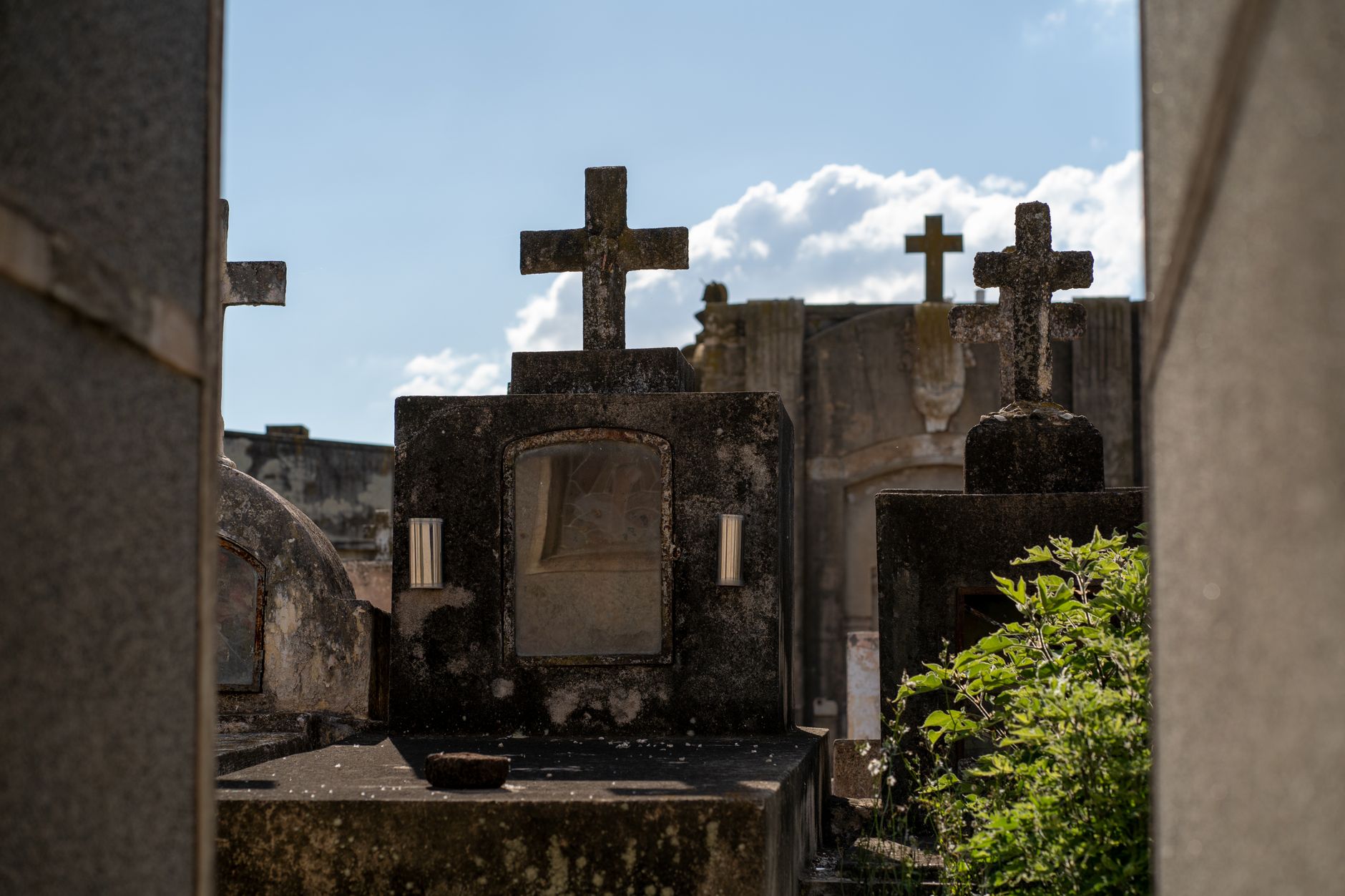
This is a literal city of the dead in Buenos Aires, packed with over 6,400 grand mausoleums. Skip the crowds hunting for Eva Perón’s tomb and look for the Art Nouveau monument of Rufina Cambaceres, a young woman tragically buried alive. Note that cash is useless here; the entrance fee must be paid online or by card at the gate.

Recoleta Cemetery (Buenos Aires) Argentina
Ornate mausoleums lining the stone pathways of Recoleta Cemetery

What to Eat in Argentina

Argentine food is simple, meat-heavy, and spectacular. Don’t leave without trying these three staples.

Bife de Lomo / Bife de Chorizo

These are thick, exceptionally tender cuts of grass-fed beef grilled over hot coals. Head to a traditional neighborhood bodegón in Palermo, Buenos Aires, where a massive steak will cost you between $10 and $18 USD (10,000 to 18,000 ARS).

Bife de Lomo / Bife de Chorizo Argentina food
A traditional Argentine steak grilled to perfection

Empanadas Salteñas

These savory baked pastries are stuffed with hand-diced steak, potatoes, and green onions. They originate from the northern Salta region, but you can grab them at regional spots like El Sanjuanino in Recoleta for about $0.80 to $1.50 USD (800 to 1,500 ARS) each.

Empanadas Salteñas (Cortada a Cuchillo) Argentina food
Hand-folding fresh Argentine empanadas before baking

Choripán

The ultimate street food: a butterfly-cut grilled chorizo sausage on crusty bread, slathered in chimichurri. Grab one from the street carts along the Costanera Sur riverfront for $2.50 to $4.00 USD (2,500 to 4,000 ARS).

Choripán Argentina food
Sausages grilling over open coals for fresh choripán

Buenos Aires Scams to Avoid

While Argentina is generally safe, petty theft in Buenos Aires is highly organized. Keep your wits about you in crowded areas.

The Mustard / Bird Poop Scam (La Mancha)

In San Telmo or La Boca, someone will spill a liquid on your shoulder. A friendly stranger will immediately offer to help clean it up. Refuse aggressively, clutch your bags, and walk into a secure indoor cafe—the helper’s accomplice is waiting to snatch your valuables while you are distracted.

Taxi Bill-Swapping

Street-hailed taxis late at night are notorious for swapping your real 1,000-peso bill for a counterfeit one, claiming you underpaid. Avoid street hails entirely and use Cabify or Uber. If you must use a taxi, look for a marked “Radio Taxi” and state your bill denomination out loud as you hand it over.

Calle Florida ‘Arbolito’ Scams

Do not exchange money with the street touts shouting “cambio” on Calle Florida. They frequently pass counterfeit bills or use sleight-of-hand to short-change you. With the unified MEP rate, there is zero financial incentive to use them anyway—just swipe your credit card.

Frequently Asked Questions

Do I need travel insurance to enter Argentina?
Yes. As of mid-2025, Argentina officially mandates that all non-resident foreign tourists must possess valid travel medical insurance. Your policy must cover hospitalization, repatriation, and emergency evacuation to be granted entry.
Is Argentina safe for solo female travelers?
Generally, yes. Violent crime rates are low, but petty theft is common in major tourist hubs. Stick to well-lit streets in Buenos Aires, use ride-hailing apps like Cabify at night, and keep your phone out of sight on public transit.
How do I get from Ezeiza Airport to the city center?
Avoid the aggressive unregistered drivers waiting in the arrivals hall. Instead, book an official taxi at the authorized indoor booths (like Taxi Ezeiza) or take the Manuel Tienda León shuttle bus directly to the center of Buenos Aires.

Staying Connected on the Road

Argentina is the 8th largest country in the world, stretching nearly 3,700 kilometers from north to south. If you are flying from Buenos Aires to Ushuaia, you’ll be in the air for over 3.5 hours. Keeping a reliable connection across these vast distances is essential, especially since Patagonian hubs like El Chaltén have notoriously slow and spotty WiFi.

A local physical SIM card costs about $4 USD (5,900 ARS) for a basic 3 GB package, but getting one is a hassle. Since 2020, Argentina legally mandates a biometric registry for all prepaid lines, meaning you must hand over your passport for scanning and have your photo taken at a physical store counter. If you want to skip the queues and the invasive registration process, grab an Argentina eSIM before you land. It connects instantly to the best local networks like Claro and Personal, keeping you online from the streets of Buenos Aires to the edge of Patagonia.

Get your Argentina eSIM


Malta Travel Guide: How to Explore the Mediterranean’s Historic Gem

Malta Travel Guide: How to Explore the Mediterranean’s Historic Gem

Malta welcomed 3.56 million tourists in 2024—on an island smaller than Philadelphia. With early 2026 arrivals tracking 20% higher, winging a trip here is a rookie mistake that will eat you alive. I’ve spent weeks navigating Malta’s ancient streets, underground tombs, and chaotic bus routes to build this realistic Malta travel guide. Here is how to survive the logistics, dodge the scams, and actually enjoy the Mediterranean’s historic fortress. If you are planning to explore more of the region, be sure to read our cyprus travel guide.

Quick Facts — Malta

Currency
Euro (€)
Language
Maltese, English
Time zone
CET (UTC+1)
Size
316 km²
Best time to visit
April–June, Sept–Oct
Visa
Schengen Zone

The Crowd-Control Strategy

Malta is incredibly compact, measuring just 316 square kilometers. You’re rarely more than an hour’s drive from any point on the island, but the sheer volume of people means key sites clog up fast. If you want to see the best historical spots, you need a tactical approach.

Ħal Saflieni Hypogeum

This 5,000-year-old underground burial complex is carved three levels deep into solid limestone. To protect the ancient red ochre paint pigments, they strictly limit visitors to 80 per day. Book your tickets 2 to 3 months in advance directly from Heritage Malta. If you miss out, a tiny batch of last-minute €50 tickets is sold in person only one day in advance, before 12:00 PM, at Fort St Elmo in Valletta or the Gozo Museum of Archaeology.

St. John's Co-Cathedral in Valletta Malta at sunset

St. John’s Co-Cathedral

This high Baroque masterpiece in Valletta features an incredibly ornate gold-leaf interior and houses Caravaggio’s largest and only signed painting, ‘The Beheading of Saint John the Baptist’. To avoid being overwhelmed by cruise ship tour groups, do not visit between 10:00 AM and 1:00 PM. Arrive exactly at the 9:00 AM opening or after 3:00 PM when the crowds thin out.

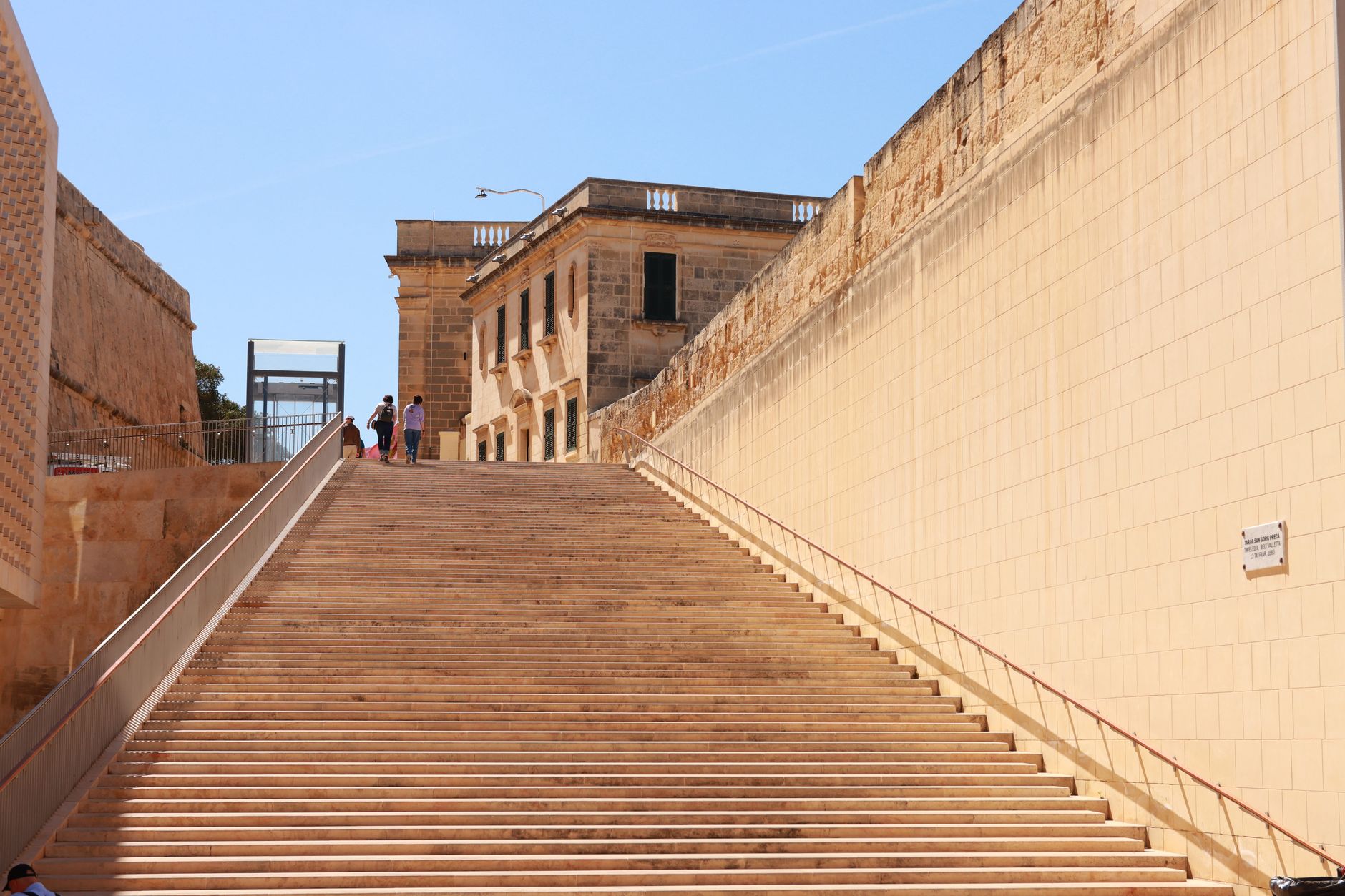
Sandstone architecture with wide steps in Mdina

Mdina (The Silent City)

A fortified medieval city perched on a hill, featuring narrow winding alleys and sweeping views of the island. Skip the daytime rush entirely. Visit Mdina after 8:00 PM when the day-trippers leave, the stone walls are lit by warm lanterns, and the streets fall completely silent.

What to Eat (And Where to Find It)

Maltese food is heavy, rustic, and heavily influenced by its Italian and North African neighbors. You can eat incredibly well here without spending a fortune, provided you know where to look.

Stuffat tal-Fenek (Rabbit Stew) Malta food

Stuffat tal-Fenek (Rabbit Stew)

Malta’s national dish features rabbit slow-cooked for hours in a rich red wine, garlic, tomato paste (kunserva), and bay leaf sauce. It is traditionally served over a first course of spaghetti. Get it at Diar il-Bniet in Dingli, a farm-to-table restaurant sourcing ingredients directly from their family fields (€25.00–€45.00).

Pastizzi

Diamond-shaped, flaky filo pastry parcels traditionally filled with warm, savory ricotta cheese or mushy peas. Buy them at Crystal Palace (Is-Serkin) in Rabat, a legendary 24-hour bar right outside the Mdina gate, for €0.50 to €1.00 per piece.

Ftira Għawdxija (Gozo-style Ftira)

A ring-shaped sourdough flatbread topped with thinly sliced potatoes, fresh gbejniet (sheep’s milk cheeselets), tomatoes, tuna, and anchovies, baked in a traditional wood-fired stone oven. Head to Mekren’s Bakery or Maxokk Bakery in Nadur, Gozo, where a fresh one costs €5.00 to €10.00.

Logistics Hacks They Don’t Tell You

Getting around Malta can be a headache if you rely on standard tourist assumptions. The public transit system is extensive but slow, and local regulations can catch you off guard.

Navigating Malta Transit — step by step

1
Airport Ride-Hailing
If using Bolt, Uber, or eCabs from Malta International Airport, drivers cannot pick you up at the terminal curb. Walk 3 minutes to the P-1 car park (Ride Service Pick-up Area) one level below.
2
Gozo Ferry Payment
When taking the Gozo Channel Ferry from Cirkewwa to Mgarr, you do not pay or show a ticket on the way there. You only pay the fare (approx. €4.65 per passenger or €15.70 for a car and driver) on the return journey from Gozo back to Malta.
3
Valletta Ferry Shortcut
Instead of taking slow, crowded buses between Valletta and Sliema or Valletta and the Three Cities, take the Valletta Ferry Services. It costs €1.50 to €2.80, takes only 10 minutes, and offers stunning harbor views.

While cards are widely accepted, keep €10 to €20 in cash. Small pastizzerias, Gozo village bakeries, and the Marsaxlokk Sunday fish market often have broken card readers or refuse plastic entirely.

Safety & Tourist Traps to Avoid

Malta is generally very safe, but the massive influx of tourists has bred a few specific scams and localized safety issues that you need to watch out for.

The ‘Per Person’ Karozzini Scam

Outside Mdina City Gate and Valletta City Gate, horse carriage (Karozzini) drivers may quote a price like €50, then demand it ‘per person’ at the end of the ride. Always agree on the total price for the entire carriage in writing or clearly confirm ‘for the whole group’ before boarding.

Bus Pickpocketing

Buses running between Valletta, Sliema, St. Julian’s, and popular beaches like Golden Bay are prime targets. Wear your backpack on your chest and keep your hand over your pockets when boarding and during the ride.

Paceville Nightlife Risks

The Paceville nightlife district in St. Julian’s gets rowdy after midnight. Avoid the main clubbing strip late at night unless partying in a group, watch your drinks closely to avoid spiking, and steer clear of aggressive bouncers.

Cannabis Law Trap

While Malta legalized personal cannabis use for local residents, tourists cannot legally purchase, possess, or consume it. Smoking in public is strictly illegal and carries heavy fines.

Frequently Asked Questions

What is the new Malta tourist tax?
Effective July 1, 2026, Malta’s Environmental Contribution (ECO Tax) is €1.50 per adult (18+) per night, capped at €22.50 per stay. This is collected directly by your accommodation, so budget for it in cash or card upon arrival.
Is Malta walkable?
Valletta and Mdina are highly walkable, but the island’s steep hills, narrow sidewalks, and intense summer heat make walking between towns impractical. Use the ferry services or ride-hailing apps for longer distances.
Is public transport reliable in Malta?
Buses are extensive and cheap, but they frequently get stuck in traffic and can bypass stops entirely when full. For tight schedules, rely on ride-hailing apps like Bolt or eCabs instead.

Stay Connected

Local SIM cards cost between €10 and €20 for a prepaid tourist data pack, and you’ll find excellent 4G and 5G coverage across both Malta and Gozo. However, there’s a catch: the thick globigerina limestone walls in historic Valletta apartments and Mdina palazzos can severely degrade indoor cellular signals. To avoid dropping offline when you step inside, grab a Malta eSIM from Galactic Roam before you fly. It connects instantly to the strongest local network, ensuring you’re never left stranded without a map.

Get your Malta eSIM


Austin F1 Travel Guide: How to Navigate the US Grand Prix at COTA

Austin F1 Travel Guide: How to Survive the US Grand Prix at Cota

On the Monday after the race, over 45,000 passengers will try to squeeze through Austin-Bergstrom International Airport. If you don’t plan your exit, the post-race logistics will eat you alive. I’ve navigated the madness of the Circuit of the Americas (Cota) and put together this realistic Austin F1 travel guide so you don’t make the same rookie mistakes.

Winging your trip to the 2026 United States Grand Prix—which kicks off on October 23, 2026—is a recipe for logistical failure. Much like navigating the city’s massive music festival with our austin city limits travel guide, dealing with 440,000 weekend attendees flooding a city of one million requires a concrete strategy. Here is what’s actually worth your time and money, and what you should skip.

440k
Weekend Fans
15mi
Downtown to Cota
84%
Airbnb Markup
$480M
Local Spending

The Track: Where to Watch and What to Skip

Cota is a massive, sprawling beast of a circuit. If you bought General Admission tickets, your entire weekend hinges on one spot: Turn 1 Hill.

Formula 1 race car speeding past the grandstands at COTA

Turn 1 Hill (General Admission)

This is the absolute best General Admission vantage point on the F1 calendar. The 133-foot uphill climb gives you views of the start/finish straight, Turn 1, and Turn 2. To secure a spot on the grass, arrive at the gates by 7:30 AM (60-90 minutes before they open) on Friday, Saturday, and Sunday. Bring a collapsible lawn chair, a tarp, and heavy-duty sunscreen—there is zero shade.

If you want a different perspective, head to the middle of the track. Just don’t make the mistake of trying to do it on race day.

The iconic red-striped COTA Observation Tower rising above the Austin landscape

Cota Observation Tower

Standing 251 feet tall, the tower offers a 360-degree panoramic view of the entire 3.4-mile track and the Texas Hill Country. Do not attempt to visit the tower on Sunday. Instead, buy a $35 ticket on Friday morning during the practice sessions when the lines are virtually non-existent. The glass-floor viewing platform at the top is worth every penny.

The Food: Fueling Your Weekend

Austin is a world-class food city, but during F1 weekend, the popular spots get slammed. Airbnb prices spike by an average of 84% (climbing from $423 to $780 a night), and restaurant wait times follow a similar trajectory. Skip the tourist traps and eat like a local.

Slicing a perfectly smoked Texas beef brisket with a dark pepper bark

Slow-Smoked Texas Brisket

This is oak-smoked beef brisket with a heavy black pepper and salt bark, cooked low and slow for up to 16 hours. Head to Micklethwait Craft Meats to avoid the infamous 4-hour line at Franklin Barbecue. Expect to pay $30 to $45 per pound for melt-in-your-mouth perfection.

Fresh breakfast tacos loaded with eggs, avocado, and cheese on a plate

Migas Originales Breakfast Tacos

A quintessential Austin breakfast featuring scrambled eggs mixed with tortilla chips, cheese, pico de gallo, and fresh avocado. Get them at Veracruz All Natural (located at Radio Coffee & Beer) for $4 to $6 per taco. They are the ultimate morning fuel.

Warm melted cheese dip served in a bowl with tortilla chips

The Bob Armstrong Dip (Queso)

This legendary Tex-Mex dish consists of warm, melted yellow cheese dip layered with guacamole, seasoned ground beef, and sour cream. Grab a bowl at Matt’s El Rancho for $12 to $18. It is a local institution for a reason.

Logistics & Safety: How to Avoid the Scams

Cota is 15 miles from downtown Austin. On race day, that short drive can easily take up to 2 hours. If you try to hail an Uber or Lyft from Cota’s McAngus Road lot after the race, expect to wait over 2 hours and pay upwards of $150 in surge pricing.

Pro Tip Ditch the rideshares and buy a 3-day official Cota Shuttle pass. It costs around $160 from Waterloo Park in Downtown or $92 from the Travis County Expo Center. These shuttles use dedicated, restricted-access bus lanes to bypass the gridlock entirely.

If you do decide to drive, watch out for the fake parking lot scams. Locals along Elroy Road and McAngus Road will wave you into their grass yards charging $40 to $50 cash. Many of these lots are illegal, lack security, and can result in your car being blocked in for hours or towed by the county for blocking emergency routes. Stick to official parking.

Important Cota is a completely cashless venue. All food, drinks, and merchandise must be paid for via credit card, debit card, or mobile payment. Leave your cash in your hotel room.

Keep your wits about you during the post-race concerts at the Germania Insurance Super Stage and on 6th Street (“Dirty Sixth”). Organized pickpocket rings target smartphones in these dense crowds. Thieves work in teams to bump into you and slide phones out of front pockets. Keep your phone on a wrist tether or in a zippered fanny pack worn tightly across your chest.

Also, understand the local tipping culture before you pay. In Austin, tipping is highly expected. For sit-down restaurants, tip 18% to 20% of the pre-tax bill. At food trucks, coffee shops, and counter-service spots, it is customary to tip $1 to $2 per drink or 10% to 15% on the digital screen.

The Connectivity Quirk You Can’t Ignore

Austin has exceptional 5G coverage, but the sheer density of 440,000 fans at Cota will severely congest local towers. Hotel and cafe WiFi in downtown Austin is incredibly fast (often 100+ Mbps), but the track’s public WiFi is notoriously choked and practically unusable during peak race hours.

Watch Out You must download your digital F1 tickets to your Apple Wallet or Google Wallet before leaving your hotel. Cellular networks at the Cota gates are so congested that loading tickets online at the entrance is often impossible. Don’t be the person blocking the turnstile.

Frequently Asked Questions

How far is Cota from downtown Austin?
It is about 15 miles (24 km) southeast of downtown. On a normal day, it is a 25-minute drive, but on race weekend, expect it to take anywhere from 1 to 2 hours due to heavy traffic.
Can I bring my own food and drinks into Cota?
No outside food or beverages are allowed through the gates, except for one factory-sealed plastic water bottle per person. There are plenty of food vendors inside, but remember that the venue is entirely cashless.
What should I wear to the United States Grand Prix?
Wear comfortable walking shoes, loose clothing, and a hat. Cota requires miles of walking on gravel and asphalt, and the Texas sun in late October can still be incredibly intense with very little shade.
Is Austin safe to walk around at night?
Downtown Austin is generally very safe, but areas like 6th Street can get rowdy and chaotic after midnight. Stick to well-lit streets, stay with your group, and keep a close eye on your belongings to avoid pickpockets.

Navigating the logistics of a massive race weekend is hard enough without worrying about how you’ll stay connected. While local SIM cards are available for $10 to $60, queuing at a retail store after a long flight is the last thing you want to do. Instead, grab a United States eSIM from Galactic Roam before you even pack your bags. It installs in seconds, gives you instant data the moment you touch down in Texas, and lets you focus on the track action rather than hunting for a signal.

Get your United States eSIM


Romania Travel Guide: How to Explore Transylvania, Bucharest, and Beyond

Romania Travel Guide: How to Explore Transylvania, Bucharest, and Beyond

Romania welcomed 15.2 million visitors in 2025, but the average stay was a measly 2.1 days. That means millions of people are rushing through medieval Transylvania and Bucharest without actually seeing them. I’ve spent three months navigating this country’s mountain passes, train networks, and underground salt mines to figure out what actually works. This realistic Romania travel guide will show you how to slow down, avoid the tourist traps, and see the real deal.

Quick Facts — Romania

Currency
Romanian Leu (RON)
Language
Romanian
Time zone
EET (GMT+2)
Plug type
Type C & F
Best time to visit
September to November
Visa
Schengen (Air/Sea borders)

The Golden Rule: Don’t Wing It

Winging your trip to Romania is a massive risk that will leave you stranded at closed castle gates or paying triple for last-minute transport. Don’t do it. With Romania’s entry into the Schengen Area for air and sea travel, accommodation prices are climbing fast, and popular spots book out weeks in advance.

A classic rookie mistake is trying to see the entire country in a weekend. Stick to a tight, realistic route instead. This keeps your travel times low and your sanity intact.

The Perfect 5-Day Transylvanian Loop

If you only have five days, do not try to see the whole country. This train-friendly route keeps things simple and stress-free.

  1. Day 1
    Bucharest Arrival

    Explore the Old Town and marvel at the Palace of the Parliament—the heaviest building in the world at 4.1 million tons. It is so massive it has its own indoor microclimate.

  2. Day 2
    Sinaia & Peleș Castle

    Take the morning train to Sinaia to tour Peleș Castle, then continue onward to the medieval hub of Brașov.

  3. Day 3
    Brașov & Bran Castle

    Explore Brașov’s cobblestone streets and take a short day trip to Bran Castle, the legendary home of Dracula.

  4. Day 4
    Sighișoara

    Catch a train to Sighișoara, one of Europe’s last fully inhabited medieval citadels, and climb the Covered Stairway.

  5. Day 5
    Return to Bucharest

    Head back to the capital for your flight out, or grab a final plate of local food before moving on.

Three Romanian Castles and Wonders Worth the Hype

Peleș Castle (Sinaia) Romania

Peleș Castle (Sinaia)

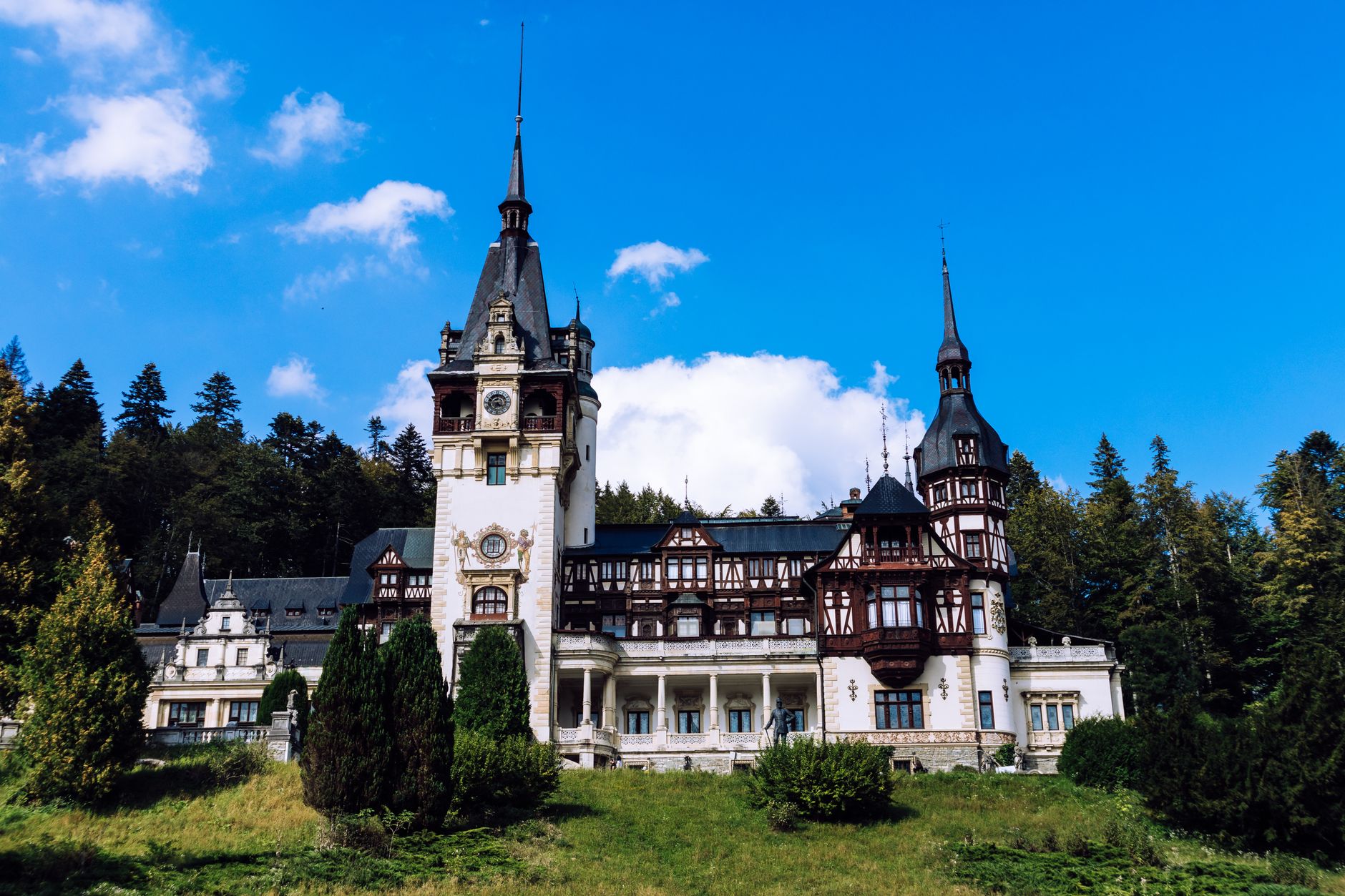
This Neo-Renaissance masterpiece features 160 lavish rooms and its own historic hydro plant. But a major rookie mistake is turning up on a Monday or Tuesday, when it’s strictly closed, or during its annual conservation shutdown in November. Arrive before 10:00 AM to beat the tour buses, and take the quiet forest path near Sinaia Monastery for a crowd-free walk up.

Turda Salt Mine (Salina Turda) Romania

Turda Salt Mine (Salina Turda)

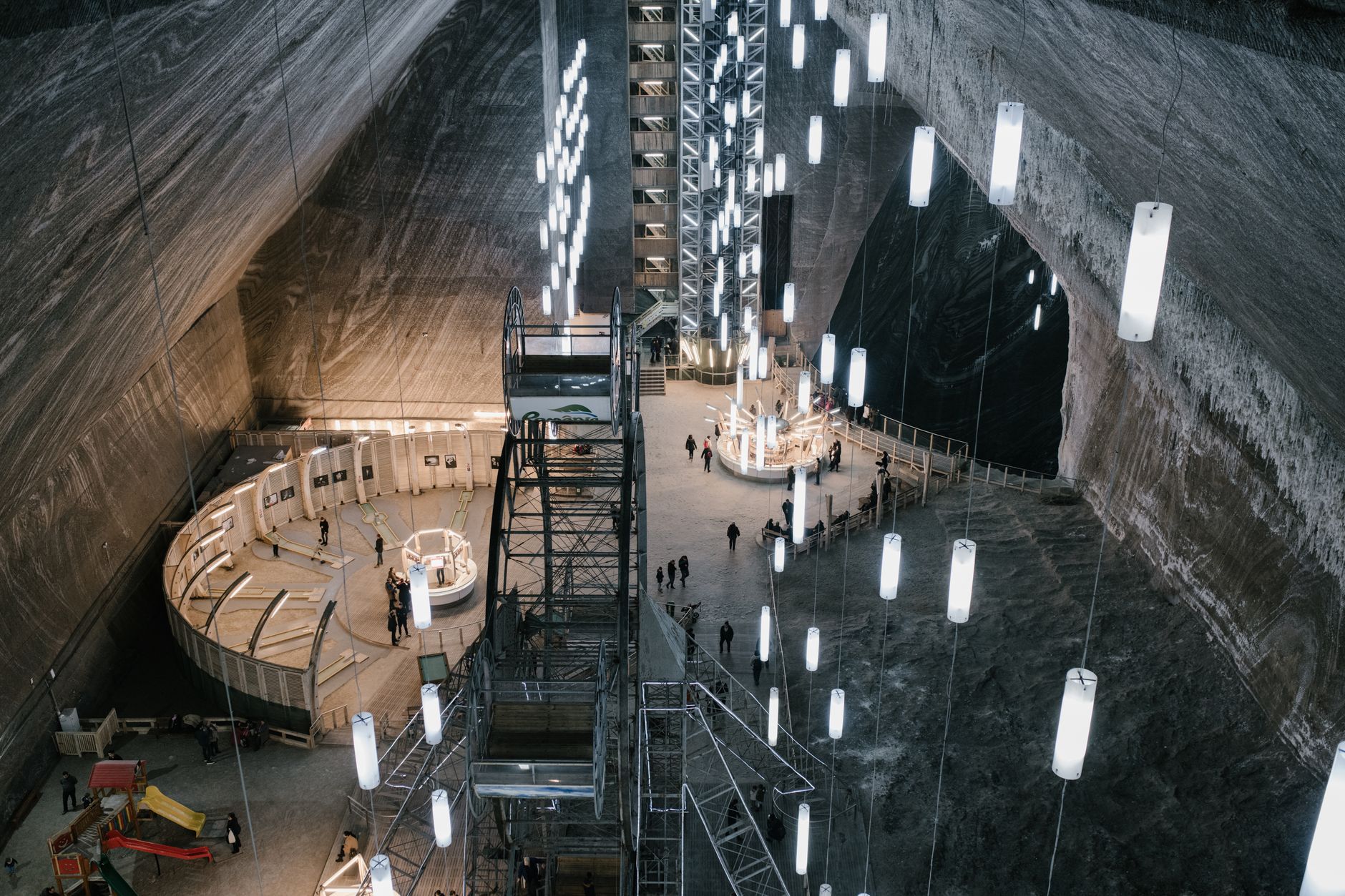
An otherworldly theme park buried 100 meters underground, complete with a Ferris wheel and a subterranean lake with rowboats. The temperature is a constant 11–12°C (53–55°F) year-round, so bring a warm jacket or the cold will eat you alive. To reach the floor of the Rudolf Mine, skip the massive queue for the single elevator and walk down the 172 steps of the historic ‘Rich Man’s Staircase’ instead.

Corvin Castle (Hunedoara) Romania

Corvin Castle (Hunedoara)

One of Europe’s largest Gothic-Renaissance fortresses, complete with a massive drawbridge and a legendary 30-meter-deep well. Keep in mind that on Mondays, the castle doesn’t open until midday (12:00 PM)—show up early and you’ll be locked out. Also, bring cash for the parking lot at the foot of the hill, as card payments are rarely accepted there.

What to Eat: Real Romanian Comfort Food

Mici (Mititei) Romania food

Mici (Mititei)

These skinless grilled sausages are made from a spiced mix of pork, beef, and sheep meat, heavily garlic-seasoned with a signature bouncy texture. Grab them at Terasa Obor inside Bucharest’s busy Piața Obor for about 5 RON ($1.10 USD) per piece.

Papanași Romania food

Papanași

These traditional fried cottage cheese doughnuts are topped with sour cream and blueberry or sour cherry jam. Try them at Caru’ cu Bere in Bucharest’s Old Town for 25–40 RON ($5.50–$9.00 USD), or hit Mahala café for a lighter, baked version.

Ciorbă de Burtă (Tripe Soup) Romania food

Ciorbă de Burtă (Tripe Soup)

A rich, velvety, garlic-heavy soup made from beef tripe, soured with vinegar and thickened with sour cream and egg yolks. Order it at Hanu’ lui Manuc in Bucharest or any local ‘Autoservire’ (cafeteria) in Brașov for 18–30 RON ($4.00–$6.50 USD).

Scams to Avoid: Don’t Get Caught Out

Bucharest is generally very safe, but dishonest operators will eat you alive if you look like an easy target. Watch out for these three classic tricks.

The ‘Maradona’ Fake Police Scam

In Bucharest’s Old Town, a stranger will approach you for directions. Suddenly, accomplices flash fake badges, claiming to inspect your wallet for ‘counterfeit cash’ or ‘drugs.’ Real Romanian police do not inspect cash on the street—firmly refuse and walk away.

The ‘Turbine’ Taxi Meter Scam

At Bucharest Airport (OTP) or outside clubs, drivers use a hidden button near the clutch to manually accelerate the meter. Skip street taxis entirely; use ridesharing apps like Bolt (which works better than Uber here) or the official touchscreen kiosks inside the OTP arrivals hall.

The Old Town Bar Scam

Attractive strangers will strike up a conversation and invite you to a specific bar. Once there, they order expensive drinks, and you are hit with an astronomical bill enforced by aggressive security guards. Never go to bars suggested by newly met strangers, and always check menu prices first.

Frequently Asked Questions

Do I need cash in Romania?

Yes, especially outside of Bucharest. While cards are widely accepted in major cities, you will need Romanian Leu (RON) cash for rural Transylvania, parking meters, market stalls, and tipping. A standard 10% tip is customary in restaurants, and leaving it in cash is highly preferred.

What is the best way to get from Bucharest Airport to the city center?

Skip the taxis and take the direct train from Henri Coandă Airport (OTP) to Gara de Nord. It runs 24/7, takes about 20 to 25 minutes, and costs only 5.50 RON (around $1.20 USD). You can pay by tapping your contactless bank card directly on the train’s readers.

Is tap water safe to drink in Romania?

Yes, tap water is safe to drink in major cities like Bucharest, Brașov, and Cluj-Napoca. However, in rural villages and older buildings with outdated plumbing, it is safer to stick to bottled water. When in doubt, ask your host or hotel staff about the local pipes.

Romania is one of those places that makes you feel slightly guilty for not coming sooner. The food alone is worth the flight, and the train rides through Transylvania are spectacular. To keep things simple and avoid the airport kiosk queues, grab a Romania eSIM from Galactic Roam before you land. It activates instantly, keeps you connected from Bucharest to the Carpathian peaks, and lets you skip the hassle of registering your passport at a local store.

Get your Romania eSIM


Colombia Travel Guide: How to Explore the Land of Magical Realism Safely

In 2025, Colombia recorded over 10.2 million international arrivals. If you think you can just wing a trip to this massive country without a solid plan, the logistics will eat you alive. I’ve spent months navigating its chaotic cities and mountain roads to compile this honest Colombia travel guide. You’ll learn exactly how to avoid the notorious scams, where to find the best local food, and how to stay connected without getting your phone blacklisted. Let’s get into what actually deserves a spot on your itinerary. If you are planning a broader South American journey, you might also want to check out our argentina travel guide. If your travels take you to Central America next, don’t miss our guatemala travel guide.

Quick Facts — Colombia

Currency
Colombian Peso (COP)
Language
Spanish
Time zone
COT (UTC-5)
Plug type
Type A & B
Best time to visit
December to March
Visa
90 days visa-free for US/EU/UK

The mandatory pre-flight step

Before you even board your flight, you have to deal with Migración Colombia. Every international traveler must complete the free online Check-Mig pre-registration form between 72 hours and 1 hour before entering or leaving the country.

Do not pay for this. Dozens of scam websites look official and charge a fee for what is a completely free government form. Make sure you use the official government portal.

What to see: the real vs. the overhyped

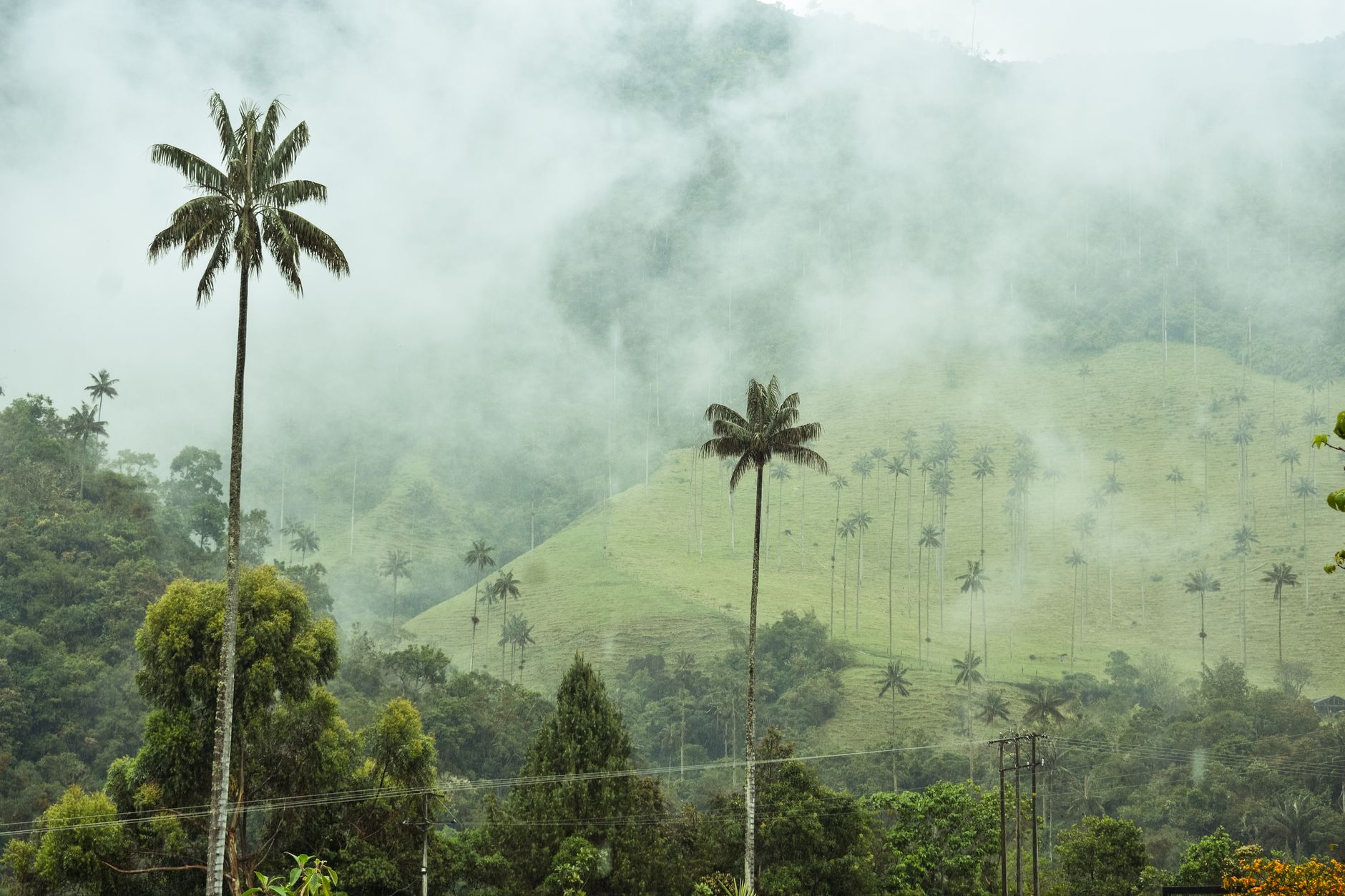
Everyone goes to Valle de Cocora to see the 60-meter-tall wax palms. If you go, start the hike by 7:00 AM to beat the crowds and the afternoon downpours. But here is a better option: skip Cocora entirely. Hire a 4×4 Willy to take you to Valle de La Carbonera instead—it has ten times more wax palms and virtually zero tourists.

Valle de Cocora (Salento) Colombia
Towering wax palms stretching up the green hillsides of Valle de Cocora.

In Medellín, Comuna 13 is famous for its transformation from a dangerous zone into an outdoor art gallery. It is worth seeing, but it has become highly commercialized. For a more authentic look at the city’s urban transformation, take the Metrocable Line J to La Aurora, or book a ‘Barrio Transformations Tour’ in Comuna 4 (Aranjuez/Moravia).

Comuna 13 (Medellín) Colombia
A colorful basketball court surrounded by brick homes in Medellín’s Comuna 13.

Further south, on the border with Ecuador, sits the Santuario de Las Lajas. Most tourists visit this dramatic neo-Gothic canyon basilica during the day and leave immediately. That is a rookie mistake. Arrive in the late afternoon so you can watch the sunset, then stay past 6:00 PM when the entire cathedral lights up in a shifting spectrum of colored lights.

What to eat: platter, soup, and ants

If you are in Medellín, order a Bandeja Paisa. It is a massive, high-calorie platter loaded with crispy chicharrón, red beans, rice, ground meat, a fried egg, plantain, chorizo, arepa, and avocado. Get it at Hatoviejo or El Rancherito for 35,000 to 55,000 COP ($9 to $14 USD).

In Bogotá, warm up with Ajiaco Santafereño, a thick potato soup made with three local potato varieties, chicken, corn, and guascas herbs. Head to La Puerta Falsa, a 200-year-old spot near Plaza de Bolívar, where a bowl costs 25,000 to 40,000 COP ($6 to $10 USD).

If you are feeling adventurous, look for Hormigas Culonas (big-butt ants) in the markets of Bucaramanga or San Gil. They are toasted, salted, and taste surprisingly like smoky, roasted peanuts for about 10,000 COP ($2.50 USD) a bag.

Safety: how to not give papaya

The golden rule of safety here is no dar papaya—literally, “don’t give papaya.” It means don’t make yourself an easy target by walking around with your phone out or wearing flashy jewelry in crowded areas like the Medellín Metro or Plaza de Bolívar.

Then there is El Paseo Millonario (the Millionaire’s Ride). Never hail a yellow taxi on the street, especially at night in Bogotá’s Zona T or Medellín’s El Poblado. Use Cabify, Uber, or DiDi instead, and sit in the front seat to blend in since ride-sharing is technically in a legal gray area.

Finally, be extremely cautious with scopolamine (Burundanga) drugging, which often starts on dating apps like Tinder or Bumble. Never leave your drink unattended, and choose accommodations with 24/7 security desks that require visitors to register their physical IDs.

Logistics & neighborhoods

When landing at Medellín’s MDE airport, don’t let pirate drivers grab your bags. Take an official white airport taxi for a fixed rate of 110,000 COP ($28 USD) through the Tunel de Oriente, or hop on the airport bus to San Diego Mall for 15,000 COP ($4 USD).

Skip the noisy, tourist-heavy El Poblado for your stay; choose Laureles or Envigado for a safer, more authentic neighborhood vibe. In Bogotá, avoid staying in La Candelaria because it gets sketchy after dark—book a place in Usaquén or Chapinero Alto instead.

Credit cards work in major cities, but you absolutely need cash (COP) for street food, public buses, and small towns like Salento. Always withdraw cash from ATMs located inside secure bank lobbies rather than on the street.

Frequently asked questions

What is the safest city in Colombia to visit?
Manizales, located in the Coffee Triangle, is statistically one of the safest mid-sized cities. It has a homicide rate of 4.4 per 100,000, which is lower than the national average of the United States.
Do I need cash or can I use credit cards in Colombia?
Credit cards are widely accepted in major cities, but cash is essential for street food, small towns, public buses, and tips. Always withdraw cash from ATMs located inside secure bank lobbies for safety.
How do I avoid getting scammed by taxis in Colombia?
Never hail a yellow cab on the street, especially at night. Use ride-hailing apps like Cabify, Uber, or DiDi to ensure your route is tracked by GPS and the fare is locked in.
What is the mandatory entry form for Colombia?
You must fill out the free Check-Mig form online between 72 hours and 1 hour before your flight. Do not use third-party sites that try to charge you a fee for it.

The 20-day connectivity trap

Staying online is crucial for navigating, but Colombia has a bizarre connectivity trap: the 20-day CRC Imei registration rule. If you buy a local physical SIM card (which costs $3 to $10 in the city, or an inflated $15 to $30 at the airport), you must register your phone’s unique 15-digit Imei number with the carrier within 20 days, or your device will be blacklisted and blocked from all networks. On top of that, activating a local prepaid eSIM online as a tourist is nearly impossible because carrier portals require a Colombian national ID. You can bypass this entire headache by getting a Colombia eSIM from Galactic Roam before you land; because it operates on international roaming protocols, it is completely exempt from the 20-day registration rule and connects automatically to the best local networks like Claro and Movistar.

Get your Colombia eSIM


Slovenia Travel Guide: How to Explore Europe’s Greenest Gem

Slovenia Travel Guide: How to Explore Europe’s Greenest Country (Without the Rookie Mistakes)

Slovenia welcomed nearly 7 million tourists in 2025, yet most travelers treat it like a highway between Italy and Croatia. Winging a trip here without knowing the local rules will get you eaten alive by unexpected fines and cash-only taxes. I’ve navigated Slovenia’s alpine peaks and coastal towns to build this realistic Slovenia travel guide. Here’s how to bypass the tourist traps, escape the herd, and explore the country like an insider.

Quick Facts — Slovenia

Currency
Euro (€)
Language
Slovenian
Time zone
CET (GMT+1)
Safety Rank
9th globally (2025/2026 GPI)
Best time to visit
May to September
Visa
Schengen rules apply
9th
Safest Country
7M
Annual Visitors
75%
Foreign Overnights
€3.13
Nightly Tourist Tax

The Costly Mistakes Most Tourists Make

First, let’s talk about the highway toll. Slovenia’s motorways require a digital “e-vignette” linked to your license plate. Driving without one results in a €300 to €800 fine.

If you’re driving down to the coast, there’s a bit of good news. As of January 1, 2026, the H5 and H6 expressways from Skofije to Izola are entirely toll-free for passenger vehicles. But don’t risk the main motorways without buying your digital pass online first.

Another surprise is the local tourist tax. Major hubs like Ljubljana and Lake Bled charge €3.13 per adult per night. Hosts often collect this strictly in cash, and it’s rarely included in your online booking price. Keep physical Euros on hand.

Important Always keep at least €50 in cash. Many private apartments, local bus drivers, and parking meters don’t accept credit cards. You’ll also need cash for renting Lake Bled’s traditional pletna boats, which cost €15 to €18.

What to See (And How to Avoid the Crowds)

Slovenia’s nature is its main draw, but staring at the backs of other tourists’ heads ruins the experience. Here’s how to see the best spots without the crowds.

Vintgar Gorge

This 1.6 km gorge features wooden boardwalks clinging to vertical stone walls right above the rushing Radovna River. The trail is strictly one-way. You must hike back via a scenic forest path, which adds about 1 to 1.5 hours to your trip. Arrive exactly at 8:00 AM when the gates open to beat the tour buses.

Vintgar Gorge Slovenia
The wooden boardwalks of Vintgar Gorge winding along the Radovna River.

Škocjan Caves

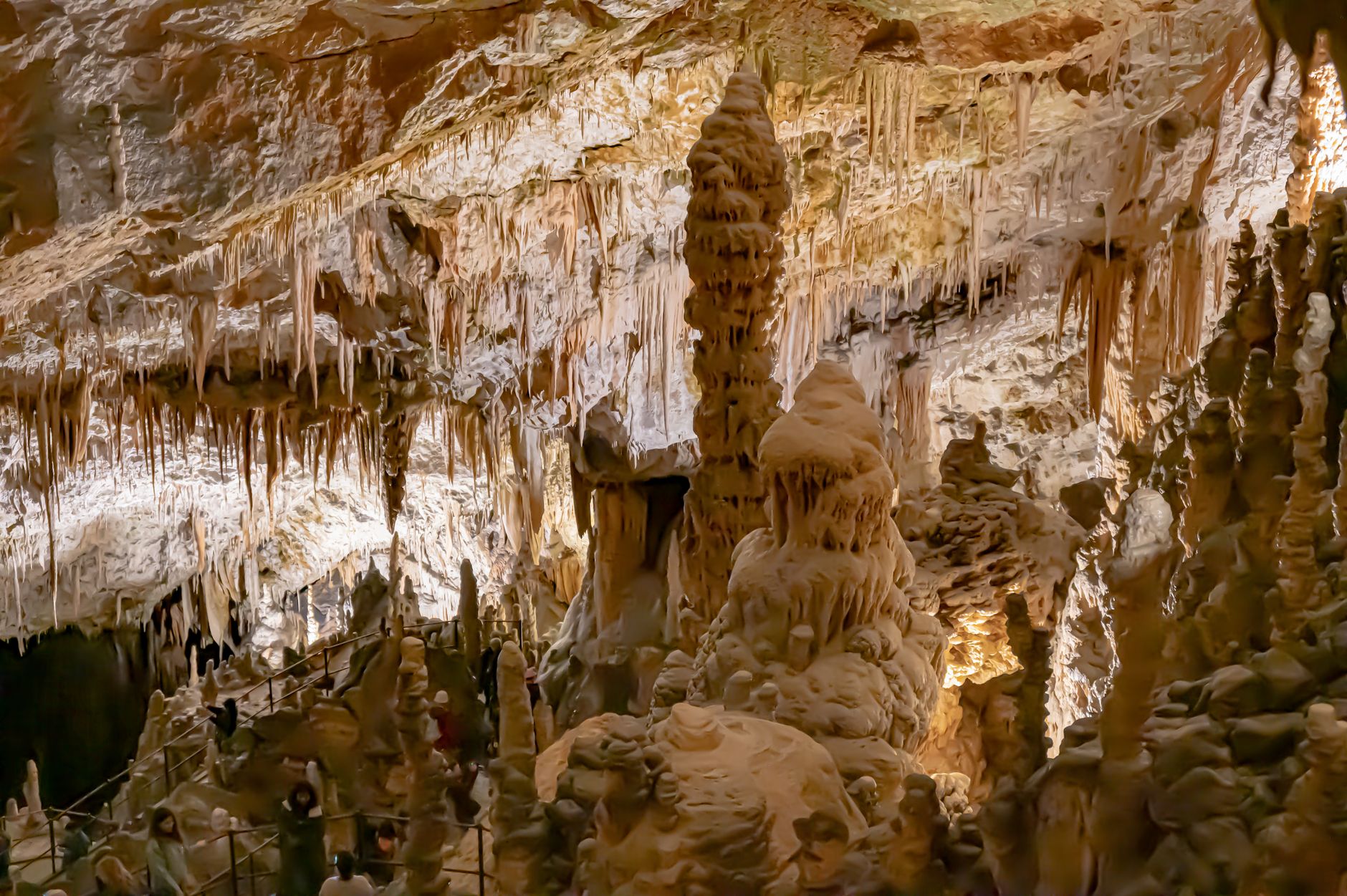
This UNESCO World Heritage site features one of the largest underground canyons in the world. It’s far less commercialized and cheaper than the famous Postojna Cave. Bring a warm jacket even in summer, as the cave temperature remains a constant 12°C (54°F) year-round. Opt for the “Through the Underground Canyon” guided tour for the most dramatic views of the bridge suspended 45 meters above the subterranean river.

Škocjan Caves (Škocjanske jame) Slovenia
The massive underground chambers of the Škocjan Caves system.

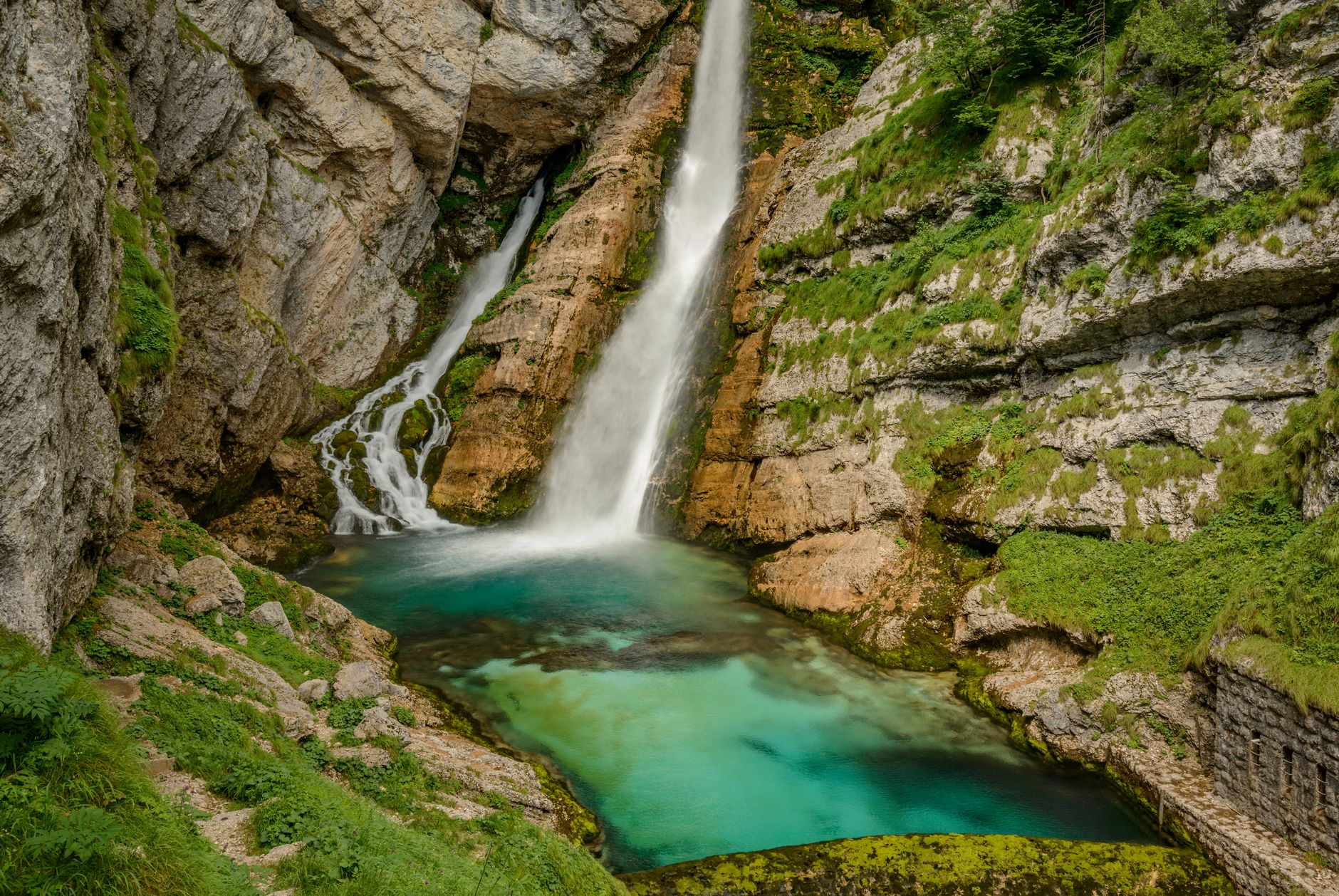
Peričnik Waterfall

Located in the Vrata Valley, this 52-meter-high waterfall lets you walk directly behind the curtain of rushing water. Wear a waterproof jacket and sturdy shoes with good grip. The path behind the falls is constantly wet, muddy, and slippery. In winter, the entire face freezes into a giant wall of blue ice needles.

Peričnik Waterfall (Slap Peričnik) Slovenia
Peričnik Waterfall cascading down the rocky cliffs of the Vrata Valley.

Walls of Piran

For the absolute best panoramic sunset views over the red-roofed Venetian town of Piran and the Adriatic Sea, head here. While most tourists crowd around St. George’s Parish Church, the medieval walls are located slightly higher up. They cost only €2.00 to enter and stay open from 8:00 AM until dusk.

Walls of Piran (Mestno obzidje Piran) Slovenia
The coastal town of Piran stretching into the Adriatic Sea.

What to Eat (And Where to Find It)

Slovenian food is heavy, comforting, and deeply regional. Skip the generic Italian restaurants in Ljubljana and seek out these local specialties.

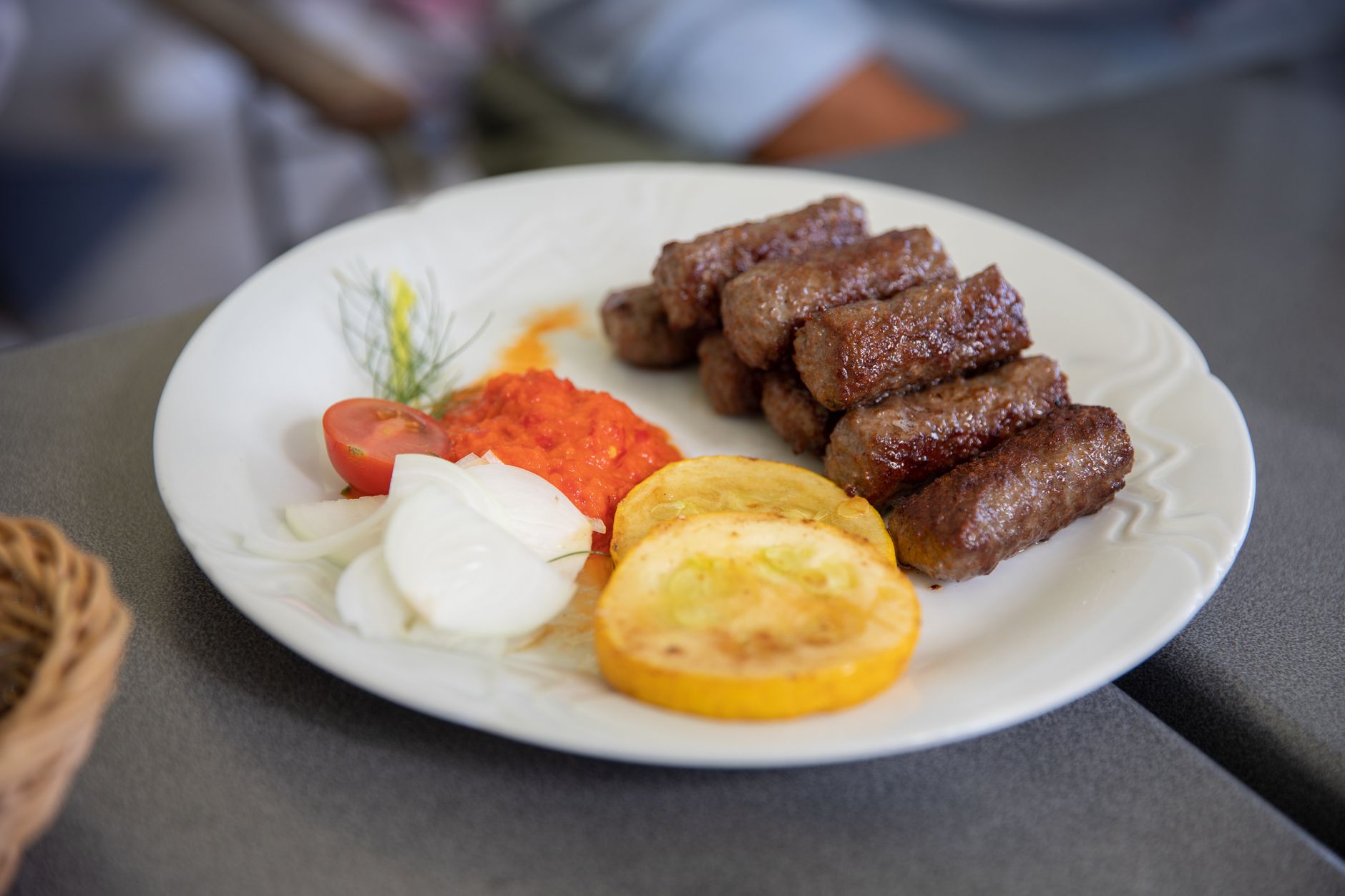
Kranjska klobasa (Carniolan Sausage) Slovenia food

Kranjska klobasa (Carniolan Sausage)

A heavily smoked pork and bacon sausage seasoned with garlic and black pepper. Grab a half or whole sausage served with mustard and horseradish at Klobasarna in Ljubljana’s old town for €7 to €12.

Štruklji Slovenia food

Štruklji

Traditional rolled dumplings filled with sweet or savory ingredients like cottage cheese, walnut, or blueberry. Try them at Moji Štruklji Slovenije by the Ljubljana Central Market colonnade, where they serve over 20 flavors for €5 to €12.

Blejska kremna rezina (Bled Cream Cake / Kremšnita) Slovenia food

Blejska kremna rezina (Bled Cream Cake)

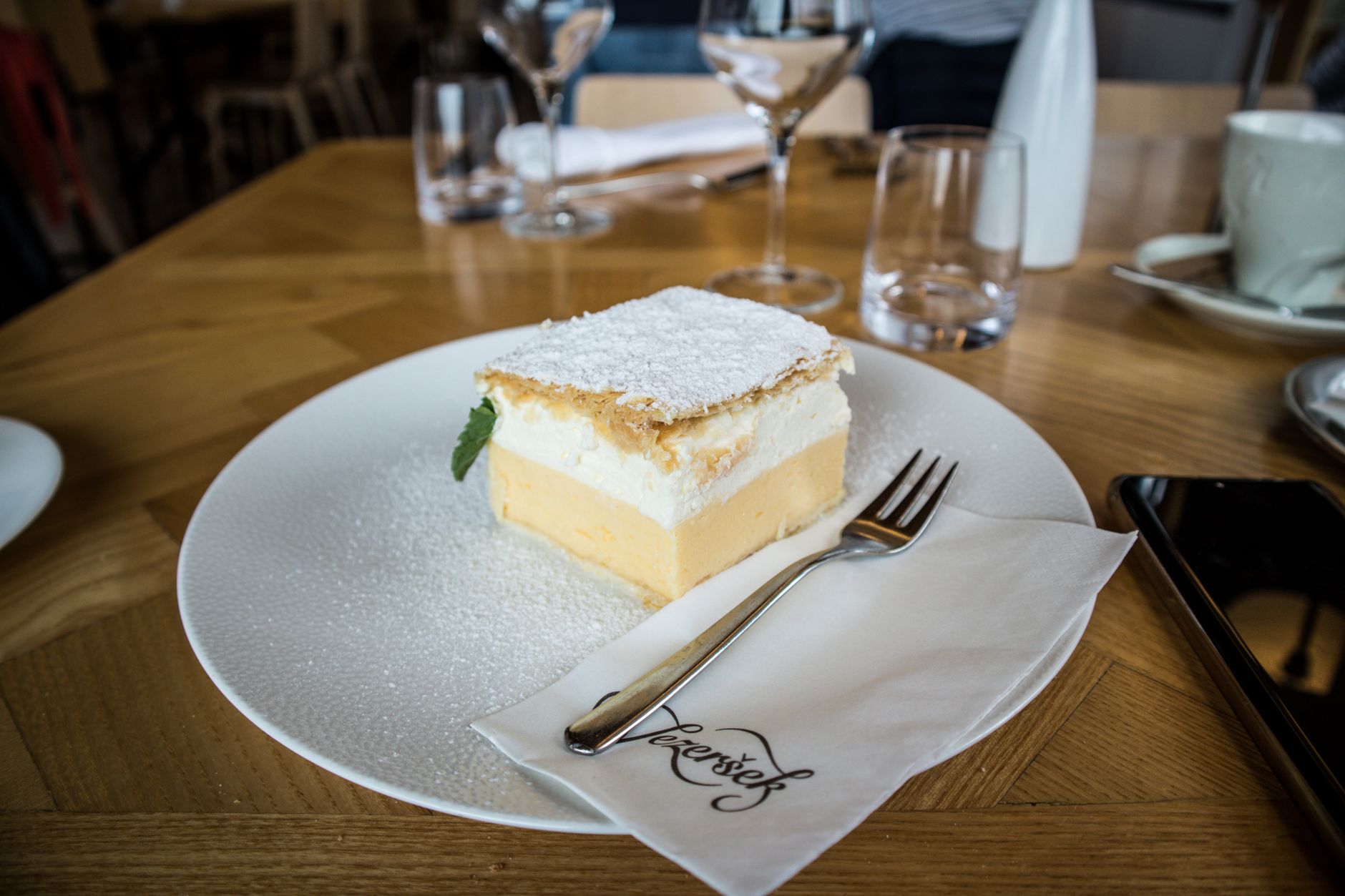
A delicate pastry layered with vanilla custard, whipped cream, and crispy butter dough. Head to Kavarna Park in Bled—the original home of the cake since 1953—where a slice costs €4 to €8.

Safety & Scams to Avoid

Slovenia ranks 9th globally in the 2025/2026 Global Peace Index, making it incredibly safe. However, you still need to watch out for a few local traps.

Distraction Pickpocketing

Watch your pockets around Ljubljana’s Triple Bridge and Prešeren Square. Scammers may approach you to sign fake petitions while an accomplice slips into your bag.

Airport Taxi Overcharging

Unmarked taxis waiting outside Ljubljana Airport (LJU) can charge up to €120 to reach the center. Avoid them. Take the official Arriva bus for €4.00 or pre-book a licensed taxi for €30 to €40.

Alpine Hiking Hazards

Don’t attempt hikes in Triglav National Park in casual sneakers. Weather changes rapidly; check Arso forecasts, carry a physical map, and know that mountain rescue is highly expensive if you’re found unprepared.

Frequently Asked Questions

Is Slovenia safe for solo travelers?
Yes, Slovenia is exceptionally safe, ranking 9th globally in the Global Peace Index. Standard precautions against pickpockets in crowded areas of Ljubljana are all you need.
How many days do you need in Slovenia?
Three days is enough to see Ljubljana and Lake Bled. However, you should budget five to seven days if you want to explore the Julian Alps, Škocjan Caves, and the coast.
Do I need cash in Slovenia?
Yes. While cards are accepted in major shops, cash is mandatory for tourist taxes, parking meters, small cafes, and the pletna boats in Bled.

Staying Connected

Local prepaid SIM cards cost between €6 and €15 for tourist packages offering 10GB to 20GB of data. You don’t always need to register these with a passport if bought at gas stations or convenience stores. While 5G is fast in Ljubljana, coverage can drop to 3G or disappear entirely in deep alpine valleys like Triglav National Park. To avoid hunting down physical shops on arrival, grab a Slovenia eSIM from Galactic Roam before you fly. It connects instantly to the strongest local network, keeping your maps active even when you’re winding through the mountain passes.

Get your Slovenia eSIM