
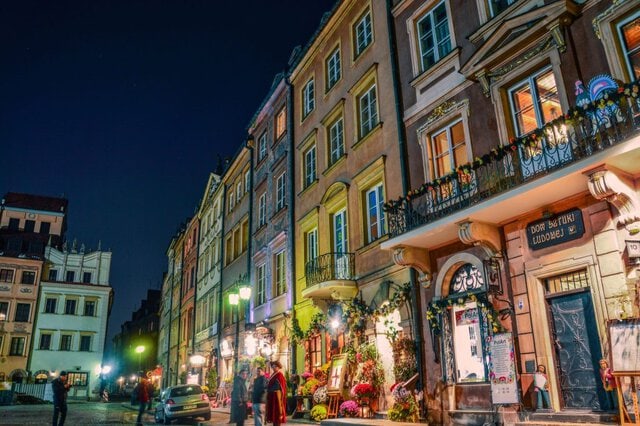
Poland Travel Guide: How to Explore Krakow, Warsaw, and Beyond Like a Local
Everyone told me Poland was just a cheap, grey alternative to Western Europe. They were dead wrong—it is actually one of the most vibrant, historically rich, and functional countries on the continent. With over 20 million tourists arriving last year, the secret is out. This practical Poland travel guide will show you how to navigate the local quirks, dodge the tourist traps, and experience the country like an insider. If you are planning to explore more of Eastern Europe, be sure to check out our romania travel guide as well. Let’s get into the logistics first.
Quick Facts — Poland
Polish Złoty (PLN)
Polish
Central European Time (CET)
Type C and E
May to September
Schengen Zone (90 days)
The Non-Obvious Rules You Need to Know
Poland is incredibly safe, but it has a few legal and cultural quirks that will cost you money if you ignore them. First, jaywalking is strictly illegal. Crossing outside a designated zebra crossing or walking against a red light is actively enforced by police and city guards (Straż Miejska). Fines range from 50 PLN to 400 PLN, and they love targeting distracted tourists.
Then there is the “Dziękuję” trap. Saying “Dziękuję” (thank you) when handing cash to a waiter is culturally understood as “keep the change.” If you actually want your change back, do not say it until the money is physically in your hand.
Finally, Poland is almost entirely cashless. Even the smallest street vendors, public toilets, and mountain huts accept contactless card payments. However, card terminals rarely have a built-in tipping prompt. If you want to tip by card, you must tell the waiter the total amount you want to pay before they swipe your card (e.g., if the bill is 90 PLN, say “make it 100, please”).
What to See (and What to Skip)
Most tourists flock to the same three places in Krakow and Warsaw. Some are worth it; others require a strategy to avoid the crowds.
Rynek Underground Museum (Krakow)
This subterranean archaeological museum sits four meters below the Main Market Square. Book tickets online days in advance because entry is strictly capped. To see the medieval waterworks demonstration in action, make sure you are at that specific exhibit at the top of any hour when they activate the water flow.
Polin Museum of the History of Polish Jews (Warsaw)
Built on the site of the former Warsaw Ghetto, this museum documents 1,000 years of Jewish life. Admission is free on Thursdays, but you still need to reserve a ticket online in advance. Don’t rush through the galleries; the reconstructed roof of the 17th-century Gwoździec synagogue is the artistic masterpiece you should spend time studying.
Wieliczka Salt Mine
Located just outside Krakow, this 13th-century underground salt mine features entire chapels, chandeliers, and statues carved entirely out of rock salt. It is located 135 meters underground and is genuinely spectacular.
But the standard “Tourist Route” is often packed shoulder-to-shoulder. Skip it and book the “Miners’ Route” (Trasa Górnicza) instead. You’ll wear a jumpsuit and headlamp, enter through a different shaft, and perform actual medieval mining tasks away from the crowds.

The Real Polish Food Scene
Forget high-end dining; the best food in Poland is cheap, traditional, and unpretentious. Start with an Obwarzanek Krakowski. This chewy, braided ring-shaped bread is the ancestor of the bagel. You can buy them for 2.50 to 4 PLN ($0.60–$1.00 USD) from the blue metal street carts scattered all over Krakow’s Old Town. Just ensure the cart has a blue sticker certifying it is an authentic, protected product.
For lunch, grab a Zapiekanka. This is an open-faced toasted baguette topped with sautéed mushrooms, melted cheese, and ketchup, originating from Communist-era food shortages. Get yours at the “Okrąglak” (the round former slaughterhouse) in the center of Plac Nowy in Krakow’s Kazimierz district. Stalls like “Endzior” sell them for 12 to 32 PLN ($3–$8 USD).
For dinner, find a traditional “Bar Mleczny” (Milk Bar) like Bar Mleczny Prasowy in Warsaw. Order Żurek, a sour rye soup made with fermented rye flour starter, boiled white sausage, hard-boiled eggs, and wild mushrooms. It costs around 15 to 30 PLN ($3.50–$7.50 USD) and is the ultimate comfort food.
Safety Warnings: Scams to Avoid
While Poland has low violent crime rates, tourist-targeted scams do exist in major hubs. Keep your guard up in these specific scenarios.
Strip Club Extortion
On Floriańska, Jana, and Szewska streets in Krakow, female promoters with colorful umbrellas will invite you in for “free entry.” Once inside, drinks are heavily marked up or spiked with memory-loss drugs. Bouncers will intimidate you into entering your PIN multiple times on card readers claiming the payment failed. Never enter these venues.
Fake Plain-Clothed Police Officers
Scammers posing as plain-clothed officers approach tourists near train stations, claiming to investigate counterfeit currency. They will ask to see your wallet and demand your credit card PIN. Real Polish police will never ask for your PIN or look through your wallet on the street. Demand to see their official badge (legitymacja).
Unlicensed Airport Taxis
Drivers standing in the arrivals halls at Warsaw Chopin or Krakow Airport will offer cheap rides but charge exorbitant rates once you arrive. Avoid anyone soliciting rides verbally. Only use official taxi ranks marked with clear city taxi emblems, or use ride-hailing apps like Uber, Bolt, or FreeNow.
How to Get Around
Do not rely on Google Maps for transit schedules in Poland. Download the “Jakdojade” app instead; it is the gold standard for real-time tram, bus, and metro routes. You can purchase and validate tickets directly within the app.
If you use physical paper tickets, you must validate them immediately upon boarding a bus or tram. Plain-clothes ticket inspectors frequently check and will issue a non-negotiable fine of around 200 PLN (~$50 USD) if you forgot to stamp it.
For airport transfers, skip taxis entirely. From Krakow Airport (KRK), take the direct Koleje Małopolskie train to Krakow Główny (main station) for 17 PLN (~$4.20 USD). From Warsaw Chopin Airport (WAW), take the SKM train (lines S2 or S3) directly to the center for just 4.40 PLN (~$1.10 USD).
The Perfect 5-Day Poland Itinerary
- Day 1-2: Warsaw — Explore the rebuilt Old Town, visit the Polin Museum, and eat at Bar Mleczny Prasowy.
- Day 3: Transit — Take the fast, comfortable 2.5-hour PKP Intercity express train south to Krakow.
- Day 4-5: Krakow — Tour the Rynek Underground, eat Zapiekanka in Kazimierz, and take a day trip to the Wieliczka Salt Mine.
Frequently Asked Questions
Is Poland expensive to visit?
Do I need to speak Polish to get around?
Is tap water safe to drink in Poland?
Staying Connected Without the Hassle
Poland has incredibly fast 4G and 5G networks, but getting a local physical SIM card comes with a major bureaucratic headache. By law, passport registration is mandatory for all physical SIM cards. This means you cannot just buy a SIM and plug it in; you must queue up at a carrier store, post office, or Żabka convenience store and present your physical passport to activate it.
| Local Physical SIM | Galactic Roam eSIM | |
|---|---|---|
| Cost | $1.20 – $3.70 (basic starter) | From $8 |
| Activation | Manual in-store setup | Instant, pre-arrival |
| Passport Registration | Required by law | None |
| Ready on arrival | No (must buy first) | Yes |
| Data options | Varies by carrier | Flexible prepaid tiers |
To bypass the queues and avoid handing your passport over to a convenience store clerk, grab a Poland eSIM from Galactic Roam before you fly. It installs in seconds, connects to the local network the moment your plane touches down, and lets you navigate with Jakdojade immediately without any registration hassle.