Peru Travel Guide: How to Explore Machu Picchu, Cusco, and Beyond
Landing in Cusco and heading straight to the ruins is a mistake. The altitude will eat you alive. Winging a trip here is a rookie mistake that will cost you money, time, and your breath. Just as I did for our colombia travel guide, argentina travel guide, and chile travel guide, I have navigated Peru’s chaotic transit and shifting regulations to build this realistic Peru travel guide. You’ll learn how to bypass the crowds, avoid the latest scams, and navigate the massive 2026 ticketing changes. Let’s get into how to actually survive and enjoy this place.
Quick Facts — Peru
Currency Peruvian Sol (PEN)
Language Spanish, Quechua
Time zone PET (UTC-5)
Plug type Type A & C
Best time to visit May to September
Visa Free 90-day visa on arrival
5,600
Daily Visitor Cap
43 km
Inca Trail Length
3,399m
Cusco Altitude
10 Days
Ideal Itinerary
The Altitude Sequencing Hack
Cusco sits at 3,399 meters (11,152 feet) above sea level. Machu Picchu is actually much lower at 2,430 meters (7,972 feet).
If you fly straight into Cusco and sleep there, you’ll likely spend your first 48 hours nursing a brutal headache. Do not stay in Cusco on your first night.
Instead, take a pre-arranged taxi straight from Cusco airport down to Urubamba (2,870m) or Ollantaytambo (2,792m) in the Sacred Valley. Spend 2-3 days acclimatizing there before you attempt to climb anything.
Top Experiences: What is Actually Worth It
The classic view of Machu Picchu citadel under the new 2026 circuit rules.
Machu Picchu (New 2026 Circuits)
Starting January 1, 2026, Peru strictly decoupled Inca Trail permits from Machu Picchu citadel entry tickets. You must purchase and manage both as entirely separate documents. The citadel is split into 3 main circuits and 10 routes; Circuit 2 (Classic) offers the most complete ruin exploration, while Circuit 1 (Panoramic) gives you the postcard photo but blocks the lower ruins. Book Circuit 2 at least 4-5 months in advance, and remember there is a strict 45-minute tolerance window for your entry time—miss it, and you are locked out.
The massive, interlocking stone walls of Sacsayhuamán fortress above Cusco.
Sacsayhuamán (Cusco)
This massive Inca fortress features stones weighing up to 128 tons fitted together without a drop of mortar. Arrive exactly at 7:00 AM when the gates open to beat the massive tour buses that arrive at 9:00 AM. Walk up to the ‘Muyuqmarca’ circular foundations, which was the actual site of the final, bloody battle between the Incas and Spanish conquistadors.
The natural desert oasis of Huacachina surrounded by towering sand dunes.
Huacachina Oasis (Ica)
A natural desert oasis surrounded by towering sand dunes, famous for sandboarding and dune buggy rides. Skip the noisy buggy tours for an hour and climb the massive dune on the far west side on foot just before sunset for complete silence and endless views. Bring a ziplock bag to seal your phone; the fine desert sand ruins charging ports instantly.
What to Eat: Lima’s Culinary Heavyweights
Fresh Ceviche Mixto cured in lime juice with red onions and giant Andean corn.
Ceviche Mixto
Fresh raw sea bass, octopus, and squid cured instantly in lime juice (leche de tigre), served with red onions, sweet potato, and giant Andean corn. Head to Al Toke Pez in Surquillo, Lima, a legendary 9-seat counter run by Tomás Matsufuji, where a plate costs just $7–$10 USD (25–35 PEN).
Crispy pork belly being prepared for Pan con Chicharrón sandwiches.
Pan con Chicharrón
Crispy, slow-cooked pork belly, fried sweet potato slices, and salsa criolla stuffed into a fluffy rosette roll. Grab one at El Chinito or La Lucha Sanguchería Criolla in Miraflores for $4–$7 USD (15–25 PEN).
Safety & Scams: Don’t Get Caught Out
The ‘Fake Police’ Scam
In the Historic Center of Lima or near Cusco’s San Pedro Market, a plainclothes individual flashing a fake badge will claim to be investigating counterfeit money and demand to inspect your wallet. Real Peruvian police always wear uniforms and never inspect cash on the street. Politely refuse, walk into a busy shop, and demand to go to the nearest Comisaría (police station).
The ‘Removable Taxi Sign’ Scam
Outside Jorge Chávez International Airport (LIM) or major bus terminals, unlicensed drivers place magnetic ‘Taxi’ signs on personal cars to lure tourists, leading to extreme overcharging or express kidnappings. Never hail a street taxi at night. Book official airport taxis at indoor counters (like Taxi Green) or use verified apps like Uber or Cabify.
Counterfeit Bill Swap
When paying with a 100 or 200 sol note at local markets, a vendor may quickly swap it for a fake bill under the counter and hand it back, claiming your money is counterfeit. Avoid using large bills at small stalls. If you must use one, state the denomination out loud and note the serial number as you hand it over.
Money & Logistics
While credit cards work fine in Miraflores and Cusco hotels, cash (Peruvian Soles) is absolutely mandatory for taxis, local markets, and Sacred Valley entry fees.
Always carry small denominations like 10 and 20 sol notes. Vendors and taxi drivers routinely refuse to break 100 or 200 sol notes, leaving you stranded over a simple transaction.
When arriving at Lima’s brand-new airport terminal, ignore the aggressive drivers waiting outside the doors. Head directly to the official taxi counters inside the baggage claim area; a flat-rate ride to Miraflores costs roughly 60–80 PEN ($16–$22 USD).
Frequently Asked Questions
How many days do I need for a first trip to Peru?
Ten days is the sweet spot. Spend 2 days in Lima for food, fly to Cusco and immediately transfer to the Sacred Valley for 2 days to acclimatize, take the train to Aguas Calientes for Machu Picchu for 1 day, spend 3 days exploring Cusco, and leave 1 buffer day for unexpected transit delays.
Is Peru safe for solo travelers?
Yes, but you must keep your wits about you. Petty theft is common in crowded markets, and the ongoing state of emergency in Lima and Callao means you should carry physical or digital copies of your passport at all times for potential ID checks.
Is tap water safe to drink in Peru?
No, never drink tap water in Peru. Always stick to bottled water or use a high-quality purification filter, even in high-end hotels in Lima and Cusco.
Staying Connected Without the Bureaucracy
Getting connected in Peru has become incredibly difficult for tourists. Under late-2025 Osiptel regulations, buying a local physical SIM card in city shops requires a biometric fingerprint scan matched in real-time against Peru’s Migraciones database. Because official city stores routinely reject foreign passports—requiring a local residency card instead—tourists are effectively blocked from buying local SIMs outside of overpriced airport kiosks.
The easiest way to bypass this bureaucratic mess is to set up your data before you land. A pre-purchased Peru eSIM from Galactic Roam connects you to local networks like Claro and Entel the second your plane touches down, keeping you connected through the Sacred Valley without the fingerprint headaches.
Rome Travel Guide: How to Explore the Eternal City Beyond the Crowds
Rome welcomed 22.9 million tourists last year. If you don’t plan your days, this city will eat you alive.
Winging a trip to the Eternal City is a rookie mistake that guarantees you’ll spend your vacation staring at the backs of people’s heads in three-hour security lines. I’ve spent years navigating these ancient streets, and this practical Rome travel guide is designed to help you bypass overhyped traps and escape the chaos.
Here is exactly how to tackle Rome in 2026 without losing your mind—or your wallet.
Quick Facts — Rome
Currency Euro (€)
Language Italian
Tourist Tax €3 to €10/night
Water Free from 2,000+ nasoni
Best Transit Metro & Walking
Airport Train Leonardo Express (€14)
The New Rules of Rome’s Icons
The Catholic Holy Year of Jubilee officially wrapped up on January 6, 2026. While it left behind excellent permanent upgrades—like the newly pedestrianized Piazza Pia near the Vatican—it also left a city bursting at the seams. To cope, Rome is getting strict about crowd control.
Take the Trevi Fountain. As of February 2, 2026, you now have to pay a €2 access fee just to step down into the lower basin and touch the water. If you want to avoid the fee and the worst of the crowds, view it from the upper square for free, or simply set your alarm and get there before 8:00 AM.
The Trevi Fountain, where lower basin access now requires a €2 fee.
Then there’s the Colosseum. Do not settle for a standard entry ticket. You want the Colosseum Underground (Ipogeo) to walk the subterranean tunnels where gladiators waited.
But here is the catch: these tickets must be booked exactly 30 days in advance at 9:00 AM CET on the official Parco Archeologico del Colosseo ticketing site. They sell out in minutes, so treat this like booking front-row concert tickets.
The exposed subterranean tunnels of the Colosseum Underground.
The Pantheon is another spot where winging it will fail you. Entry now costs €5, and they rarely accept cash at the door. Book your ticket online ahead of time.
For the ultimate view, time your visit for midday between 11:30 AM and 1:30 PM. When the sun hits its peak, it shoots a solid, dramatic beam of light straight through the open oculus in the dome.
The towering stone columns at the entrance of the Pantheon.
Ditch the Tourist Menus: What to Eat
If a restaurant has a host outside waving a laminated menu with pictures of lasagna, keep walking. Real Roman food is cheap, unpretentious, and usually found in paper bags or market stalls.
Start with Allesso di Scottona con Cicoria. It is a legendary street food sandwich featuring slow-simmered beef brisket and bitter chicory stuffed into a crusty roll dipped in rich cooking broth. Grab one for €6 to €7 at Mordi e Vai (Box 15 inside the Nuovo Mercato Comunale di Testaccio).
For a quick snack, hunt down Supplì al Telefono. These are deep-fried, breaded rice balls mixed with meat ragù and tomato, with a core of warm mozzarella that stretches like a telephone wire. Get them for €1.50 to €3.00 at Supplì Roma in Trastevere.
Finally, skip standard pizza one night and try Pinsa Romana. This ancient flatbread uses a fermented mix of soy, rice, and wheat flour, making it incredibly light and crispy. Pinsere on Via Flavia serves incredible toppings for €3 to €6.
A freshly baked Pinsa Romana topped with prosciutto and burrata.
How to Spot Rome’s Most Common Scams
Rome is generally safe, but the sheer volume of tourists makes it a goldmine for opportunistic thieves. You need to keep your wits about you, especially around transit hubs.
Metro Line A Pickpockets
Teams of pickpockets operate heavily at Spagna, Termini, and Barberini stations. They often fake pregnancies or create artificial crowding near the train doors to distract you. Keep your bags zipped and held in front of you, and never put your phone in your back pocket.
The ‘Helpful Local’ Ticket Machine Scam
At Termini Station, scammers linger near ticket kiosks offering to help you navigate the screen. Once your ticket prints, they will aggressively demand your change or use the distraction to let an accomplice pick your pockets. Decline all unsolicited help and use contactless ‘Tap & Go’ directly at the turnstiles instead.
Unlicensed ‘Fake’ Taxis
Avoid drivers who approach you inside Fiumicino Airport (FCO) shouting ‘Taxi!’. Official Rome taxis are white, have a ‘Taxi’ sign on the roof, and wait at designated outdoor stands. They charge a flat rate of €50 to destinations inside the Aurelian Walls—make sure they honor this or book via the FreeNow app.
Getting Around and Where to Stay
Getting from Fiumicino Airport (FCO) to the city center is straightforward. Take the non-stop Leonardo Express train directly to Roma Termini for €14 one-way. It takes just 32 minutes. If you are traveling in a group of four, buy the ‘Mini-group’ fare online for €40 total to save yourself €16.
Once you are in the city, do not bother buying individual paper transit tickets. Just tap your contactless card or phone at the turnstiles. A single ride costs €1.50, and the system automatically caps your daily charge at €8.50 if you tap more than four times in 24 hours.
For your base, skip the overpriced hotels near the Vatican. If you have a healthy budget (€150 to €350 per night) and only a few days, stay in the Centro Storico for pure walkability. Otherwise, book a place in Testaccio (€90 to €200 per night) for an authentic Roman vibe, incredible food markets, and fewer tourist crowds.
Frequently Asked Questions
How much is the Rome overnight tourist tax?
The city tax (imposta di soggiorno) ranges from €3 to €10 per person, per night, depending on your accommodation’s star rating. It is capped at a maximum of 10 consecutive nights and must usually be paid in cash or card directly to your host at check-in.
Is the tap water safe to drink in Rome?
Yes, the tap water is exceptionally clean and cold. Rome features over 2,000 public drinking fountains, known locally as ‘nasoni’ (big noses), which provide free, high-quality spring water. Carry a reusable bottle and fill it up as you explore to save money.
Do I need to carry my physical passport with me?
Yes. By Italian law, you are technically required to carry official identification at all times. Furthermore, under the Pisanu anti-terrorism law, you must present a physical passport to purchase and register any local SIM card.
Staying Connected Without the Bureaucracy
While Rome has excellent 4G and 5G coverage, getting online can be a headache. Buying a local SIM card at a shop costs between €10 and €25, but Italian law requires you to hand over your physical passport for registration. Public city WiFi exists, but it is notoriously slow and painful to connect to. To bypass the lines and avoid handing your passport to a stranger in a kiosk, grab an Italy eSIM from Galactic Roam before you fly. It activates the moment you land, keeping you connected even when you are navigating the ancient stone alleys of Trastevere.
Finland Beyond the Postcards: A Brutally Honest Guide to Saunas, Lapland, and Helsinki
Finland has 5.6 million people and 3.3 million saunas—more than one hot room for every two citizens. If you try to navigate this hyper-boreal country without understanding its deep-rooted local quirks, the freezing temperatures and rigid social rules will eat you alive. I’ve spent years navigating the Nordic region, and this practical Finland travel guide is designed to help you bypass the tourist traps, dodge the seasonal price surges, and experience the country like a local. If you are also crossing the gulf to Tallinn, our estonia travel guide is the perfect companion. Let’s get into what actually matters before you step off the plane.
3.3M
Saunas
7.2M
2025 Visitors
9.6x
Dec vs May Stays
€323
Dec Avg Room Rate
The Lapland reality check: Timing is everything
International tourism in Finland hit a historic record in 2025 with 7.2 million registered overnight stays. Most of those people made the exact same mistake: they tried to book a last-minute winter wonderland trip to Lapland.
Lapland’s winter tourism is highly seasonal. December saw 622,000 overnight stays—nearly ten times higher than May’s 65,000. This massive winter rush drives average room rates in Lapland to €323.51 per night in December, compared to just €104.47 in May.
If you’re planning a trip for the upcoming Northern Lights viewing season, you must book your accommodations and activities at least 6 to 9 months in advance. Winging it in December is a financial suicide mission.
Helsinki’s best spots (and how to navigate them)
Helsinki is easy to walk, but most tourists stick to the same three blocks around the Senate Square. Break away from the herd and head to these spots instead.
Vallisaari Island
This former military island turned nature reserve is just a 15-minute ferry ride from Helsinki. It served as the primary venue for the Helsinki Biennial contemporary art exhibition, which is gearing up for its fourth edition from June 6 to September 19, 2027.
Most tourists stick to the main paved paths. Skip them and head straight to the Alexander Battery viewpoint for panoramic views of the archipelago.
But be careful. You must stay on marked trails due to delicate biodiversity and the historical risk of unexploded military ordnance.
The rocky shoreline of Vallisaari Island, looking out over the Helsinki archipelago.
Sompasauna
If you want a sterile, commercial spa experience, go elsewhere. Sompasauna is a completely free, self-service, community-built public sauna located in Helsinki’s Verkkosaari district.
It is open 24/7 and clothing-optional. There are no staff; you are expected to chop your own firewood from the pile, carry seawater to throw on the rocks, and clean up after yourself. Bring your own towel, water bottle, and a headlamp if visiting after dark.
Temppeliaukio Church (Rock Church)
This Lutheran church is excavated directly into solid bedrock. It is famous for its massive copper dome and incredible natural acoustics, which means it is also a magnet for cruise ship tour buses.
To avoid the crowds, visit right at opening at 10:00 AM or after 5:00 PM. Instead of just sightseeing, check their online calendar for evening classical piano or organ concerts. Experiencing the acoustics during a live performance is far superior to walking through with 300 whispering tourists.
What to eat: Real Finnish food
Finnish cuisine is simple, honest, and heavily reliant on what can be foraged, fished, or hunted. Don’t leave without trying these four staples.
Poronkäristys (Sautéed Reindeer): Thinly sliced reindeer meat sautéed in butter, onions, and black pepper. It is served over creamy mashed potatoes with tart lingonberries and pickled cucumbers. Get it at Ravintola Saaga or The Seahorse in Helsinki (€25–€38).
Leipäjuusto (Squeaky Cheese): A mild, baked cheese made from colostrum milk that literally squeaks against your teeth. It is served warm, topped with sweet cloudberry jam. Try it at Savotta Restaurant (€8–€12) or buy it fresh at Hakaniemi Market Hall (€3–€5).
Paistetut muikut (Fried Vendace): Tiny freshwater lake fish lightly coated in rye flour and pan-fried in generous amounts of butter. They are crispy, salty, and eaten whole—bones, head, and tail included. Grab a plate at the outdoor food stalls at Kauppatori for €10–€15.
Karjalanpiirakka (Karelian Pie): A thin rye-crust pastry filled with savory rice porridge and topped with egg butter (munavoi). Buy them fresh at Café Ekberg (Helsinki’s oldest bakery, est. 1850) for under €3.50.
Transit traps and local scams
Finland is incredibly safe, but it isn’t immune to opportunists. Here are the three main traps designed to separate you from your money.
The Airport Train Fine Trap
Taking the local I or P train from Helsinki Airport to Helsinki Central Station takes 30 minutes and requires an ABC zone ticket (€4.10). You must buy this ticket via the HSL app or a platform machine before boarding. Tickets are not sold on trains, and inspectors issue an immediate €100+ fine for fare evasion without hesitation.
Deregulated Taxi Overcharging
Taxi fares in Finland are deregulated, allowing independent drivers at Helsinki Central Station and ferry terminals to set exorbitant rates. Avoid unmarked taxis. Always check the yellow price sticker on the rear window, agree on a fixed price before starting, or use reputable apps like Bolt or Taksi Helsinki.
The Dynamic Currency Conversion (DCC) Trap
When paying by card at restaurants or souvenir shops, the terminal will ask if you want to be billed in your home currency or Euros (EUR). Always choose Euros. Choosing your home currency lets the local merchant’s bank apply terrible exchange rates and hidden fees.
Frequently asked questions about visiting Finland
Do I need to tip in Finnish restaurants?
No. Tipping is not expected or required in Finland, as service charges are legally included in your bill. If the service was exceptional, rounding up to the nearest €5 or €10 is appreciated but entirely optional.
What is the basic etiquette for a Finnish sauna?
Always shower thoroughly with soap before entering. In mixed-gender public saunas, swimsuits are required, but in same-sex saunas, nudity is the norm. Never throw water on the hot stones without asking fellow bathers: “Saako heittää löylyä?”
Can I use cash in Finland?
Finland is almost entirely cashless. Many saunas, cafes, and market stalls do not accept physical cash at all. Carry a reliable debit or credit card instead of paper Euros.
Stay connected without the airport hassle
Prepaid physical SIM cards from operators like DNA are cheap (€4.90 to €9.90), but buying them at the airport is a chore. Convenience store staff at R-Kioski are not trained to register or set them up for you, leaving you to decipher the English instructions alone on the curb. Skip the plastic waste and the setup headache by downloading a Finland eSIM from Galactic Roam before you fly. You’ll get instant, high-speed 5G data the second your plane touches down in Helsinki, keeping you connected from the design district to the deep forests of Lapland.
Brazil welcomed 9.29 million international visitors last year—a massive 37% jump that is changing how you travel there. If you try to wing it on the beaches of Rio or the trails of Iguazu, the crowds will eat you alive. I’ve spent years navigating this massive country, dodging the rookie mistakes that ruin trips. This practical Brazil travel guide will show you how to bypass the lines and experience the real country like a local. Let’s start with the paperwork you can’t afford to ignore.
Quick Facts — Brazil
Currency Brazilian Real (BRL)
Language Portuguese
Time zone GMT-3 (Brasília)
Plug type Type N / C
Best time to visit June to August
Visa eVisa required for US/CA/AU
The New Rules of Entry
As of April 10, 2025, citizens of the United States, Canada, and Australia must obtain an eVisa before boarding a flight to Brazil. This ends a six-year visa-free travel period, and airlines will deny you boarding if you don’t have the digital PDF ready. Plan your application at least 2 to 3 weeks before departure to avoid a logistical nightmare.
Three Epic Stops (And How to Do Them Right)
Anavilhanas National Park (Amazon)
This is one of the world’s largest river archipelagos, featuring over 400 islands and flooded forests. Visit from March to August (high-water season) to canoe through the treetops of the flooded igapó forest. If you go between September and February, the water drops and white-sand beaches emerge instead.
Lençóis Maranhenses National Park
Thousands of crystal-clear freshwater lagoons sit between sweeping white sand dunes in this UNESCO World Heritage Site. Do not visit between October and December when the lagoons dry up completely. The absolute best window is June to August when they are at their fullest. Take a 4×4 tour to Lagoa Bonita for the best sunset.
Iguazu Falls (Brazilian Side)
This side offers the most dramatic panoramic views of the Devil’s Throat (Garganta del Diablo) and a lengthy catwalk spanning the gorge. To experience the falls without the massive tour-bus crowds, stay at the Belmond Hotel das Cataratas. It’s the only hotel inside the national park on the Brazilian side, granting you exclusive trail access before 9:00 AM and after 5:00 PM.
What to Eat (And Where to Find It)
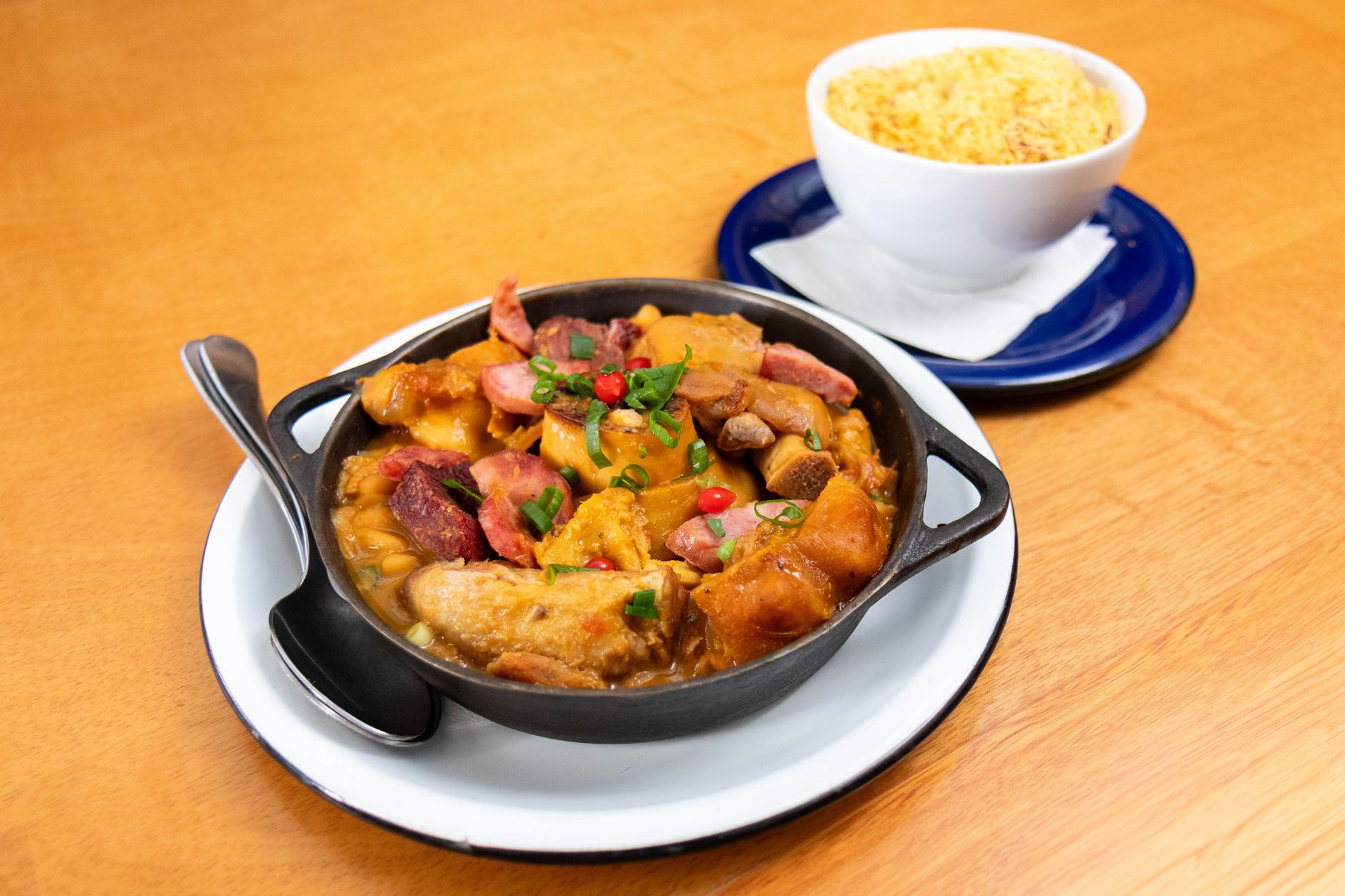
Feijoada
A rich, slow-cooked black bean stew with various cuts of pork and beef, served with rice, collard greens, orange slices, and farofa (toasted cassava flour). Head to Bar do Mineiro in the historic Santa Teresa neighborhood of Rio de Janeiro. Expect to pay $15 to $30 USD.
Moqueca Baiana
A fragrant, slow-cooked seafood stew made with fish or shrimp, coconut milk, bell peppers, tomatoes, coriander, and a heavy splash of earthy azeite de dendê (palm oil). Try it at Restaurante Yemanjá in Salvador, Bahia, for $16 to $30 USD.
Traditional Savory Açaí
Unlike the sweet, frozen, guaraná-syrup-blended bowls popular in Rio and globally, traditional Amazonian açaí is served thick, unsweetened, bitter, and warm, paired with fried fish, dried shrimp, or tapioca pearls. Find it at Ver-o-Peso Market in Belém, Pará, for $3 to $8 USD.
This occurs in nightclubs, bars, and street parties in Rio (especially Lapa and Ipanema) and dating app meetups. Never accept unsealed drinks from strangers, watch your drink being poured by the bartender, and never leave your glass unattended. If using dating apps, meet in highly public, well-lit places and do not go back to private residences on the first night.
Beach Distraction Theft
This is common on Copacabana, Ipanema, and Leblon beaches in Rio. Do not bring valuables (passports, laptops, expensive cameras, excess cash) to the beach. Bring only a towel, a small amount of cash, and one phone. Never leave your belongings unattended when swimming; sit near busy lifeguard stations (postos) and watch out for fake vendors who distract you while an accomplice snatches your bag.
Card-Machine Swap and Skimming
This happens with street vendors, taxi drivers, and standalone sidewalk ATMs in major cities. Always use contactless (NFC) payments like Apple Pay or Google Pay, which are widely accepted. Never let a vendor take your card out of sight, and double-check the amount on the screen before tapping or inserting. Only use ATMs located inside secure bank branches or shopping malls.
Logistics: Navigating Brazil Like a Pro
When arriving at Rio’s Galeão (GIG) or São Paulo’s Guarulhos (GRU), avoid unofficial “transfer” touts in the arrivals hall. Instead, use official pre-paid taxi desks inside the terminal or request a ride via Uber or 99 (the local ride-hailing app) from designated rideshare pickup zones. A ride from GIG to Copacabana typically costs $12 to $20 USD (R$60 to R$100).
Brazil is highly digitized; credit and debit cards are accepted everywhere, even by beach vendors selling coconuts. However, the local instant payment system, Pix, is ubiquitous but requires a Brazilian bank account and CPF. Tourists should carry a small amount of cash (Reais) for emergencies or remote national parks, but rely on international cards for 95% of transactions.
Tipping is not a standard part of Brazilian culture. However, restaurants almost always add a 10% (sometimes 12-13%) service charge (“serviço”) to the bill. While technically optional, it is customary to pay it. Taxi drivers do not expect tips, but rounding up the fare to the nearest 5 or 10 Reais is appreciated.
Staying Connected: The CPF Trap
Buying a local physical SIM card is notoriously difficult for tourists because registration requires a CPF (Brazilian Tax Number). Tourists must visit an official operator store (like Vivo, Claro, or TIM) with a physical passport to bypass this requirement, as online or newsstand activation will fail without a CPF. Local SIMs cost $10 to $25 USD at major international airports (GRU/GIG) for 10 to 20GB, or $5 to $15 USD at city phone shops.
Network coverage is excellent with 5G in all state capitals and major cities, with average download speeds reaching 125 Mbps. However, coverage can drop significantly in remote areas like the Amazon or deep within national parks. WiFi is highly reliable and fast in hotels, co-working spaces, and cafes in major urban centers like São Paulo and Rio, but spotty or non-existent in remote regions. There are no major government blocks on VPNs, social media, or messaging apps like WhatsApp, which is the primary communication tool used by almost all businesses and locals.
Local SIM
Galactic Roam eSIM
Cost
$10–$25 USD
From $8
Activation
In-store only
Instant, pre-arrival
Registration
Requires CPF or passport in-store
None
Ready on arrival
After queuing at airport
Yes
Data options
10 GB / 20 GB
1 GB / 3 GB / 5 GB / 10 GB
Frequently Asked Questions
Is Brazil safe for tourists?
Yes, but you must stay vigilant. Most crime against tourists is opportunistic theft, especially on beaches in Rio and near major transit hubs. Avoid carrying valuables, use contactless payments, and never leave your belongings unattended.
Do I need a visa to visit Brazil?
As of April 10, 2025, citizens of the US, Canada, and Australia must obtain an eVisa before traveling to Brazil. You should apply at least 2 to 3 weeks before your departure date.
How do I pay for things in Brazil?
Brazil is highly digitized, and cards are accepted almost everywhere. While locals use the instant payment system Pix, you will rely on international credit or debit cards. Keep a small amount of cash for remote areas or emergencies.
Navigating the bureaucracy of local SIM cards in Brazil is a headache you don’t need after a long flight. To bypass the CPF registration mess entirely, grab a Brazil eSIM from Galactic Roam before you leave. It activates the moment you land, letting you order an Uber from the airport without missing a beat. If you are planning to extend your South American adventure, be sure to check out our argentina travel guide, peru travel guide, or our colombia travel guide for your next destination.
Albania welcomed over 12.4 million visitors in 2025. That is roughly four tourists for every single local. The secret is officially out, and if you try to wing your trip here without a strategy, you’ll end up stuck in massive traffic jams or paying double for a basic room. I’ve spent weeks navigating the chaotic streets of Tirana and the dusty coastal roads to put together this realistic Albania travel guide. Here is how to escape the herd, bypass the lines, and actually enjoy Europe’s best-kept budget secret. If you are planning to explore more of the region, be sure to check out our bosnia travel guide and our bulgaria travel guide.
Quick Facts — Albania
Currency Albanian Lek (ALL)
Language Albanian
Time zone CET (UTC+1)
Plug type Type C & F
Best time to visit May–June or Sept–Oct
Visa Visa-free for most (90 days)
12.4M
2025 Visitors
173k+
Cold War Bunkers
270km
Wild Vjosa River
20%+
GDP from Tourism
The Reality of Albania in 2026
Visiting in the shoulder seasons of May–June or September–October is your best move. The weather is still warm, but you won’t have to fight crowds of cruise-ship day-trippers on the beaches. If you go in July or August, prepare for gridlock.
You’ll also notice concrete bunkers everywhere. Dictator Enver Hoxha built over 173,000 of them during the communist era—roughly one for every 11 people. Today, they’re quirky cafes, art galleries, or just odd concrete mushrooms in the middle of sheep pastures.
But the real natural prize is the Vjosa River. It is Europe’s first Wild River National Park, protecting 270 kilometers of free-flowing water from dams and development. It is spectacular, untouched, and worth the detour.
Things Actually Worth Your Time
The striking mosaic on the National Historical Museum in Tirana, near where your journey begins.
Bunk’Art 1 (Tirana)
Most tourists flock to Bunk’Art 2 in the city center because it’s easy to reach. Skip the crowd and head to Bunk’Art 1 on the outskirts instead—it’s a massive, 5-story underground nuclear bunker built for Hoxha in the 1970s. It’s far larger, deeply eerie, and pairs perfectly with a ride on the nearby Dajti Ekspres cable car.
While this photo shows Shkodër’s Rozafa Castle, Albania’s ancient ruins are scattered across dramatic landscapes from north to south.
Butrint National Park (near Sarandë)
This UNESCO World Heritage site features incredibly preserved Greek, Roman, and Byzantine ruins inside a lush wetland forest. To beat the massive cruise ship crowds crossing over from Corfu, arrive exactly when the gates open at 8:00 AM. Don’t miss the ancient hand-cranked wooden cable ferry at the entrance to cross the Vivari Channel.
The stone architecture of Gjirokastër, nestled against the dramatic Albanian mountains.
Gjirokastër Castle (Gjirokastër)
Overlooking the UNESCO-listed ‘Stone City’, this is one of the largest castles in the Balkans. Deep inside its vaulted stone galleries, you’ll find a captured 1957 US Air Force Lockheed T-33 training plane and a cold-war tunnel network. Bring a small flashlight—some of the best corners are completely pitch black.
What to Eat (And Where)
Albanian food is heavy, comforting, and incredibly cheap. You can easily eat like royalty for under $15 a day if you avoid the tourist-trap beach clubs.
A bubbling, freshly baked traditional clay pot dish, similar to Tavë Kosi.
Tavë Kosi
This is Albania’s national dish—a rich baked casserole of tender lamb, rice, and a savory custard made of yogurt, eggs, garlic, and oregano. Head to traditional tavernas in Elbasan (its birthplace) or Oda Restaurant in Tirana to try it for $5.50 to $8.50.
Flaky, golden-brown layers of freshly baked byrek filled with savory spinach.
Byrek me Spinaq / me Gjizë
A flaky, multi-layered filo pastry pie filled with spinach or salted curd cheese (gjizë). Grab it from local corner bakeries (byrektore) in Tirana or Shkodër for a dirt-cheap breakfast costing $0.80 to $1.50.
A traditional Albanian spread served with fresh, crusty bread.
Fërgesë Tirane
A thick, savory dip made from sweet bell peppers, tomatoes, onions, and salted curd cheese, baked and served bubbling hot in a traditional clay pot. Find it around Tirana’s New Bazaar (Pazari i Ri) for $3.00 to $5.00.
Safety & Scams to Avoid
While Albania is incredibly welcoming, the sudden boom in tourism has brought out a few bad actors. Don’t let your guard down entirely.
The Plainclothes Police Scam
In Skanderbeg Square and central Tirana, fake plainclothes officers might ask to inspect your wallet or passport for “counterfeit currency.” Never hand over cash or documents on the street. Insist on walking to the nearest official station, ask for a badge number, or call 129.
The Friendly Local Drink Scam
In Tirana’s Blloku neighborhood, a friendly stranger might strike up a conversation and invite you to a “great local bar.” You’ll be hit with an astronomical bill (often hundreds of euros) enforced by aggressive bouncers. Politely decline unsolicited bar invites and pick your own spots.
Taxi Overcharging
Unlicensed street taxis at Tirana International Airport (TIA) or nightlife zones will quote inflated prices or refuse to use the meter. Only use official yellow airport taxis (which have a fixed rate of 2,000–2,500 ALL to the center) or use apps like Speed Taxi or Vrapon.
Logistics & Getting Around
Albania is heavily cash-based. Smaller guesthouses, furgons, and local tavernas only accept Albanian Lek (ALL). ATMs are everywhere, but most charge high transaction fees up to 700–800 ALL ($7–$8) per withdrawal. Look for Credins Bank ATMs, which historically have lower or no fees for foreign cards.
How to master the furgon system — step by step
1
Head to the terminal early Albania has no centralized train system. Go to Tirana’s South and West Bus Terminal before 9:00 AM.
2
Ask drivers directly There are no formal national timetables. Shout your destination and drivers will point you to the right minibus.
3
Pay in cash Furgons cost between €3 and $15 depending on the distance. They only depart when full, so be patient.
Frequently Asked Questions
Is Albania safe for solo travelers?
Yes, Albania is generally very safe, and violent crime against tourists is extremely rare. Your biggest risks are petty scams in central Tirana and aggressive driving on rural roads. Just keep your wits about you, refuse unsolicited bar invitations, and you’ll be fine.
Do I need to carry cash in Albania?
Absolutely. While high-end hotels and restaurants in Tirana accept credit cards, cash is king everywhere else. You’ll need Lek for furgons, traditional tavernas, and rural guesthouses. Always carry at least 5,000 ALL on you.
What is the best way to get around Albania?
For flexibility, renting a car is best, though local driving can be chaotic. If you are on a budget, you’ll rely on furgons (minibuses). They don’t have fixed schedules but connect almost every major town for under $15.
Stay Connected Without the Hassle
One major detail to remember: Albania is not part of the EU or EEA, so your standard European roaming plans won’t work here. If you rely on your home carrier, you’ll get hit with massive roaming fees. Buying a physical SIM card at Tirana Airport is an option, but it costs between $24 and $41, requires showing your passport, and the queues are brutal. Plus, you might have to manually configure your APN settings just to get data. Save yourself the headache and grab an Albania eSIM from Galactic Roam before you fly. It connects instantly to local networks on arrival, letting you navigate the furgon terminals without missing a beat.
Amsterdam Dance Event 2026: How to Survive the World’s Biggest Club Festival
Amsterdam has 900,000 residents, but for five days in October, over 500,000 electronic music fans completely take over the city.
If you think you can just roll up to the 30th anniversary of the Amsterdam Dance Event starting October 21, 2026, and wing it, you are in for a brutal wake-up call. I’ve navigated this beautiful, chaotic madness multiple times, and I know exactly where first-timers waste hundreds of euros and get locked out of the best parties.
This realistic Amsterdam Dance Event guide will help you bypass the rookie mistakes, dodge the street scams, and actually make it to sunrise.
500K+
Visitors
3,300+
Artists
1,200+
Events
€675
Pro Pass
The Pro Pass Trap and Late-Night Transit
Let’s talk about the €675 Pro Pass. Many rookies buy this thinking it’s an all-access golden ticket to every single party during the day and night. It isn’t.
While it gets you into the daytime conferences, popular night-time festival events operate on a strict “one-in, one-out” capacity limit. If a venue is full, you are staying outside, pass or no pass. Plan your must-see sets early and get to the venues before peak hours.
If you do buy the Pro Pass, activate your free 5-day GVB public transit pass immediately upon receipt to save on travel costs. But remember that standard trams and metros stop running around 00:30. After that, you’ll have to rely on night buses, rental bikes, or expensive taxis to jump between venues.
The Venues: Where to Go and How to Survive
ADE takes over more than 300 unique venues across the city. Here are three iconic spots you’ll likely end up at, along with the survival hacks you need for each.
The historic circular Gashouder venue at Westergas
Gashouder (Westergas)
This circular former gasworks features a pillar-free iron ceiling and hosts massive techno events with 360-degree laser shows. It gets incredibly hot and humid inside due to the crowd and pyrotechnics. Dress in light layers, and use the lockers located *outside* the main dome structure to store your heavy coats—the indoor locker queue can take up to 45 minutes after peak entry.
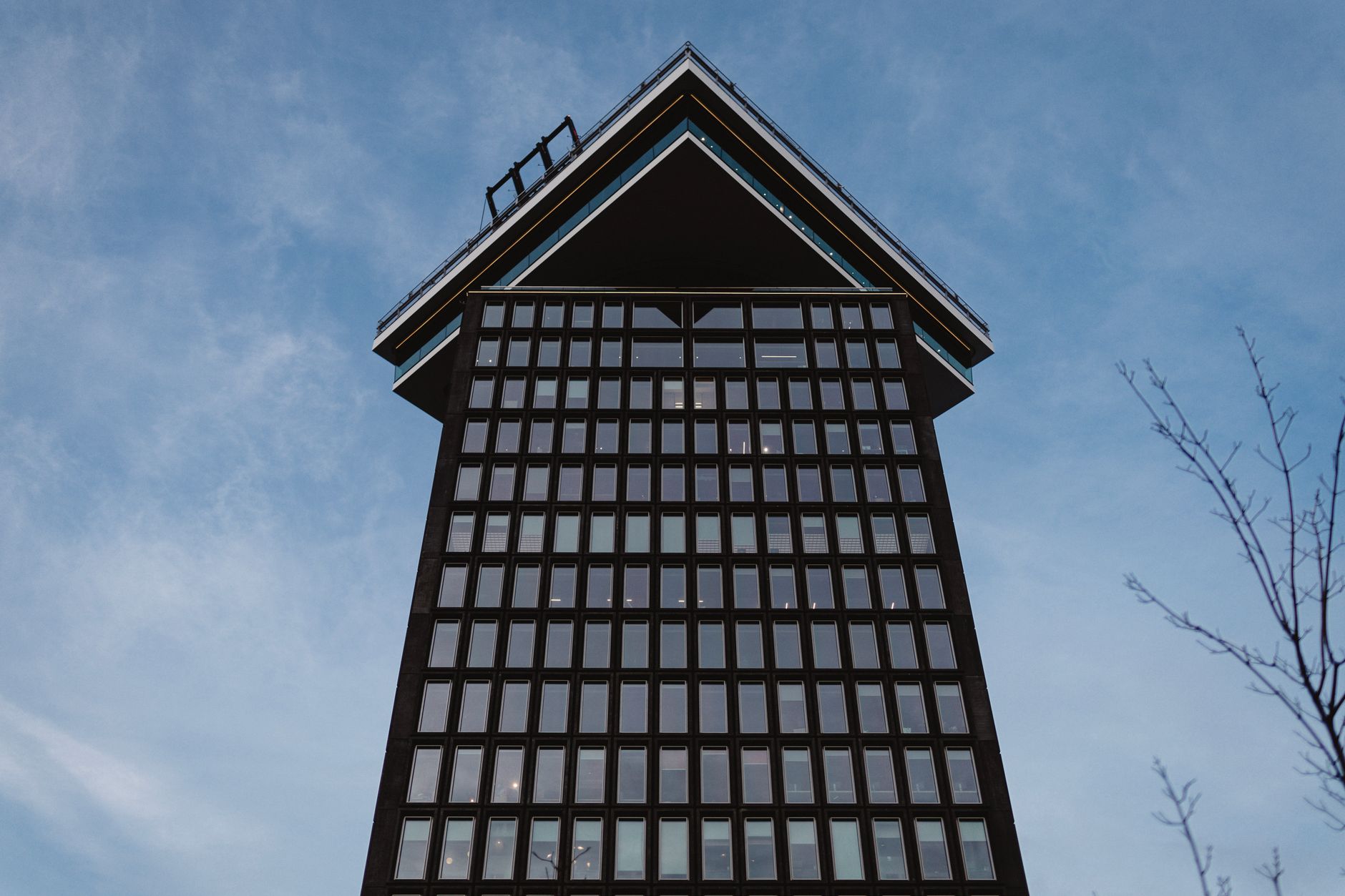
The A’DAM Tower in Amsterdam-Noord, home to The Loft
The Loft (A’DAM Tower)
Located on the 16th floor of the A’DAM Tower in Amsterdam-Noord, this venue hosts exclusive sunrise and sunset sessions with floor-to-ceiling city views. To get here, take the free 24/7 ferry from behind Centraal Station to Buiksloterweg, but expect long queues during peak hours. Tickets sell out in seconds, so set up alerts on TicketSwap weeks in advance.
The historic facade of Paradiso near Leidseplein
Paradiso
A converted 19th-century church near Leidseplein featuring stained-glass windows and excellent acoustics. The main hall has a wrap-around balcony. If the main floor gets too packed or hot, head up to the second-level balcony for better ventilation and a perfect bird’s-eye view of the DJ booth.
What to Eat Between Sets
You can’t dance for five days straight on an empty stomach. Skip the generic kebab shops and fuel up on real Dutch street food instead.
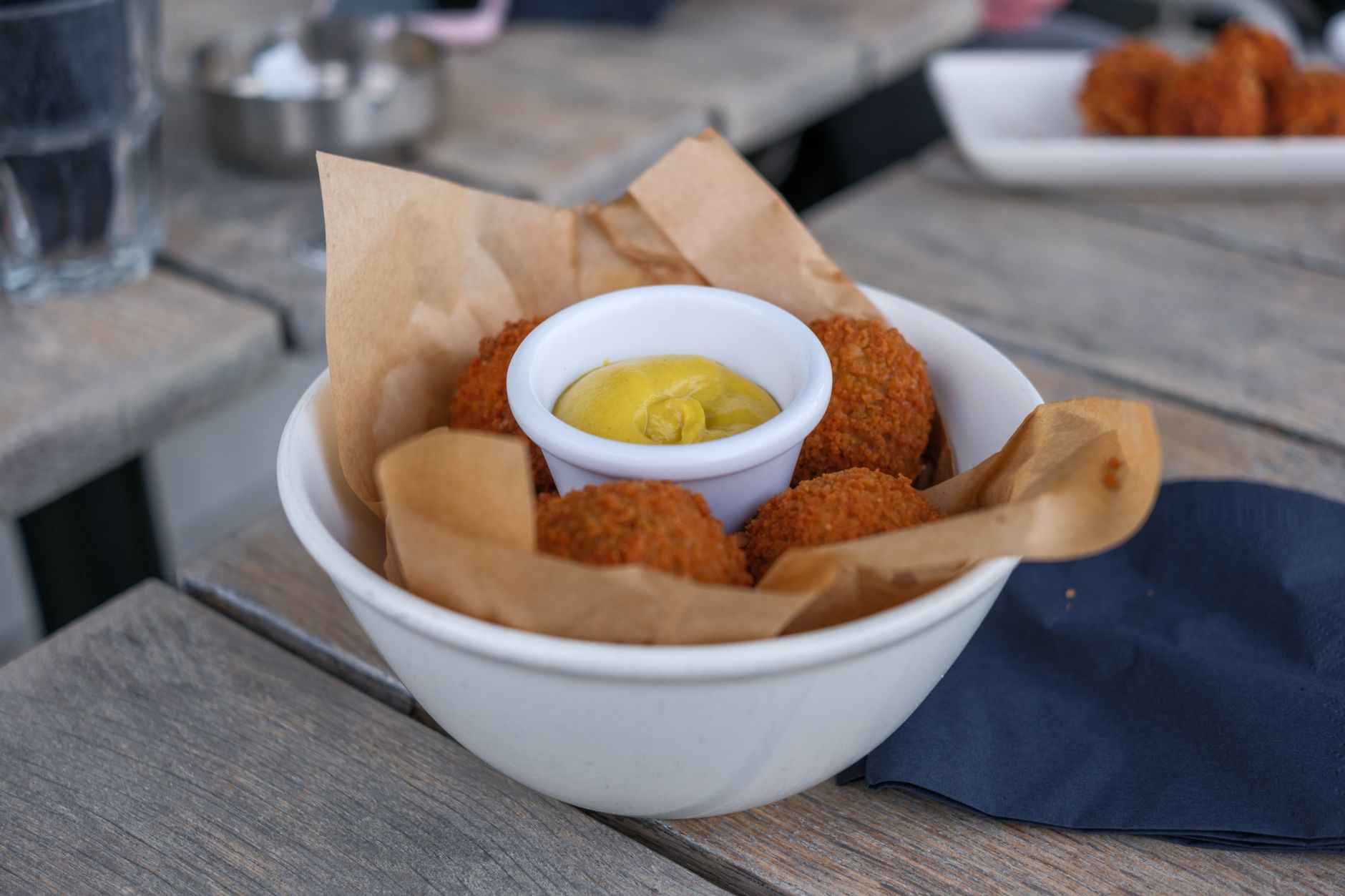
Crispy bitterballen served hot with mustard
Bitterballen
These deep-fried, breaded spheres are filled with a piping hot, savory beef or veal ragout and served with mustard. Grab them at Café Hoppe on Spui (a historic brown café from 1670) or De Ballenbar inside the Foodhallen in Oud-West for €5.50 to €12.00.
Traditional raw herring served with onions and pickles
Haring (Raw Herring)
This is raw herring cured in salt, served cold with chopped raw onions and gherkins. Get it for €4.00 to €5.00 at Stubbe’s Haring, a legendary open-air fish stall on the Singel canal bridge near Haarlemmerstraat.
Safety: Scams and Local Laws
Amsterdam is generally safe, but during ADE, opportunists flock to the crowds. Here is how to keep your money and your health intact.
Fake Taxis at Transit Hubs
Outside Schiphol Airport arrivals and Amsterdam Centraal Station, unlicensed drivers will aggressively approach you offering “cheap” rides. Ignore them completely. Only follow the official blue signs to the designated taxi ranks outside, or use official ride-hailing apps like Uber or Bolt.
Street Drug Scams
In the Red Light District (De Wallen) and Rembrandtplein, aggressive street dealers will offer you “coke” or “ecstasy.” These are almost always fake, dangerous substances (like white heroin sold as cocaine) or baking soda. If you choose to use substances, utilize the free, anonymous drug testing services provided by the GGD, and look for “Celebrate Safe” hubs at venues.
Bike Lane Collisions and Fines
Never walk in the reddish-asphalt bike lanes—local cyclists ride fast and will not hesitate to crash into you. Also, holding your phone while riding a bicycle carries a hefty €140+ fine. Keep it in your pocket until you pull over safely.
Logistics: Transit, Cash, and Where to Stay
Getting from Schiphol Airport to Amsterdam Centraal is simple. Take the direct NS train, which runs 24/7, takes 14 to 17 minutes, and costs €4.90 one-way. Avoid buying paper tickets at the yellow machines to bypass the €1 surcharge; instead, use “OVpay” by tapping your contactless card or phone directly at the gates.
Amsterdam is virtually cashless. Many cafes, bars, and ADE venues are strictly “pin-only” and will refuse physical euros. Tipping is not mandatory since a 15% service charge is legally included in your bill, but rounding up to the nearest €5 is appreciated for good service.
For accommodation, stay in Amsterdam-Noord near the ferry for cheaper rates and proximity to venues like Shelter and Lofi. De Pijp is another great option, well-connected by Metro Line 52. If you are on a budget, book hostels like ClinkNOORD or Flying Pig Uptown early.
Frequently Asked Questions
What is the cheapest way to get from Schiphol Airport to the city center?
The direct NS train is the cheapest and fastest option. It runs 24/7, takes about 14 to 17 minutes, and costs €4.90 one-way when you tap in and out using contactless payment via OVpay.
Can I use cash at Amsterdam Dance Event venues?
No, Amsterdam is almost entirely cashless. Most ADE venues, bars, and local cafes are strictly “pin-only” and will not accept physical euro notes or coins.
How do I avoid getting fined while riding a bicycle in Amsterdam?
Never hold your phone while riding a bicycle, as police actively issue €140+ fines for this. Always stay in the designated reddish-asphalt bike lanes and never stop in the middle of them to take photos.
Where is the best area to stay for ADE?
Amsterdam-Noord is highly recommended because it is close to major venues like Shelter and Lofi, and offers cheaper accommodation. De Pijp is also excellent due to its lively food scene and direct connection via Metro Line 52.
Staying Connected in Amsterdam
You’ll need reliable mobile data to load digital tickets, navigate transit apps, and use OVpay smoothly at train gates. While local SIM cards cost between €10 and €40, airport kiosks are heavily marked up, and queuing up after a long flight is a waste of your party time. The local networks like KPN and Vodafone offer exceptional 5G coverage, even inside crowded concrete venues, but you must ensure your phone is unlocked before you travel.
To avoid the hassle of swapping physical cards, grab a Netherlands eSIM from Galactic Roam before you leave. It connects instantly to the top local networks the moment you land, keeping you online so you can coordinate with your crew and find the next afterparty without missing a beat.
Turkey welcomed over 56 million international visitors in 2024, and most of them made the exact same rookie mistakes. I’ve spent years navigating Istanbul’s chaotic streets, dodging aggressive carpet sellers and overpriced tourist traps. This practical istanbul travel guide will help you escape the herd, bypass the lines, and experience the city like a local in 2026. Let’s get into what is actually worth your time.
Quick Facts — Istanbul
Currency Turkish Lira (TRY)
Language Turkish
Time zone GMT+3
Plug type Types C and F
Best time to visit April–May or September–October
Visa E-Visa required for some (check official portals)
The Sights: What is Worth Your Time (and What to Skip)
Most tourists spend their entire trip standing in lines. Don’t be one of them. Istanbul’s history is massive, but your patience isn’t.
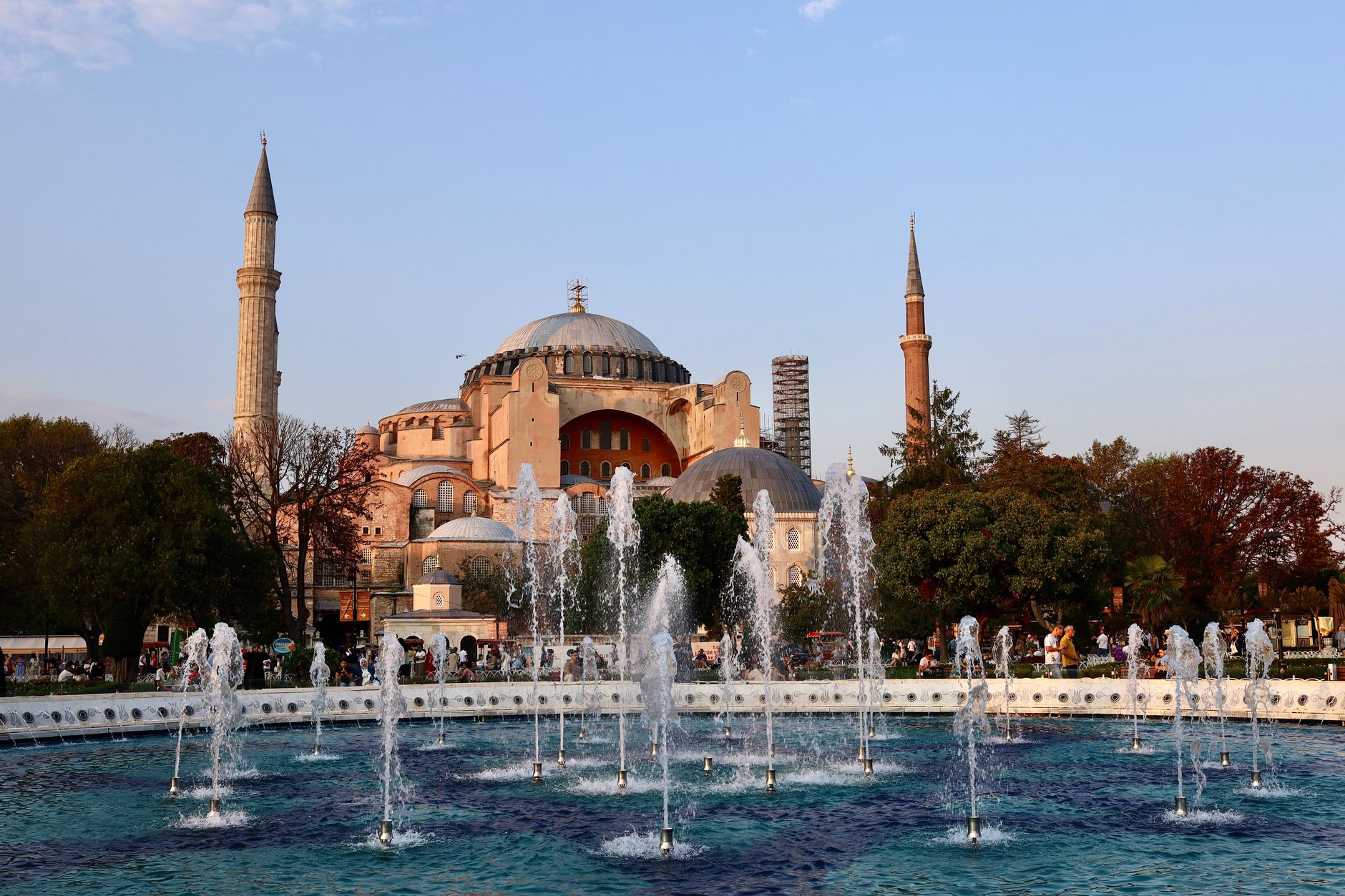
Hagia Sophia (Ayasofya)
You can’t enter the ground floor for free anymore—it is now €25 for foreign tourists, and you are restricted to the upper gallery. Go between 4:00 PM and 5:00 PM to miss the worst of the tour groups. Women must cover their heads, so bring your own scarf to avoid paying inflated prices for disposable ones at the door.
Basilica Cistern (Yerebatan Sarnıcı)
This subterranean reservoir is incredibly atmospheric, but the ticket lines outside are brutal. Skip them entirely by purchasing your tickets online through the official Passo app or muze.gov.tr. Go during the late-night opening hours—it stays open until 10:00 PM and is much quieter then.
Topkapi Palace (Topkapı Sarayı)
The Harem section requires an extra ticket, but it is the only part of the palace that is genuinely spectacular. Arrive at 9:00 AM sharp, bypass the main exhibitions, and walk straight to the Harem. You’ll get the beautifully tiled corridors to yourself before the crowds arrive.
Bosphorus Public Ferry (Şehir Hatları)
Do not waste money on private dinner cruises or pushy tour boats at the docks. Use your Istanbulkart to board a municipal Şehir Hatları ferry from Eminönü to Ortaköy or Kadıköy. It costs less than $2 USD and offers the exact same panoramic views of the waterfront mansions.
Street Food: Where to Eat
Istanbul is a world-class food city, but the tourist hubs are packed with mediocre, overpriced traps. Here is what to eat and where to find the real deal.
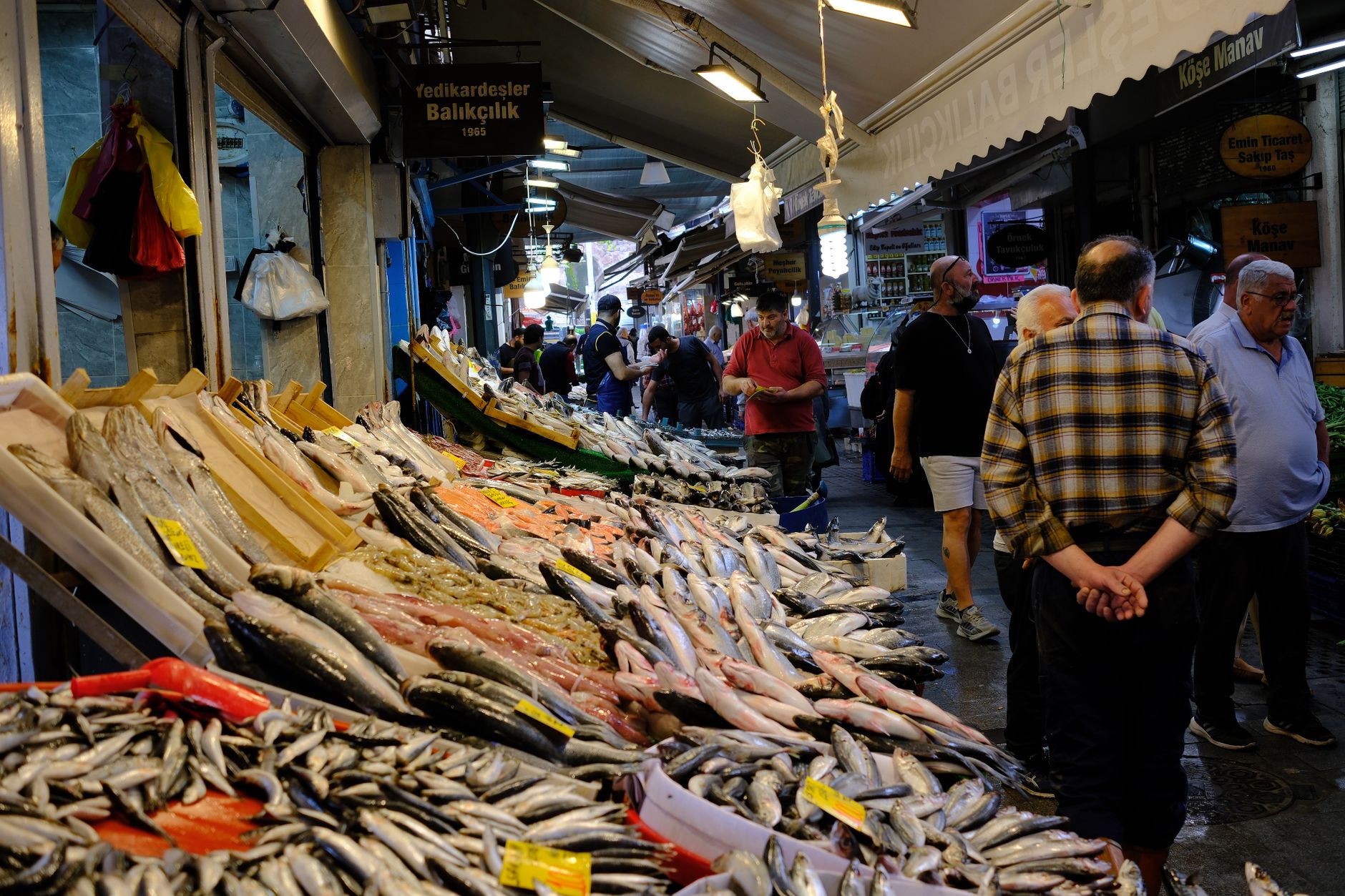
Balık Ekmek (Karaköy Style)
Skip the touristy, bobbing boats at Eminönü pier—they often use frozen fish. Cross the Galata Bridge to the Karaköy side and find the small street-food stalls behind the Karaköy Fish Market (like Sokak Lezzeti). They bone the fresh mackerel by hand and wrap it in a spiced dürüm wrap for $4.50 to $8.00.
Islak Burger (Wet Burger)
This is a seasoned beef slider drenched in garlicky tomato sauce and steamed inside a heated glass chamber. It sounds strange, but it is the ultimate late-night food. Head to Kızılkayalar in Taksim Square to get one for $2.50 to $4.50.
Cağ Kebabı
This is the horizontal ancestor of the modern döner. Marinated lamb is stacked on a horizontal spit, wood-fired, and sliced onto small skewers. Go to Şehzade Cağ Kebap in Sirkeci for the best version in town, costing $6.00 to $8.00 per skewer.
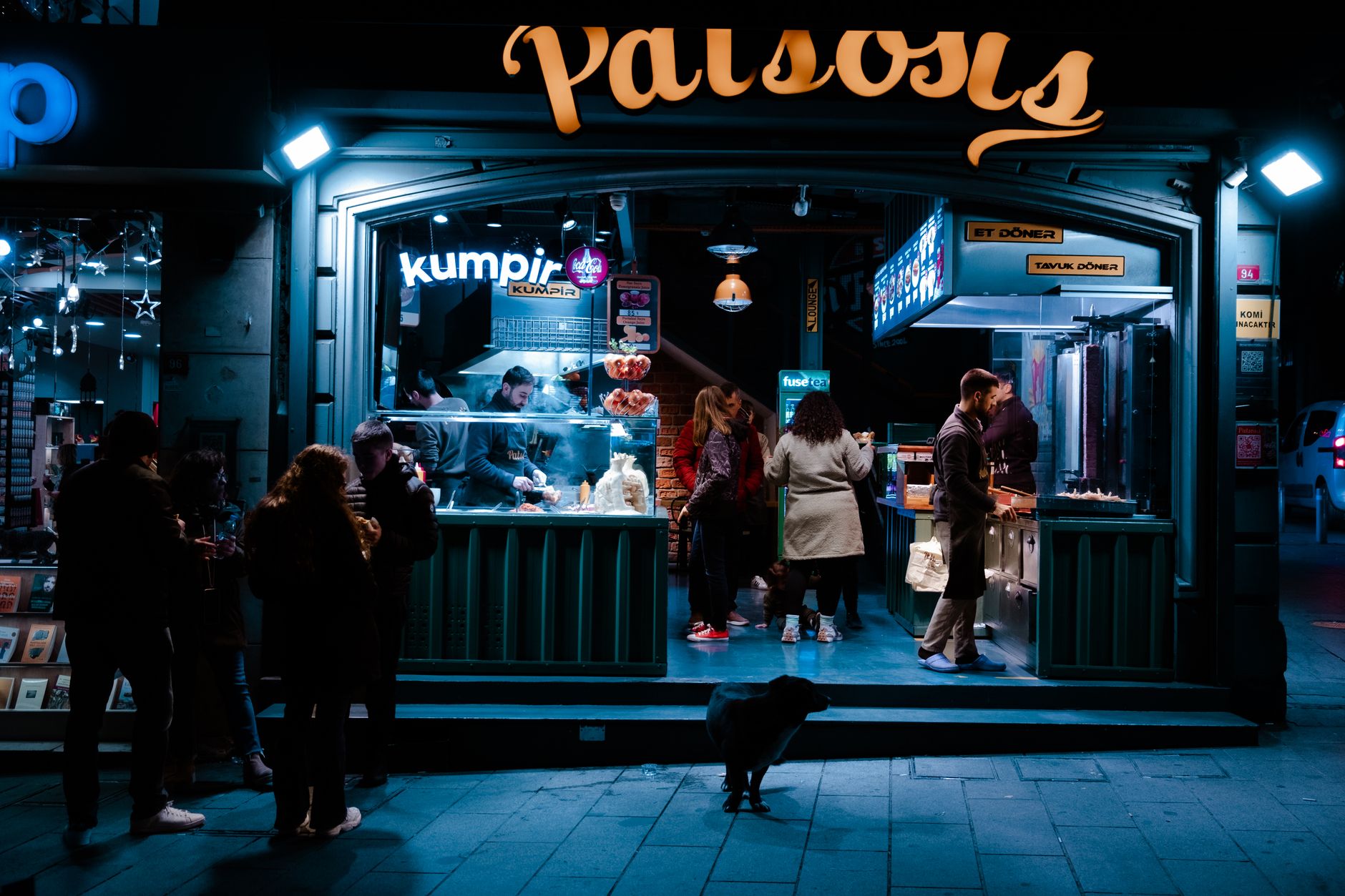
Kumpir
A massive baked potato mashed with butter and kaşar cheese, then piled high with olives, pickles, corn, and sausage. Buy one from the waterfront stalls in Ortaköy, right next to the mosque, for $8.00 to $15.00.
Scams to Avoid
Istanbul is generally safe, but the tourist areas are playground territory for professional hustlers. Keep your wits about you.
The Shoe Shine Brush Drop
A shoe shiner walking ahead of you in Sultanahmet or Taksim will “accidentally” drop his brush. If you pick it up, he will insist on giving you a “free” shine to thank you, then aggressively demand an outrageous fee. Ignore the dropped brush and keep walking.
The “Let’s Have a Drink” Scam
A friendly local approaches solo travelers around Istiklal Street and invites them to a “great local bar.” Once there, you are hit with a bill for thousands of dollars, and large bouncers will escort you to an ATM. Never go to a second location with a stranger.
Taxi Bill Swapping
Drivers may claim their meter is broken or swap your 500 TL note for a 50 TL note, claiming you underpaid. Avoid yellow taxis entirely. Use public transit or book rides through Uber or BiTaksi where fares are tracked digitally.
Fake Metro Card “Helpers”
Scammers hang around transit ticket machines offering to help you load your Istanbulkart. They will pocket your cash and load their own card instead. Decline all help; the machines have clear English menus.
How to Navigate Transit and Neighborhoods
Mastering Istanbul Transit — step by step
1
Get an Istanbulkart The physical anonymous card costs 165 TL in 2026. Multiple people can share a single card—just tap it once for each passenger. A single journey costs about 46.20 TL.
2
Choose your airport route From Istanbul Airport (IST), take the M11 Metro line to Gayrettepe to reach the center. From Sabiha Gökçen (SAW), use the M4 Metro line. Havaist and Havabus shuttles are also reliable road options.
3
Pick the right base Stay in Cihangir (Beyoğlu) for an artsy vibe near the tram, or Moda (Kadıköy) on the Asian side for a local feel. Avoid staying in Sultanahmet—it is dead at night and packed with tourist traps.
The Connectivity Catch
Getting online in Turkey has some unique hurdles. If you buy a local physical SIM card at the airport, expect to pay $35 to $60 for tourist packages. Worse, foreign mobile devices are subject to a strict 120-day Imei registration rule; stay longer than 120 days, and your phone gets blocked on all national networks unless you pay a massive tax.
There is another catch: since July 2025, Turkey’s telecommunications regulator (BTK) has blocked in-country access to many international eSIM websites and apps. This means you cannot easily download a digital SIM once you land. You must purchase and install your travel eSIM before you cross the border.
Local SIM
Galactic Roam eSIM
Cost
$35.00–$60.00
From $8
Activation
Physical swap at kiosk
Instant, pre-arrival
Registration
Passport required
None
Ready on arrival
No (must queue)
Yes
Data options
Fixed tourist packages
Flexible tiers
To avoid the airport queues and the government web block, grab a Turkiye eSIM from Galactic Roam before you depart. It functions just like a universal travel adapter—you set it up at home, and the second your plane touches down in Istanbul, you are connected to local networks without having to deal with blocked websites or overpriced airport kiosks.
Cihangir in Beyoğlu is best for first-timers who want a quiet, artsy neighborhood close to the main tram line. If you want a trendy, local experience away from the tourist crowds, stay in Moda on the Asian side. Avoid staying in Sultanahmet, as it is overpriced and empty after dark.
Do I need cash in Istanbul?
Yes, you must keep some Turkish Lira on hand. While cards are accepted at 95% of shops and restaurants, you will need cash for street food stalls, tipping, and loading your physical Istanbulkart at transit machines.
How do I avoid taxi scams in the city?
The easiest way to avoid taxi scams is to use public transit, which is faster anyway due to heavy traffic. If you must use a car, book through Uber or BiTaksi so your fare is tracked, or make sure the driver turns on the meter before you move.
Paris welcomed 49.1 million visitors in 2025, and most of them made the exact same mistake. They booked generic hotels near overhyped landmarks and spent their entire trip dodging selfie sticks. I have navigated the city’s winding streets through fashion weeks and summer heatwaves, and this practical Paris neighborhood guide will help you bypass the tourist traps. With Paris Fashion Week kicking off on September 28, 2026, finding the right base is more critical than ever.
49.1M
2025 Visitors
2.8M
US Travelers
47
Days Over 30°C
120
Max Airbnb Days
Decoding the Paris Escargot Layout
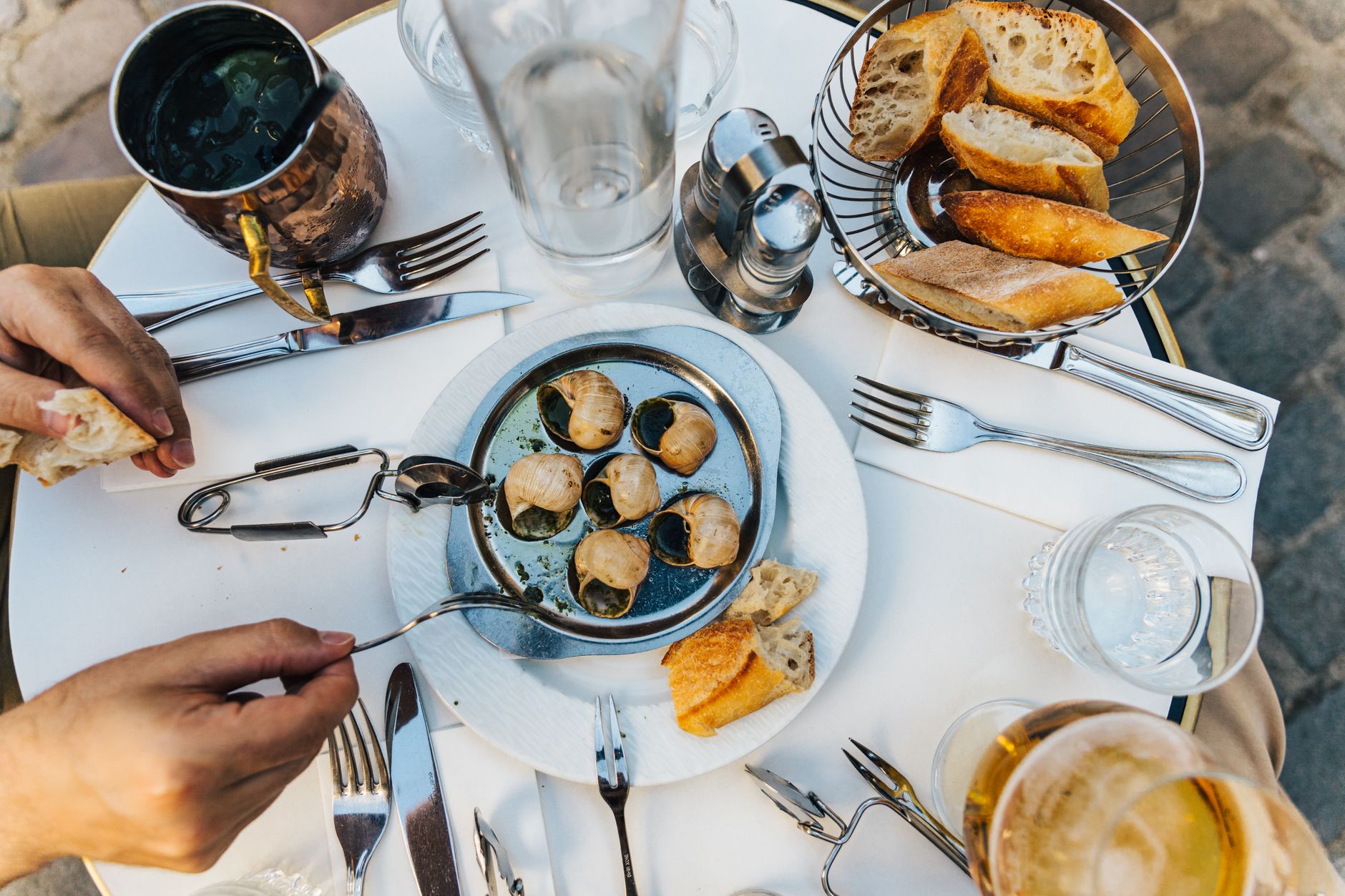
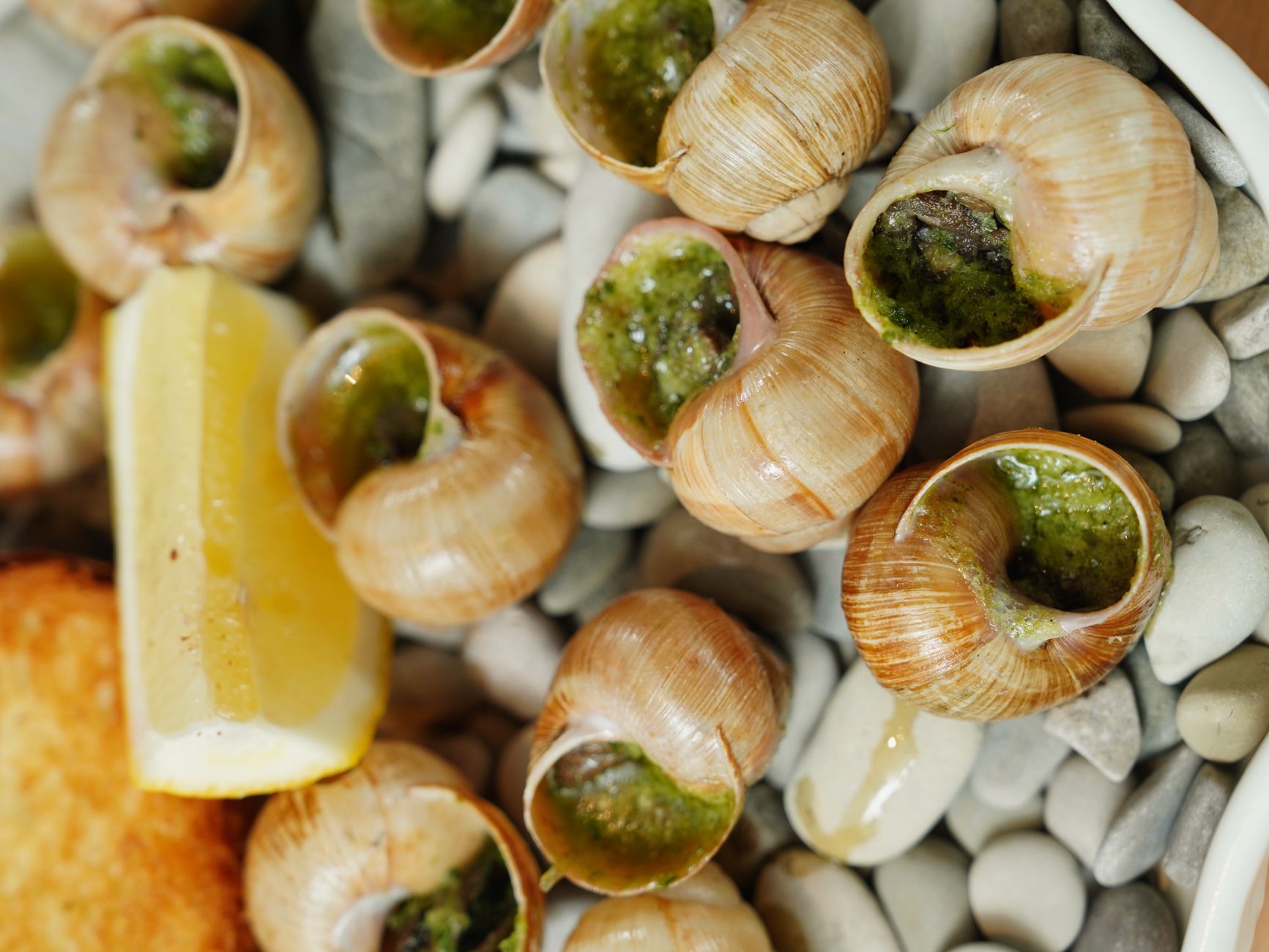
Paris’s 20 arrondissements are arranged in a clockwise spiral starting from the city center and expanding outward. Locals refer to this as the “escargot” pattern because it looks exactly like a snail shell. The lower the number, the closer you are to the Seine.
If you want to navigate like a pro, track down the official Ratp “grand plan lignes avec rues” map. Unlike standard transit maps, this one overlays the metro lines directly onto actual city streets with major landmarks. It makes understanding the physical layout of the city much easier.
But don’t expect to find cheap Airbnbs easily. Under France’s “Le Meur” law, primary residences can only be rented on short-term platforms for a maximum of 120 days per year. This tight limit on tourist rental supply makes booking a proper hotel early absolutely essential.
Three Neighborhoods Worth Your Time
The 4th Arrondissement: Le Marais & Notre-Dame
Notre-Dame Cathedral
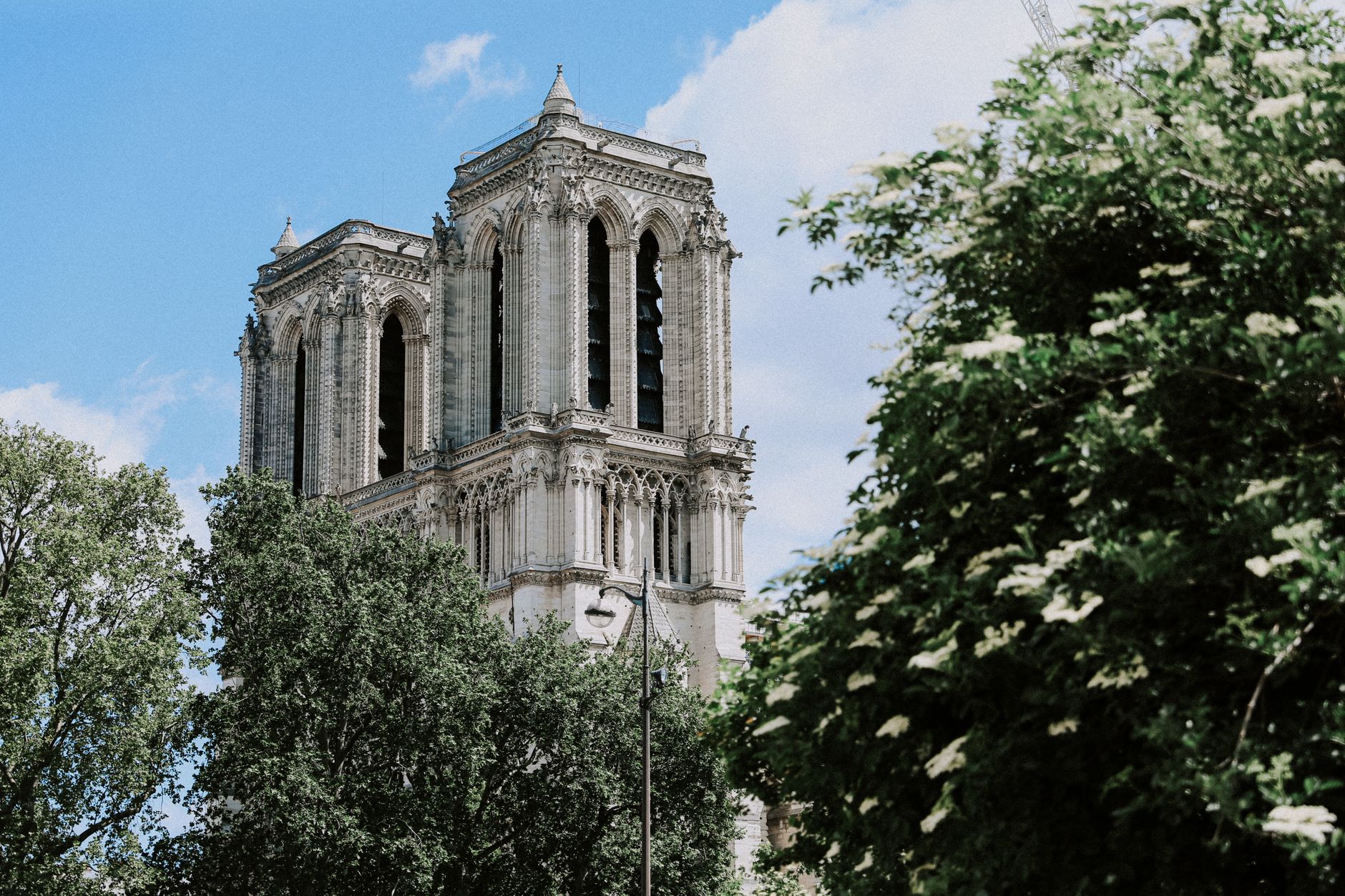
Step inside to see the newly cleaned, gleaming white limestone interior and the massive 13-ton Emmanuel bell. Free timed reservations open exactly 48 hours in advance at midnight Paris time on the official website. If you miss out, attend a church service to bypass the main queue entirely.
Le Marais is historic, central, and packed with medieval architecture. It’s also home to Notre-Dame, which now features the Olympic victory bell in its South Tower. Walk the narrow alleys here to find independent boutiques and excellent Jewish bakeries.
The 19th Arrondissement: Parc des Buttes-Chaumont
Parc des Buttes-Chaumont
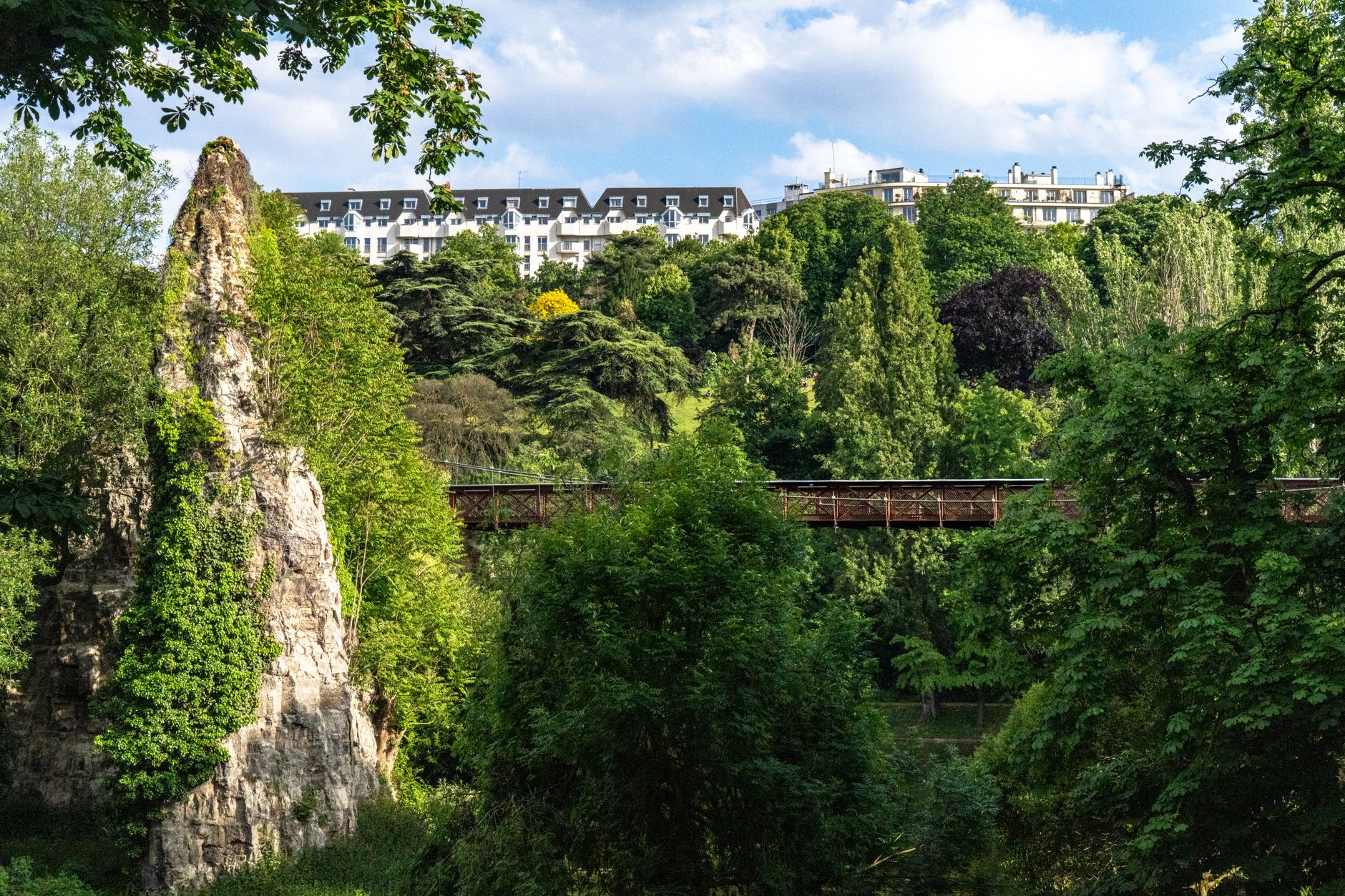
This dramatic, hilly park is built on a former gypsum quarry. It features a suspension bridge, a 30-meter-high waterfall, and a temple perched on a cliff. Skip the crowded central lawns and head to the Rosa Bonheur guinguette inside the park for local wine and tapas.
The 19th is a residential haven that most tourists ignore. It’s hilly, green, and feels entirely different from the flat boulevards of central Paris. Walk up to the Temple de la Sibylle for a sunset view of Montmartre that you won’t have to share with thousands of others.
The 9th Arrondissement: South Pigalle & Musée de la Vie Romantique
Musée de la Vie Romantique
This quiet museum is set in a 19th-century greenhouse and villa dedicated to the Romantic era. It features works by George Sand and Ary Scheffer. The real draw is the hidden courtyard café run by Rose Bakery, surrounded by rose bushes and lilac trees.
South Pigalle, or SoPi, has transitioned from a gritty red-light district into a trendy neighborhood. It’s packed with cocktail bars, artisanal bakeries, and quiet courtyards. It’s the perfect base if you want to be close to Montmartre without the tourist crowds.
What to Eat: Real Parisian Fuel
Jambon-Beurre
This classic street food sandwich features a fresh, crusty baguette, high-quality demi-sel butter, and traditional Parisian ham. Grab one at Caractère de Cochon in the Marais for €6 to €9.
Pistachio Escargot Pastry
A spiral-shaped viennoiserie pastry layered with rich pistachio paste and chocolate chips. Get the legendary version at Du Pain et des Idées in the 10th Arrondissement for €3.50 to €5.
Traditional Bouillon Fare
Classic French comfort food like Oeuf Mayo or Boeuf Bourguignon served in grand Art Nouveau dining halls. Head to Bouillon République or Le Petit Bouillon Pharamond for a full meal costing €10 to €18.
Scams to Avoid: Keep Your Wallet Safe
The Friendship Bracelet Scam
On the steps of Sacré-Cœur in Montmartre, vendors will try to tie a string around your wrist and demand €20. Keep your hands in your pockets and walk past without stopping.
The Gold Ring Scam
Along the Seine or near the Tuileries Garden, someone will pretend to pick up a “gold” ring and ask if you dropped it. Ignore them completely; it’s a distraction for pickpockets.
The Petition/Clipboard Scam
Groups of teenagers near the Louvre or Eiffel Tower will ask if you speak English while holding clipboards. They want you to sign a fake petition while an accomplice unzips your bag.
Metro Door Pickpockets
On Lines 1, 2, 4, and RER B, thieves target people standing near the doors right as they open. Keep your phone in an inside pocket and hold your bag in front of you.
Logistics: Getting Around Like a Local
Navigating Paris Transit — step by step
1
Airport Transit Take the RER B train from CDG to central Paris for €11.80. It takes 35 to 45 minutes and bypasses highway traffic entirely.
2
Navigo Easy Card Buy a reusable card at any station for €2 and load it with a “carnet” of 10 digital rides for €17.35. It is much cheaper than buying single paper tickets.
3
Tipping Norms Service is always included in your bill. Leave €1 to €2 per drink or €5 for an exceptional dinner, but a 15-20% tip is not expected.
Frequently Asked Questions
How do I get from Charles de Gaulle airport to central Paris?
The RER B train is the fastest option. It costs €11.80 and takes about 40 minutes to reach Gare du Nord. Official taxis offer flat rates of €56 to the Right Bank and €65 to the Left Bank.
Is tipping expected in Parisian restaurants?
No. Service is legally included in the price of your meal. Leaving a few euros is a nice gesture for great service, but you do not need to calculate a percentage.
How can I avoid pickpockets on the Paris Metro?
Keep your phone out of your back pocket and hold your backpack in front of you. Be especially alert on Lines 1, 2, and 4 when the doors are opening and closing.
What is the best way to buy Paris Metro tickets?
Do not buy single paper tickets. Purchase a Navigo Easy card for €2 at any station counter and load it with 10 digital rides to save money.
Staying Connected in the City of Light
Local SIM cards cost €10 to €20 at airport shops or convenience stores (tabacs). You’ll find excellent 4G and 5G coverage throughout Paris, even inside the underground Metro stations. But older Haussmann-style buildings have extremely thick stone walls that can severely degrade indoor cellular signals.
Local SIM
Galactic Roam eSIM
Cost
€10 – €20
From $4.50
Activation
In-store registration
Instant, pre-arrival
Registration
Passport required
None
Ready on arrival
After queuing
Yes
Data options
Fixed packages
Flexible tiers
Instead of standing in line at a tabac or dealing with physical SIM cards, you can set up a France eSIM before you leave home. It connects to multiple local networks automatically, ensuring you stay online even when Haussmann’s limestone walls try to block your signal. If you plan to travel beyond Paris during the festive season, be sure to read our strasbourg christmas market guide to experience the holiday magic like a local.
During October, over 1.2 million people descend on a coastal New England town of just 44,000 residents. That is not a festival—it is a month-long siege, and if you arrive without a plan, Salem will eat you alive. I’ve navigated the chaotic streets of this historic witch city during peak season. This Salem Haunted Happenings guide will show you how to bypass the worst tourist traps, secure impossible tickets, and escape without a triple-digit parking fine. Let’s get into how you can actually enjoy the chaos starting October 1, 2026.
1.2M
October Visitors
44K
Local Residents
$16
Train Round-Trip
3x
Parking Fines
Ditch the Car: The Only Way to Arrive
Do not drive to Salem in October. Just don’t. Parking garages charge up to $50 a day and routinely fill up by 9:00 AM, leaving you to circle residential streets where parking is strictly forbidden for tourists. Salem actively deploys automated license plate readers and will tow your car instantly if you park in resident-only zones. To make matters worse, parking fines are tripled during October.
Instead, take the Mbta Commuter Rail from Boston’s North Station directly to Salem Station. The trip takes only 30 minutes and costs $16.00 for a round-trip ticket. If you want a more scenic route, board the Salem Ferry from Boston’s Long Wharf to Blaney Street. It costs $25.00–$30.00 one-way, takes 45 minutes, and drops you off just a short walk from the historic waterfront.
What is Actually Worth Your Time
The festival officially kicks off on Thursday, October 1, 2026, with the Grand Parade. Most tourists assume the parade is a Halloween night finale, but it’s actually the opening act. Here is where you should spend your time—and where you shouldn’t.
The Witch House (Jonathan Corwin House)
This is the only remaining structure in Salem with direct, physical ties to the 1692 Witch Trials. Tickets are not sold weeks in advance. Instead, they are released online daily at exactly 8:00 AM for same-day entry. You must be on the website with your payment info ready at 8:00 AM sharp, as they sell out within 2 to 3 minutes.
Chambers of Terror
Salem’s premier walk-through haunted house features movie-quality sets and live actors. While open on Halloween night, the regular line can exceed three hours. Buy a VIP ticket online to skip the main queue entirely, or call ahead to book their late-night ‘Fireside Ghost Stories’ which run after the main haunt closes at 10:30 PM.
Charter Street Cemetery & Witch Trials Memorial
The oldest cemetery in Salem contains the graves of trial judges, adjacent to the solemn memorial featuring 20 granite benches. To manage the massive October crowds, the city requires free timed-entry reservations on October weekends. Book the earliest slot at dawn or visit just before dusk when the long shadows fall over the stone benches.
The Salem Heritage Trail
This 1.5-mile self-guided trail is marked by a painted red line on the sidewalk connecting Salem’s major landmarks. Most tourists blindly follow the line during the crowded afternoon. Instead, start at the National Park Service Visitor Center on New Liberty Street at 9:00 AM to grab a physical map, and walk the trail in reverse to bypass the wave of tour groups.
Witch City Eats: Historic Sugar and Fusion Gravy
Salem’s food scene during October is as chaotic as its streets. Skip the sit-down restaurants with two-hour waits and grab these local specialties instead.
Chop Suey Sandwich
A unique mid-20th-century Chinese-American fusion dish consisting of chicken or pork stir-fried with celery, onions, and bean sprouts in a thick, salty soy-gravy, served on a hamburger bun. Grab one at Sage’s Fusion Kitchen at Salem Willows for $6.00–$10.00.
Salem Gibraltars
The first commercially manufactured candy in the United States, dating back to 1806. These are rock-hard, pillow-shaped candies flavored with lemon or peppermint that soften as they dissolve. Pick up a bag for $5.95–$8.95 at Ye Olde Pepper Candy Companie on Derby Street.
Safety, Scams, and Local Laws to Avoid
With massive crowds comes a wave of opportunistic street hustles. Keep your wits about you and watch out for these common traps.
The Curse Removal Scam
Be wary of unlicensed psychic shops and street readers around Hawthorne Boulevard and Essex Street who claim you are “cursed” or “full of evil” and demand hundreds of dollars to perform a cleansing. Under Salem city ordinances, fortune-tellers are legally only allowed to forecast the future or read the past—charging to remove curses is illegal. Always check if the psychic has a valid, city-issued Fortunetelling License.
Aggressive Street Performer Photo Traps
On the Essex Street Pedestrian Mall, street performers dressed as movie characters (like the Joker, Batman, or Pennywise) will eagerly pose for photos with you, but will aggressively demand tips immediately afterward. If you take a photo of or with them, expect to tip $5–$10. If you don’t want to pay, keep your camera down.
The ‘Hocus Pocus’ House Trap
The private residence at 4 Ocean Ave is located in an active residential neighborhood. The city strictly bans non-resident vehicles here in October and deploys automated license plate readers to instantly ticket and tow tourists who crowd the street. Walk from downtown or skip it entirely.
Strict Prop Weapon Laws
Salem police strictly enforce a ban on real or realistic-looking weapons as part of costumes. If your costume includes a sword, gun, or knife, it must be obviously fake (plastic or foam) and cannot be carried in a threatening manner. Batarangs, metal swords, and realistic replica firearms will be confiscated, and you may face a hefty fine.
The October Cell Tower Collapse
During October weekends, Salem’s cell phone towers experience extreme network congestion from over 100,000 daily visitors. Major carriers deploy temporary mobile cell towers (COWs) in Riley Plaza and Hawthorne Boulevard, but cellular data speeds still frequently drop to zero. This makes it nearly impossible to load maps, call rideshares, or use digital payment apps.
Do not rely on finding public municipal WiFi, as it is virtually non-existent or completely overwhelmed by crowds. Before you arrive downtown, download offline Google Maps and screenshot all of your tickets, train passes, and reservations. If you are traveling from abroad, a local physical SIM card will cost you $10–$30 at retail stores, but you can bypass the retail queues entirely by setting up your connection beforehand.
Frequently Asked Questions
Does Salem have a Halloween parade?
Yes, but it is not on Halloween night. The Salem Haunted Happenings Grand Parade takes place on the first Thursday of October (October 1, 2026) to kick off the month-long festival.
Are the haunted houses in Salem open on Halloween night?
Yes, major haunts like Chambers of Terror are open on Halloween night, but lines can easily exceed three hours. Buying a VIP ticket online is highly recommended to skip the wait.
Why is Salem so famous for Halloween?
Salem’s Halloween fame stems from its dark history with the 1692 Witch Trials. Over the decades, the city embraced this identity, transforming into a global hub for spooky events, historical tours, and autumn festivities.
Can I drive and park in Salem during October?
You can try, but you will regret it. Parking garages charge up to $50 a day and fill up by 9:00 AM, residential parking is strictly off-limits to tourists, and fines are tripled. Take the commuter rail instead.
Navigating Salem during its busiest month requires some tactical planning, especially when it comes to staying connected. While local prepaid SIMs cost between $10 and $30, they won’t save you from the network congestion unless you plan ahead. To keep your maps and tickets handy without dealing with physical SIM cards, grab a United States eSIM from Galactic Roam before you board the train. It keeps you connected to the strongest available network so you can navigate the crowds without a hitch.
Poland Travel Guide: How to Explore Krakow, Warsaw, and Beyond Like a Local
Everyone told me Poland was just a cheap, grey alternative to Western Europe. They were dead wrong—it is actually one of the most vibrant, historically rich, and functional countries on the continent. With over 20 million tourists arriving last year, the secret is out. This practical Poland travel guide will show you how to navigate the local quirks, dodge the tourist traps, and experience the country like an insider. If you are planning to explore more of Eastern Europe, be sure to check out our romania travel guide as well. Let’s get into the logistics first.
Quick Facts — Poland
Currency Polish Złoty (PLN)
Language Polish
Time zone Central European Time (CET)
Plug type Type C and E
Best time to visit May to September
Visa Schengen Zone (90 days)
The Non-Obvious Rules You Need to Know
Poland is incredibly safe, but it has a few legal and cultural quirks that will cost you money if you ignore them. First, jaywalking is strictly illegal. Crossing outside a designated zebra crossing or walking against a red light is actively enforced by police and city guards (Straż Miejska). Fines range from 50 PLN to 400 PLN, and they love targeting distracted tourists.
Then there is the “Dziękuję” trap. Saying “Dziękuję” (thank you) when handing cash to a waiter is culturally understood as “keep the change.” If you actually want your change back, do not say it until the money is physically in your hand.
Finally, Poland is almost entirely cashless. Even the smallest street vendors, public toilets, and mountain huts accept contactless card payments. However, card terminals rarely have a built-in tipping prompt. If you want to tip by card, you must tell the waiter the total amount you want to pay before they swipe your card (e.g., if the bill is 90 PLN, say “make it 100, please”).
What to See (and What to Skip)
Most tourists flock to the same three places in Krakow and Warsaw. Some are worth it; others require a strategy to avoid the crowds.
Rynek Underground Museum (Krakow)
This subterranean archaeological museum sits four meters below the Main Market Square. Book tickets online days in advance because entry is strictly capped. To see the medieval waterworks demonstration in action, make sure you are at that specific exhibit at the top of any hour when they activate the water flow.
Polin Museum of the History of Polish Jews (Warsaw)
Built on the site of the former Warsaw Ghetto, this museum documents 1,000 years of Jewish life. Admission is free on Thursdays, but you still need to reserve a ticket online in advance. Don’t rush through the galleries; the reconstructed roof of the 17th-century Gwoździec synagogue is the artistic masterpiece you should spend time studying.
Wieliczka Salt Mine
Located just outside Krakow, this 13th-century underground salt mine features entire chapels, chandeliers, and statues carved entirely out of rock salt. It is located 135 meters underground and is genuinely spectacular.
But the standard “Tourist Route” is often packed shoulder-to-shoulder. Skip it and book the “Miners’ Route” (Trasa Górnicza) instead. You’ll wear a jumpsuit and headlamp, enter through a different shaft, and perform actual medieval mining tasks away from the crowds.
The industrial wooden scaffolding inside the historic Wieliczka Salt Mine.
The Real Polish Food Scene
Forget high-end dining; the best food in Poland is cheap, traditional, and unpretentious. Start with an Obwarzanek Krakowski. This chewy, braided ring-shaped bread is the ancestor of the bagel. You can buy them for 2.50 to 4 PLN ($0.60–$1.00 USD) from the blue metal street carts scattered all over Krakow’s Old Town. Just ensure the cart has a blue sticker certifying it is an authentic, protected product.
For lunch, grab a Zapiekanka. This is an open-faced toasted baguette topped with sautéed mushrooms, melted cheese, and ketchup, originating from Communist-era food shortages. Get yours at the “Okrąglak” (the round former slaughterhouse) in the center of Plac Nowy in Krakow’s Kazimierz district. Stalls like “Endzior” sell them for 12 to 32 PLN ($3–$8 USD).
For dinner, find a traditional “Bar Mleczny” (Milk Bar) like Bar Mleczny Prasowy in Warsaw. Order Żurek, a sour rye soup made with fermented rye flour starter, boiled white sausage, hard-boiled eggs, and wild mushrooms. It costs around 15 to 30 PLN ($3.50–$7.50 USD) and is the ultimate comfort food.
Safety Warnings: Scams to Avoid
While Poland has low violent crime rates, tourist-targeted scams do exist in major hubs. Keep your guard up in these specific scenarios.
Strip Club Extortion
On Floriańska, Jana, and Szewska streets in Krakow, female promoters with colorful umbrellas will invite you in for “free entry.” Once inside, drinks are heavily marked up or spiked with memory-loss drugs. Bouncers will intimidate you into entering your PIN multiple times on card readers claiming the payment failed. Never enter these venues.
Fake Plain-Clothed Police Officers
Scammers posing as plain-clothed officers approach tourists near train stations, claiming to investigate counterfeit currency. They will ask to see your wallet and demand your credit card PIN. Real Polish police will never ask for your PIN or look through your wallet on the street. Demand to see their official badge (legitymacja).
Unlicensed Airport Taxis
Drivers standing in the arrivals halls at Warsaw Chopin or Krakow Airport will offer cheap rides but charge exorbitant rates once you arrive. Avoid anyone soliciting rides verbally. Only use official taxi ranks marked with clear city taxi emblems, or use ride-hailing apps like Uber, Bolt, or FreeNow.
How to Get Around
Do not rely on Google Maps for transit schedules in Poland. Download the “Jakdojade” app instead; it is the gold standard for real-time tram, bus, and metro routes. You can purchase and validate tickets directly within the app.
If you use physical paper tickets, you must validate them immediately upon boarding a bus or tram. Plain-clothes ticket inspectors frequently check and will issue a non-negotiable fine of around 200 PLN (~$50 USD) if you forgot to stamp it.
For airport transfers, skip taxis entirely. From Krakow Airport (KRK), take the direct Koleje Małopolskie train to Krakow Główny (main station) for 17 PLN (~$4.20 USD). From Warsaw Chopin Airport (WAW), take the SKM train (lines S2 or S3) directly to the center for just 4.40 PLN (~$1.10 USD).
The Perfect 5-Day Poland Itinerary
Day 1-2: Warsaw — Explore the rebuilt Old Town, visit the Polin Museum, and eat at Bar Mleczny Prasowy.
Day 3: Transit — Take the fast, comfortable 2.5-hour PKP Intercity express train south to Krakow.
Day 4-5: Krakow — Tour the Rynek Underground, eat Zapiekanka in Kazimierz, and take a day trip to the Wieliczka Salt Mine.
Frequently Asked Questions
Is Poland expensive to visit?
Not compared to Western Europe. You can easily get by on $40–$60 USD per day including hearty meals, public transit, and museum entries, especially if you stick to local milk bars and trains.
Do I need to speak Polish to get around?
No. Almost everyone under 40 in major cities speaks excellent English, especially in restaurants, hotels, and transit hubs. However, learning basic words like “Dziękuję” (thank you) is always appreciated.
Is tap water safe to drink in Poland?
Yes, tap water is perfectly safe to drink in all major Polish cities, including Warsaw and Krakow. You do not need to buy bottled water; just bring a reusable bottle.
Staying Connected Without the Hassle
Poland has incredibly fast 4G and 5G networks, but getting a local physical SIM card comes with a major bureaucratic headache. By law, passport registration is mandatory for all physical SIM cards. This means you cannot just buy a SIM and plug it in; you must queue up at a carrier store, post office, or Żabka convenience store and present your physical passport to activate it.
Local Physical SIM
Galactic Roam eSIM
Cost
$1.20 – $3.70 (basic starter)
From $8
Activation
Manual in-store setup
Instant, pre-arrival
Passport Registration
Required by law
None
Ready on arrival
No (must buy first)
Yes
Data options
Varies by carrier
Flexible prepaid tiers
To bypass the queues and avoid handing your passport over to a convenience store clerk, grab a Poland eSIM from Galactic Roam before you fly. It installs in seconds, connects to the local network the moment your plane touches down, and lets you navigate with Jakdojade immediately without any registration hassle.