
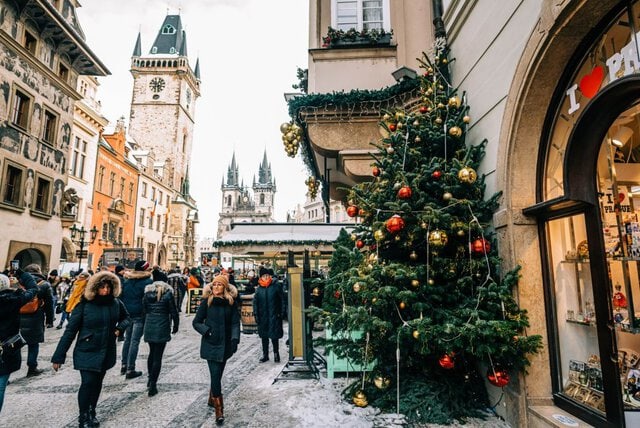
Updated November 20, 2026. The Prague Christmas markets run from November 28, 2026, to January 6, 2027. The best markets are at Old Town Square (for the iconic 26-meter tree) and Náměstí Míru (for lower prices and local vibes). Avoid the Wenceslas Square construction crowds by visiting early in the morning.
Everyone thinks the Prague Christmas markets are an unchanging, timeless fairy tale. But in late November 2026, a massive tramway reconstruction project at Wenceslas Square is forcing smart travelers to completely rewrite their holiday playbooks. I’ve spent years navigating Prague’s winter crowds, and this season requires a highly specific strategy to bypass the tourist traps and find the real magic. Here is how to navigate the city like a local who actually knows where to go.
The 2026 Prague Christmas Market Playbook
Prague is undergoing a massive face-lift this winter. The upper part of Wenceslas Square is completely torn up for a major tramway reconstruction, meaning that market is crammed solely into the lower part of the square. It is going to be packed. You need to look elsewhere for breathing room.
Also, do not waste your time climbing up to Prague Castle looking for a traditional market. It was quietly discontinued years ago. Instead, you will find a “Christmas Stroll” and a festive labyrinth designed by the Forman Brothers Theatre—fun, but not the market experience you are likely after.

What to Eat (and the Chimney Cake Lie)
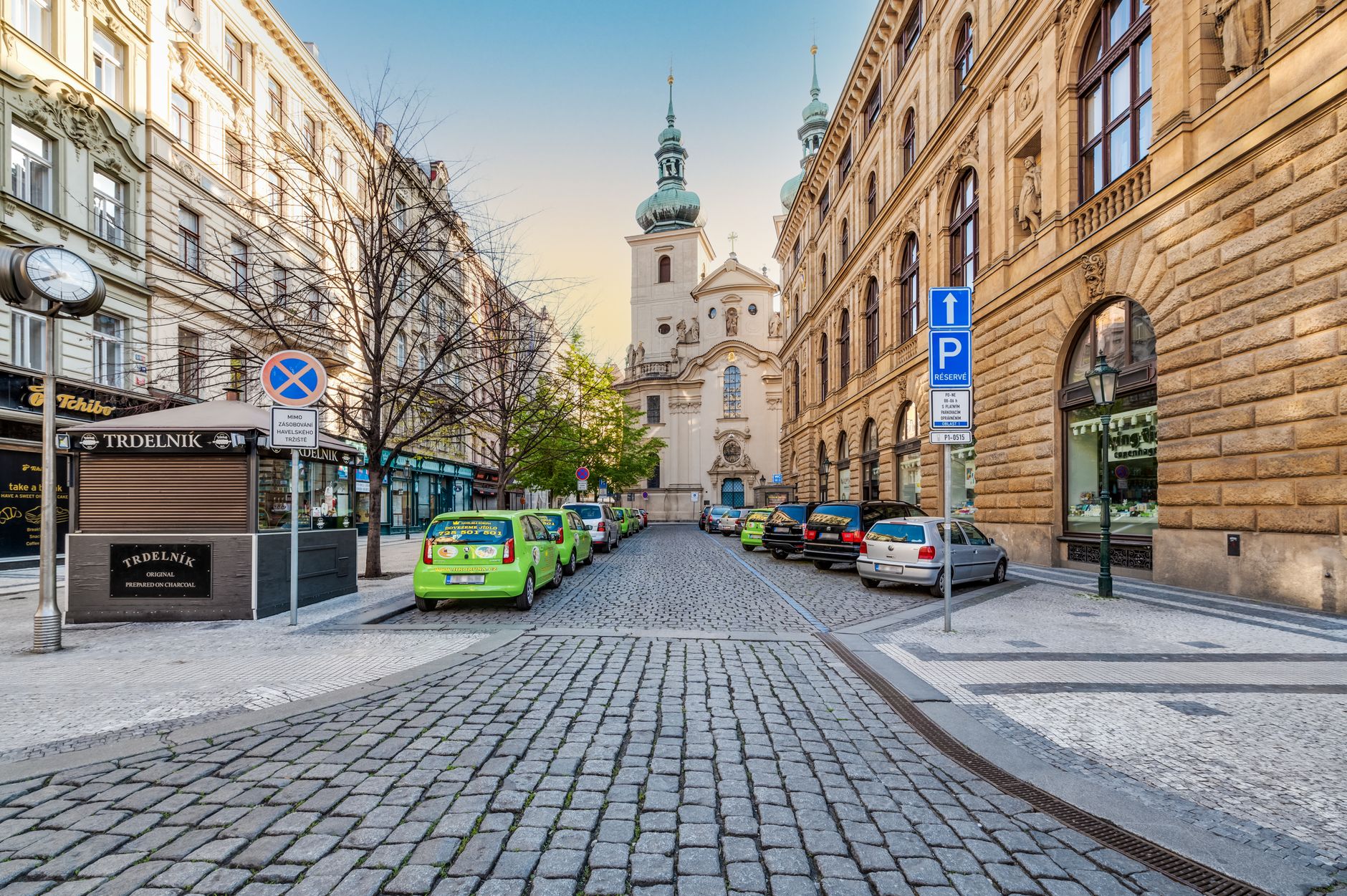
Let’s get one thing straight: the trdelník (that cinnamon-sugar chimney cake you see on every Instagram feed) is not Czech. It actually originated in Slovakia and Hungary, and its massive popularity in Prague is a modern tourist creation. If you want real Czech comfort food, skip the cake and look for these instead.

Prague Christmas Market Survival Strategies
Prague is generally very safe, but the massive influx of holiday crowds brings out professional opportunists. Knowing how they operate is the difference between a great trip and a ruined evening.
The Pay-by-Weight Food Trap
Where: Spit-roast ham (Pražská šunka) and Halušky stalls at Old Town and Wenceslas Squares.
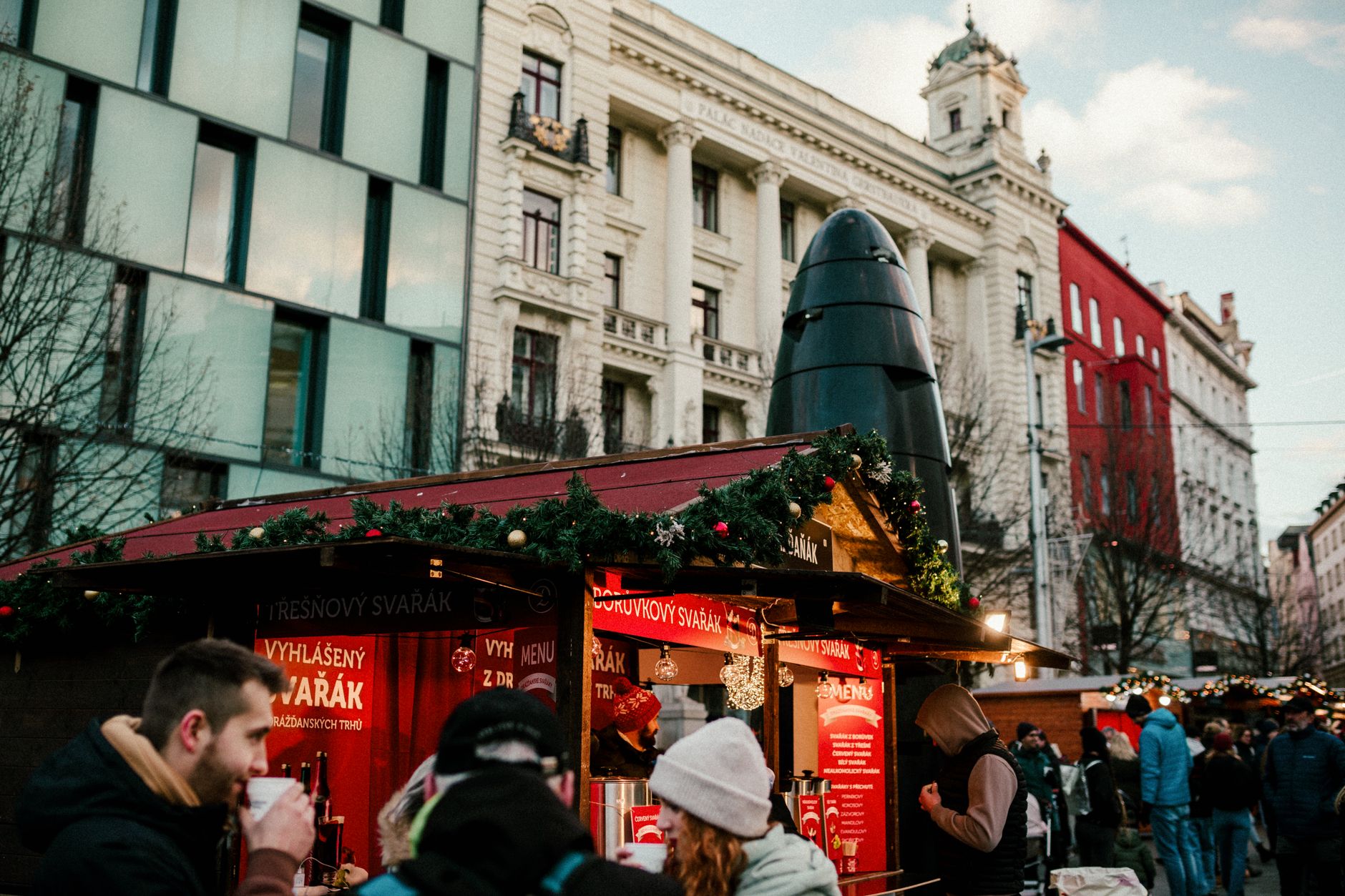
The Scam: Prices are listed per 100g (e.g., 99 CZK). If you ask for “a portion,” vendors will carve a massive slab weighing 400g to 500g and demand 500 CZK (~$22 USD). Always specify the exact weight you want—say “sto gramů” (100g) or “dvě stě gramů” (200g)—and watch the scale closely.
Fake Plainclothes Police Scam
Where: Quiet side streets near Wenceslas Square, Karlova Street, or the Main Railway Station (Hlavní nádraží) at night.
The Scam: Men posing as plainclothes officers show a fake badge and demand to inspect your wallet for “counterfeit currency” or “drugs.” They will pocket your cash during the inspection. Real Czech police will never handle your cash on the street; politely refuse, do not hand over your wallet, and offer to walk to the nearest station or call 112.
Pickpocketing Teams
Where: Crowded areas around the Astronomical Clock on the hour, Charles Bridge, Tram 22, and Metro escalators (Můstek, Muzeum).
The Scam: Thieves work in small teams using distraction techniques like the “Rempel” jostle or spilling condiments on your coat. Keep your backpack on your front, zip all bags, and never keep your phone or wallet in your back pockets.
Logistics & Getting Around Prague
Getting from Václav Havel Airport (PRG) to the city center is simple if you avoid the taxi touts. There is no direct metro line, so take the public trolleybus Line 59 to Nádraží Veleslavín (Metro Line A) or Bus 100 to Zličín (Metro Line B). A standard 90-minute integrated transit ticket costs just 46 CZK via the Lítačka app, or 50 CZK if you buy a paper ticket.
When it comes to paying for your food, do not rely solely on plastic. While major markets accept credit cards, neighborhood stalls require cash. Withdraw Czech Koruna (CZK) from bank-owned ATMs like Komerční banka or Česká spořitelna, and always decline the Dynamic Currency Conversion (DCC) option to let your home bank set the rate.
Tipping is customary but modest—usually 5% to 10% for good service. In sit-down restaurants, do not leave coins on the table. Instead, when the server tells you the bill, state the total amount you want to pay (including the tip) before they process the transaction. For example, if the bill is 450 CZK, say “500” as you hand over your cash or card.
Staying Connected in the Crowds
Prague has excellent 4G and 5G coverage, even deep inside the underground metro stations and packed market squares. While you can buy a local physical tourist SIM for 300 to 600 CZK (~$12–$24 USD), Czech law requires physical passport registration for all prepaid SIM card purchases. This means you cannot buy a local SIM anonymously or quickly at a convenience store without standing in line and handing over your passport.
Public WiFi networks in crowded market squares are highly unsecured, and airport WiFi is limited to 30 slow minutes. To bypass the registration hassle and secure your data, grabbing a Czech Republic eSIM before you land is the easiest move. With active eSIM connections projected to reach 1.5 billion globally in 2026, the industry has transitioned to the modern SGP.32 standard. This enables seamless “push provisioning,” allowing you to activate your profile automatically through your carrier app without scanning QR codes. It works just like a universal adapter—you activate it instantly, skip the airport lines, and have secure data the moment your plane touches down.
| Local Physical SIM | Galactic Roam eSIM | |
|---|---|---|
| Cost | 300–600 CZK (~$12–$24) | From $4.50 |
| Activation | In-store queue | Instant, pre-arrival (SGP.32 Push) |
| Registration | Physical passport required | None |
| Ready on arrival | No | Yes |
| Data options | 10 GB / 20 GB | 1 GB / 3 GB / 5 GB / 10 GB / Unlimited |
Frequently Asked Questions
What are the dates for the Prague Christmas markets in 2026?
What is the best area to stay in Prague for the Christmas markets?
Do Prague Christmas markets accept credit cards?
Is tap water safe to drink in Prague?