Everyone told me to just road-trip across Canada in a week. They clearly have no concept of scale. Trying to see the world’s second-largest country without a ruthless strategy is a recipe for staring at the taillights of logging trucks for fourteen hours a day. I’ve spent years navigating Canada’s massive distances, from the rocky shores of Newfoundland to Vancouver’s rainforests. This Canada travel guide will show you how to plan a realistic, spectacular coast-to-coast adventure without losing your mind—or your budget.
Key Takeaways
Best time to visit: July to September for hiking and warm weather, or January to March if you want world-class skiing.
Budget needed: $150 to $250 CAD per day for mid-range travelers.
Must book ahead: National park shuttles (like Lake Louise) and VIA Rail sleeper cabins require booking up to six months in advance.
Getting around: Renting a car is essential for the parks, but use budget airlines like Porter or Flair for hopping between major regions.
Quick Facts — Canada
Currency Canadian Dollar (CAD)
Language English, French
Time zone GMT-3.5 to GMT-8
Plug type Type A and B
Best time to visit June to September
Visa eTA required ($7 CAD)
The scale problem: How to actually get around
The Trans-Canada Highway stretches over 7,800 kilometers. Driving from Halifax to Vancouver takes about 60 hours of pure, non-stop steering. If you only have two weeks, don’t try to see it all. Pick a region—either the West Coast (British Columbia and Alberta) or the East (Ontario, Quebec, and the Maritimes).
Trying to cross the country by train is romantic but slow. The VIA Rail journey from Toronto to Vancouver takes four days and covers 4,400 kilometers. It’s often cheaper to fly, though domestic flights in Canada are notoriously expensive. Budget at least $300 to $500 CAD for one-way domestic flights between major hubs.
The must-see stops (and what to skip)
Everyone goes to Banff, which is beautiful but can feel like an outdoor theme park in July. Go to Jasper instead. It’s wilder, quieter, and the Icefields Parkway drive between the two is worth every drop of gas.
Moraine Lake in Alberta—beautiful, but you’ll need to book the park shuttle months in advance to see it.
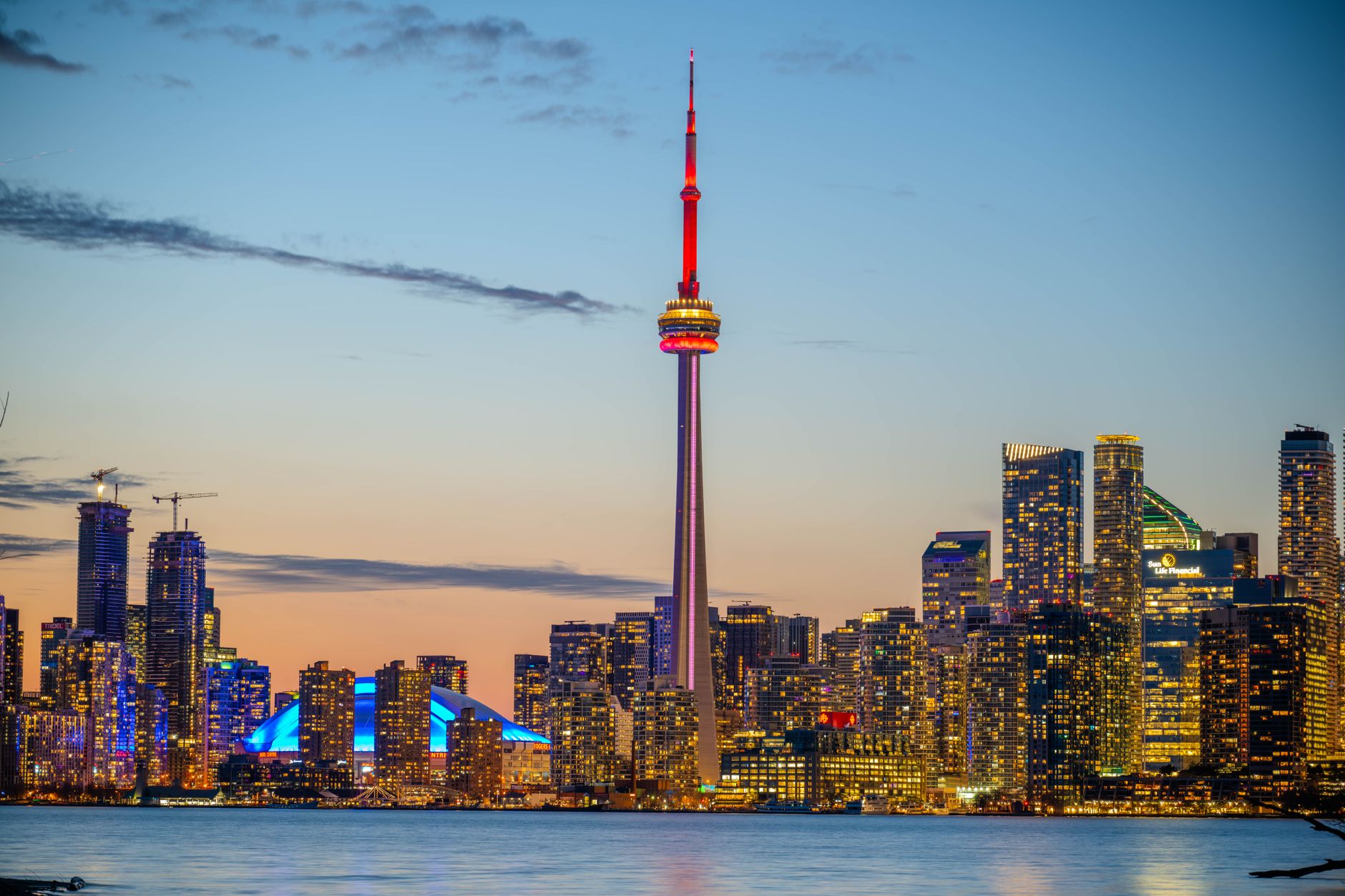
Then there’s Toronto. It’s Canada’s biggest city, often dismissed by nature purists as just another concrete jungle. That’s a mistake. The food scene in neighborhoods like Kensington Market is world-class, and watching the sunset behind the CN Tower from the Toronto Islands is a classic experience.
The Toronto skyline dominated by the CN Tower at dusk.
Important Don’t buy individual day passes if you’re spending more than seven days in Canada’s National Parks. Get the Parks Canada Discovery Pass instead. It costs about $150 CAD for a group and pays for itself incredibly fast.
What to eat: Real poutine vs. tourist traps
Don’t leave without trying real poutine in Quebec. Skip the chain restaurants and find a roadside “casse-croûte” (grease joint) in rural Quebec. A proper plate should cost around $12 to $20 CAD.
The cheese curds must squeak when you bite them. If they don’t, you’ve been served day-old mozzarella, which is a culinary crime. Wash it down with a local spruce beer if you’re feeling brave.
Frequently asked questions about traveling in Canada
Do I need a car to travel around Canada?
Yes, if you plan to leave the major cities. While Vancouver, Toronto, and Montreal have decent public transit, reaching national parks, trailheads, and smaller towns is nearly impossible without your own wheels.
When is the best time to visit Canada?
July and August offer the best weather for hiking and festivals, but prices are at their peak. September is the sweet spot—fewer crowds, cheaper accommodation, and beautiful autumn foliage.
How expensive is a trip to Canada?
Canada is not a budget destination. Expect to pay $150 to $250 CAD per night for a decent hotel, and around $25 to $40 CAD for a standard restaurant meal. Taxes and tipping (usually 15-20%) add up quickly.
Before you head out into the Canadian wilderness, make sure you’ve sorted your connectivity. Roaming fees from home carriers in Canada are brutal, and finding local SIM cards in smaller towns is a hassle. Grab a Canada eSIM from Galactic Roam before you fly. It connects automatically to the strongest local networks, keeping your maps active even when you’re deep in the Rockies.
Over 50% of Toronto’s population was born outside of Canada. If you visit without a strategy, you’ll end up staring at the backs of tour groups in overpriced downtown hubs instead of tasting the real city. I’ve spent years navigating Toronto’s neighborhoods, transit, and underground labyrinths. This Toronto travel guide is your insider blueprint to skipping the traps and exploring like a local. If you are planning a broader trip across the country, check out our ultimate canada travel guide.
50%+
Foreign-Born
30km
Path Network
8.5%
Hotel Tax (MAT)
15
Islands
The 2026 Landscape: Timing Your Visit
If you’re planning a trip in 2026, timing is everything. The city is hosting six matches of the Fifa World Cup 2026 at BMO Field from June 12 to July 2, including Canada’s historic men’s home opener. Later in September, the Toronto International Film Festival (Tiff) takes over the downtown core.
To fund the World Cup, the city temporarily raised its Municipal Accommodation Tax (MAT) on hotel stays to 8.5% until July 31, 2026. Expect packed hotels and premium rates. Book early, or prepare to pay through the nose.
Neighborhoods & Attractions: What’s Actually Worth It
Toronto Islands: The Escape Hatch
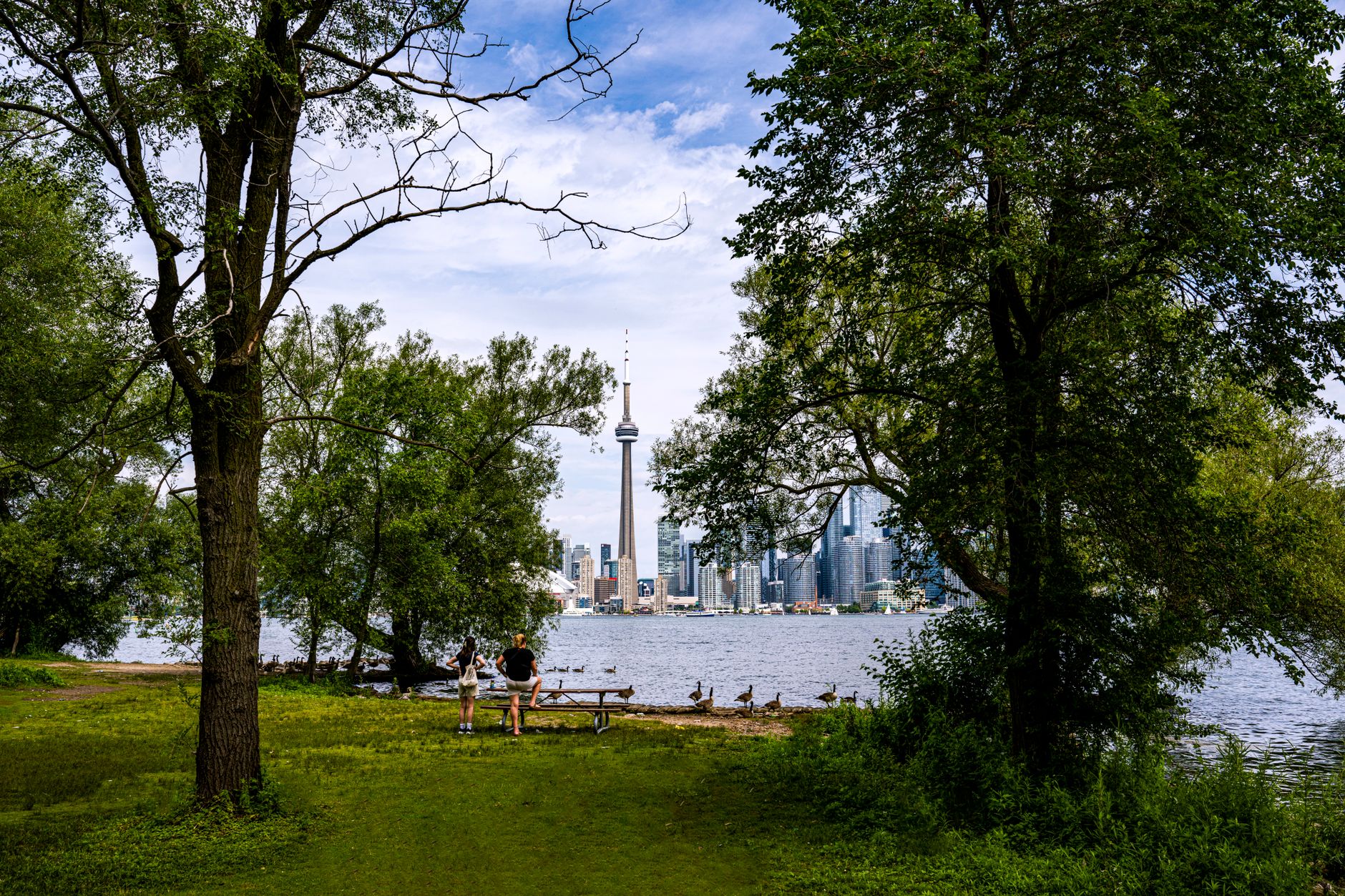
A chain of 15 small, car-free islands connected by bridges, offering sandy beaches, bike paths, and the iconic postcard view of the Toronto skyline. But don’t make the rookie mistake of queuing at the Jack Layton Ferry Terminal on summer weekends—lines easily hit two hours between 11:30 AM and 2:30 PM.
Skip the queue by booking tickets online in advance, or shell out $10–$13 CAD for a private water taxi to Ward’s Island. The ultimate hack? Take a water taxi to the island, and ride the public ferry back to the mainland for free, as tickets are only checked on the outbound trip.
The Toronto skyline viewed from the quiet shores of the Toronto Islands.
Kensington Market: Bohemian Toronto
This is a bohemian, open-air neighborhood filled with vintage shops, indie cafes, and diverse street food that represents Toronto’s multicultural roots. It’s best experienced on ‘Pedestrian Sundays’—the last Sunday of every month from May to October—when cars are banned and the streets turn into a giant festival of live music and outdoor food stalls.
Eclectic storefronts and street life in Kensington Market.
The Path: The Subterranean Labyrinth
Spanning over 30 kilometers and connecting over 75 buildings, the Path is the largest underground shopping complex in the world. It lets you traverse the entire Financial District completely sheltered from winter cold or summer humidity. But be warned: GPS is useless down here, and the color-coded signs are notoriously inconsistent.
Navigate using major landmarks like Union Station or the Eaton Centre as waypoints. Watch out for ‘Tower Traps’—hallways with only corporate logos and no directional arrows, which lead to dead-end private office lobbies.
The modern, sprawling walkways of Toronto’s underground Path network.
What to Eat: Toronto’s Signature Bites
Forget generic chain restaurants. Toronto’s food scene is defined by its immigrant communities and localized fusion dishes that you won’t find anywhere else.
Peameal Bacon Sandwich
Toronto’s signature culinary creation features thick slices of wet-cured, unsmoked pork loin rolled in cornmeal, grilled, and served on a soft kaiser bun. Grab one at Carousel Bakery inside St. Lawrence Market for $8–$11 CAD—it’s the exact spot Anthony Bourdain praised.
East Indian Roti
A unique Toronto-born fusion dish where a Caribbean dhalpuri roti is wrapped around thick, rich Indian curries like butter chicken or aloo gobi. Head to Mother India in the Parkdale neighborhood and budget $14–$19 CAD for a massive portion.
Jamaican Beef Patty in a Bun
A flaky, spiced Jamaican beef patty stuffed inside a sweet, soft coco bread bun. It’s a classic grab-and-go snack popularized by Toronto’s Caribbean diaspora, costing just $3–$5 CAD at Warden or Bathurst subway stations.
Safety & Scams to Avoid
Toronto is generally very safe, but like any major metropolis, it has its share of bad actors looking to exploit distracted travelers. Keep your wits about you, especially in these situations.
The Taxi Debit Card Swap
Late at night in the King West or Queen West entertainment districts, a rogue driver might claim their card reader is broken or that they don’t accept cash. They’ll ask for your debit card, distract you, and swap it with a stolen replica. Never hand over your card; always tap it yourself, or stick to rideshare apps and licensed Beck Taxis.
The Aggressive Flower / CD Handout
Around Yonge-Dundas Square and Front Street near Union Station, scammers dressed as monks or elderly women will hand you a rose, a ‘free’ CD, or a bracelet. Once you take it, they’ll aggressively demand a $5–$20 CAD donation. Keep your hands in your pockets, ignore them, and keep walking.
The Moss Park & Sherbourne Corridor
Avoid walking through the intersection of Sherbourne Street and Dundas Street East at night. While not violent, this pocket has a high concentration of shelters and open substance use that can feel unpredictable. Stick to well-lit main arteries like Yonge or University Avenue instead.
Frequently Asked Questions
How do I get from Pearson Airport to downtown Toronto?
The Union Pearson (UP) Express train is the fastest option. It runs every 15 minutes, takes just 25 minutes to reach Union Station, and costs $12.35 CAD one-way (or $9.25 CAD if you tap with a Presto, debit, or credit card).
What is the best way to pay for public transit in Toronto?
You don’t need a physical ticket. Simply tap your debit card, credit card, or phone on the TTC subway, streetcar, or bus reader. A single adult fare is $3.30 CAD, which includes a free 2-hour transfer window across the entire network.
How much should I tip in Toronto?
Tipping is customary in restaurants, bars, and taxis. Standard rates range from 15% to 20%, with 18% being the modern expectation for good service. Keep in mind that a 13% Harmonized Sales Tax (HST) is added to almost all purchases at checkout.
Staying Connected Without Getting Ripped Off
Canada has some of the most expensive mobile data rates in the world. If you buy a local physical SIM card on arrival, expect to pay anywhere from $35 to $95 CAD ($25 to $70 USD) for a basic data package, plus an annoying $10 to $15 CAD one-time fee just for the plastic card. To make matters worse, budget prepaid brands like Chatr or Lucky Mobile often cap your speeds at sluggish 3G or 4G LTE rates.
You can easily bypass these high local rates and activation fees by setting up a Canada eSIM before you even pack your bags. It connects directly to premium networks like Rogers, Bell, or Telus, giving you instant, unthrottled 5G speeds the second your plane touches down at Pearson. Grab a Canada eSIM from Galactic Roam, skip the airport kiosk queues, and spend your saved cash on another peameal bacon sandwich instead.