Las Vegas Grand Prix Guide: How to Experience the F1 Night Race Like a Local
The temperature during late November night sessions in Las Vegas routinely drops to 45°F (7°C). This definitive Las Vegas Grand Prix travel guide is your playbook to survive the freezing desert wind chills, bypass the Strip’s massive road closures, and experience the F1 night race like an insider who actually knows where to stand.
I’ve spent weeks navigating the chaos of the Strip during race setups to figure out what’s actually worth your money. From avoiding counterfeit merch lawsuits to booking the exact grandstand seats with a view of the concert stage, here is how you survive the weekend without getting eaten alive.
45°F
Night Temp
140hr
Monorail Run
1:00 PM
Road Closures
$299
Ramsay Lunch
The Cold Hard Truth & Essential Logistics
Pack a heavy jacket. Seriously. Many first-time visitors underdress expecting warm desert weather, only to face freezing wind chills in the open grandstands. It is one of the coldest races on the F1 calendar, and shivering through a qualifying session is a miserable way to spend your money.
Security will turn you away if you bring the wrong bag. The circuit enforces a strict clear bag policy: any bag larger than 6″ x 9″ must be fully transparent and no larger than 12″ x 6″ x 12″. Standard backpacks are strictly banned at the gates, and there are absolutely no lockers or storage facilities available.
To bypass the massive road closures on the Strip, use the Las Vegas Monorail. It runs continuously for 140 hours straight during race week, operating 24/7 from Tuesday morning through Monday morning. Circuit roads close starting at 1:00 PM each session day (Thursday to Saturday) and fully close by 3:00 PM. If your hotel is inside the track loop, like the Flamingo or The Linq, you must arrive before 1:00 PM or prepare to walk.
Top Track Zones & Attractions
T-Mobile Zone at Sphere
This zone offers the most iconic backdrop of the race, with cars navigating slow corners right beneath the towering, animated Sphere. Book seats in the SG5 grandstand for the absolute best view of Turns 7 and 8 and a direct line of sight to the concert stage. Avoid SG8, as it faces the opposite direction of the stage despite having good track views.
Grand Prix Plaza (F1 Pit Building)
A massive 39-acre year-round F1 attraction featuring F1® X (an interactive 4D theater) and F1® Drive (a karting experience where you race through the actual pit lane). You do not need a ticket to enter the flagship F1 retail store or the F1 Hub Lounge. If you book karting, add a motion simulator session for just a $10 add-on.
F1 Arcade Las Vegas
Located inside The Forum Shops at Caesars Palace, this 21,000-square-foot venue features 87 full-motion F1 simulators and a 41-foot Champagne Bar. To avoid massive Strip traffic and walking detours, set your rideshare drop-off specifically to ‘The Forum Shops Valet off Las Vegas Blvd / Caesars Plaza’ instead of the main Caesars Palace pin.
Where to Eat: Trackside Fuel
Gordon Ramsay’s Hell’s Kitchen Trackside Lunch
An exclusive four-course lunch hosted by celebrity chef Gordon Ramsay right next to the circuit. Located at Hell’s Kitchen at Caesars Palace, it costs $299 per person and offers a rare chance to hear Ramsay share his personal love of motorsport.
Fontainebleau ‘Shoey’ Cocktails
A high-octane tribute to the famous F1 podium celebration, served in limited-edition collectible shoeys. Head to the Solo Lounge at Fontainebleau Las Vegas to grab one, crafted with Tequila Volcán de mi Tierra and Cointreau for $25 to $45.
Carne Asada Fries
A classic late-night Southwest comfort food. Crispy french fries piled high with grilled steak, warm nacho cheese, fresh guacamole, sour cream, and cotija cheese, available at local food trucks inside the Flamingo Zone and Sphere Zone for $15 to $25.
Scams and Traps to Avoid
Counterfeit F1 Merchandise
Independent souvenir shops along the Strip (like Bonanza Gift Shop and Crazy Ely) sell fake apparel. F1 recently filed federal lawsuits against these shops. Only buy official gear from the F1 Las Vegas Hub at the Grand Canal Shoppes or official trackside kiosks.
Fake Marijuana Dispensaries
Shops directly on the Las Vegas Strip sell “hemp-derived” or fake THC products with zero active ingredients. Real recreational dispensaries are legally barred from operating on the Strip. Head off-Strip to licensed spots like Rise in Henderson or Piso’s on Maryland Parkway instead.
QR Code Parking Scams
Scammers paste fake QR codes over official payment signs in unattended parking lots near the circuit to steal credit card info. Always pay through the official resort app or physical payment kiosks inside the garages.
Frequently Asked Questions
How do I get from the airport to the Strip during F1?
Taxis from Harry Reid International Airport (LAS) have flat-rate zones ($23 to $30), but they face massive detours due to road closures. Your best bet is taking a taxi to the MGM Grand station, then hopping on the Las Vegas Monorail to bypass the traffic entirely.
What are the tipping norms in Las Vegas?
Standard tipping is 15% to 20% for rideshares, taxis, and sit-down restaurants. For casino dealers, tip $1 to $5 per winning hand or place a bet for them, and give bartenders $1 to $2 per drink.
When do the roads close for the Grand Prix?
Circuit roads (including Las Vegas Blvd, Harmon Ave, Koval Lane, and Sands Ave) close starting at 1:00 PM each session day (Thursday to Saturday) and fully close by 3:00 PM. They reopen between midnight and 2:00 AM.
Stay Connected Amid the Trackside Chaos
Staying connected in Las Vegas during race week is a challenge. While major carriers offer excellent 5G, severe network congestion occurs during peak hours when 100,000 fans stream video simultaneously. Local physical SIMs cost $30 to $60, but there are no physical SIM desks at Harry Reid International Airport except a single vending machine in Terminal 3. Plus, US prepaid SIMs require an unlocked phone and a US ZIP code to activate. To skip the hassle, grab a United States eSIM from Galactic Roam before you fly, so you can connect the second you land.
You have 72 hours in Miami during Art Week, and the gridlock on the causeways is about to eat you alive. With over 80,000 visitors descending on the city, navigating this chaos requires more than just a standard Miami travel guide. I’ve spent years navigating South Florida’s logistics, and I know exactly how to bypass the traffic, dodge the parking scams, and eat like a local. Here is your survival blueprint for Art Basel and beyond.
28.3M
2025 Visitors
$22.7B
Total Spend
2x
Hotel Rates
80k+
Art Basel Crowds
Navigating Art Basel 2026 Without the Headaches
Art Basel Miami Beach runs from December 4 to December 6, 2026, at the Miami Beach Convention Center. It draws over 80,000 global visitors, which means the surrounding streets turn into a parking lot. Skip the massive weekend crowds by visiting on Thursday, the first public day.
Don’t even think about buying tickets at the door; purchase them online in advance. To get around, download the “Miami Beach Gov” app to track the free, extended-hours Art Week trolleys. If you need to cross the bay, a free water taxi service connects Sunset Harbour in Miami Beach to Downtown Miami near Edgewater, letting you bypass the gridlocked causeways entirely.
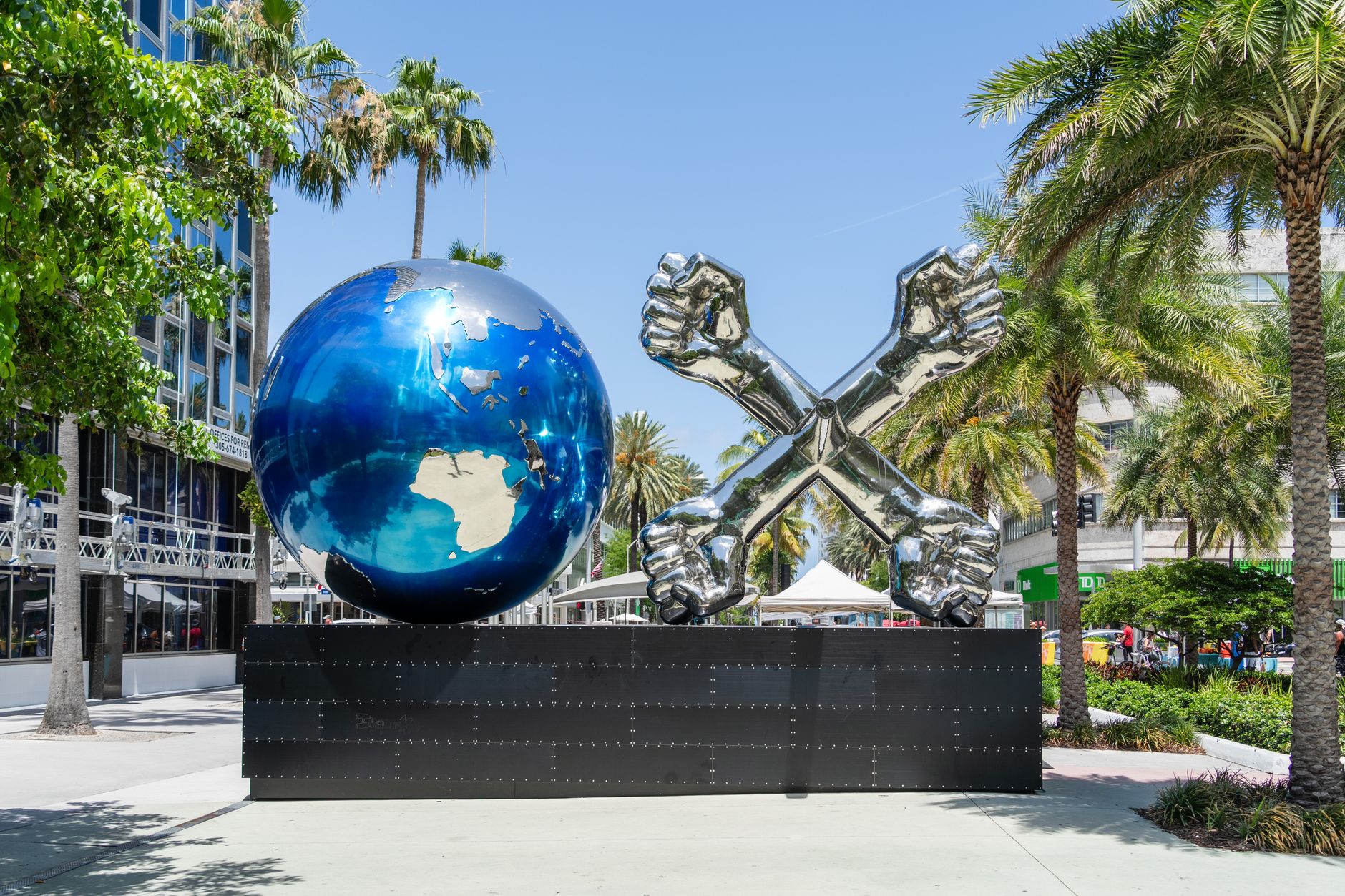
The outdoor plaza of the Miami Beach Convention Center during Art Week.
Wynwood Art District: Beyond the Walls
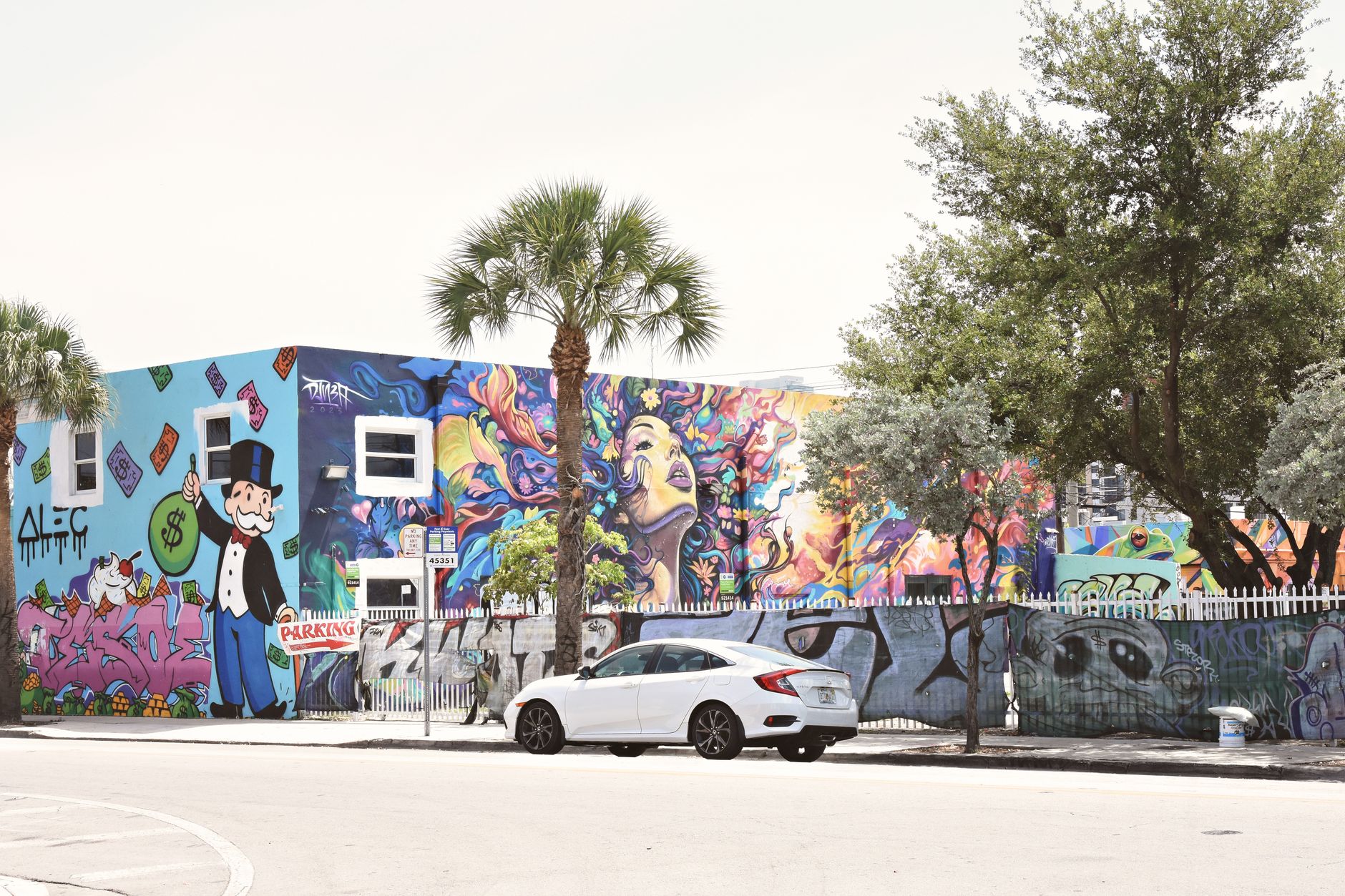
Wynwood holds the world’s largest concentration of street art, but most tourists make the mistake of paying to enter the official Wynwood Walls. The surrounding blocks are a completely free open-air gallery that is just as impressive. Walk the neighborhood before 11:00 AM to photograph the murals before the crowds block your shots.
Street art murals lining the blocks of the Wynwood Art District.
Where to Eat: Local Legends and Fast Tracks
Miami’s food scene is legendary, but the wait times during peak season will test your patience. If you want to experience Joe’s Stone Crab, skip the main dining room’s notorious three-hour wait. Head to “Joe’s Take Away” next door instead.
It has its own bar and table seating with the exact same menu. Just remember: if you buy claws to go, eat them indoors. Eating them on the beach will instantly attract swarms of flies.
El Cubano (Cuban Sandwich)
A masterfully pressed sandwich featuring pork butt marinated for a week, house-made ham, Swiss, pickles, and mustard on bread brushed with rendered pork fat. Get it at Sanguich de Miami in Little Havana for $13.49 to $14.99.
Frita Cubana (Cuban Burger)
A seasoned beef and pork patty spiced with chorizo and paprika, topped with a mountain of crispy shoestring potato sticks on a Cuban roll. Grab one at El Rey de las Fritas for $6.00 to $10.00.
Stone Crab Claws
Sweet, cold crab claws served cracked on ice with a signature cold mustard sauce. Available from October to May at Joe’s Stone Crab in South Beach for $65.00 to $140.00.
Survival Guide: Three Scams to Avoid
Miami is generally safe, but it is a city built on tourism, which means some locals have turned parting you from your money into an art form. Keep your eyes open for these three common traps.
The “Double Tip” Gratuity Trap
Restaurants in South Beach and Wynwood automatically add an 18% to 20% service charge to your bill. Servers may hand you a wireless terminal showing only the total and a prompt to add a tip, or physically cover the service charge line on the receipt. Always read the itemized receipt from the bottom up before adding extra cash.
Fake QR Code Parking Stickers
Scammers paste fraudulent QR code stickers over official PayByPhone parking signs in Downtown, Brickell, and Wynwood. Scanning them redirects to fake payment sites that steal your credit card info. The Miami Parking Authority removed over 7,000 of these codes; avoid scanning any physical signs and pay directly through the official PayByPhone app.
Illegal Valet Street Storage
High-end venues in Brickell and Wynwood charge $40 to $100 for valet, then park your car directly on the street. Under Miami City Ordinance, valet companies are legally prohibited from storing vehicles on public streets for more than 10 minutes. If they leave your car on the street, it risks being ticketed or towed; insist on knowing where it is stored or use a municipal garage.
Getting Around Without Breaking the Bank
Getting from Miami International Airport (MIA) to Miami Beach doesn’t have to cost a fortune. Skip the $28 to $47 rideshare and take the Miami Beach Airport Express (Route 150) bus instead. It costs just $2.25 and runs every 20 minutes from 5:00 AM to 11:00 PM.
Once you’re in the city, take advantage of the free Miami Beach Trolley, which runs five loops from 8:00 AM to 11:00 PM daily (extended to midnight during Art Week). In Downtown and Brickell, the free elevated Metromover train runs every 90 seconds to 3 minutes, saving you from walking in the midday heat.
Frequently Asked Questions
Is Miami safe for solo travelers?
Yes, Miami is highly suitable for solo travel. However, solo travelers, especially women, should avoid walking alone at night in poorly lit areas of Little Havana or Wynwood. Use rideshares after dark instead.
How much does an average trip to Miami cost?
Mid-range daily spending averages $180 to $240 per day, excluding lodging. Budget travelers can save by staying in top-rated hostels like Freehand or Generator Miami for $50 to $65 per night for a dorm bed.
When is the best time to visit Miami?
The best weather is from November to April when temperatures are mild and humidity is low. If you are visiting for Art Week, keep in mind that hotel rates roughly double during this period.
Staying Connected
Staying connected in Miami is straightforward, but buying a local SIM card at the airport is a rookie mistake. Airport kiosks charge a steep premium of $30 to $50 for basic data packages, and the queues can be brutal. Public WiFi along Ocean Drive is highly vulnerable to security snooping and requires annoying email registrations.
To skip the hassle, grab a United States eSIM from United States eSIM before you fly. You’ll get instant 5G coverage the moment you land, leaving you free to focus on navigating the art crowd rather than hunting for a signal.
Las Vegas welcomed 38.5 million visitors last year, but almost none of them actually set foot in the city itself.
The entire world-famous Strip—from the Bellagio fountains to the iconic welcome sign—is actually located in Paradise, Nevada, an unincorporated town created in 1950 to dodge municipal taxes. I have spent months navigating this neon-soaked corridor, learning exactly where the tourist traps end and the real Nevada begins.
This Las Vegas travel guide will save you from the rookie mistakes that eat first-timers alive. From hidden fees to off-Strip escapes, here is how to survive the chaos.
38.5M
Annual Visitors
$56.69
Real Resort Fee
13.38%
Lodging Tax
$0
Pinball Entry
Strip Scams and Hidden Costs
Winging it in Las Vegas is a quick way to empty your wallet before you even hit the blackjack tables. The house always wins, but the street vendors and hotels have their own ways of draining your funds.
The Resort Fee Tax Trap
The average daily resort fee on the Strip is $45 to $51 per night. But hotels hide the fact that these fees are subject to Clark County’s 13.38% lodging tax. A quoted $50 fee actually costs $56.69 on your final bill, and it is completely mandatory.
Showgirl and Character Photo Scam
People dressed in elaborate feathers or superhero costumes on pedestrian bridges will push you to take a photo. Once the shutter clicks, they will aggressively demand $30 to $50 per person. Walk past without making eye contact, or step directly into a casino—they cannot follow you onto private casino property.
Fake Strip Dispensaries
Recreational cannabis is legal in Nevada, but city laws ban dispensaries on the Strip itself. Every “dispensary” you see on the main boulevard only sells hemp-derived CBD with 0% THC. For the real deal, take a short rideshare off-Strip to licensed spots like Planet 13 or Reef.
Where to Escape the Casino Chaos
If you spend your entire trip inside the casinos, you are missing the best parts of the region. These three off-Strip spots are genuinely worth the Uber fare.
The Neon Museum’s outdoor boneyard featuring retired casino signs.
The Neon Museum
This outdoor boneyard preserves the city’s iconic retired neon signs. Skip the basic daytime ticket and book the “Brilliant!” night show instead. It uses projection mapping and classic music to make broken, non-functional signs look alive again. Book weeks in advance for a dusk slot.
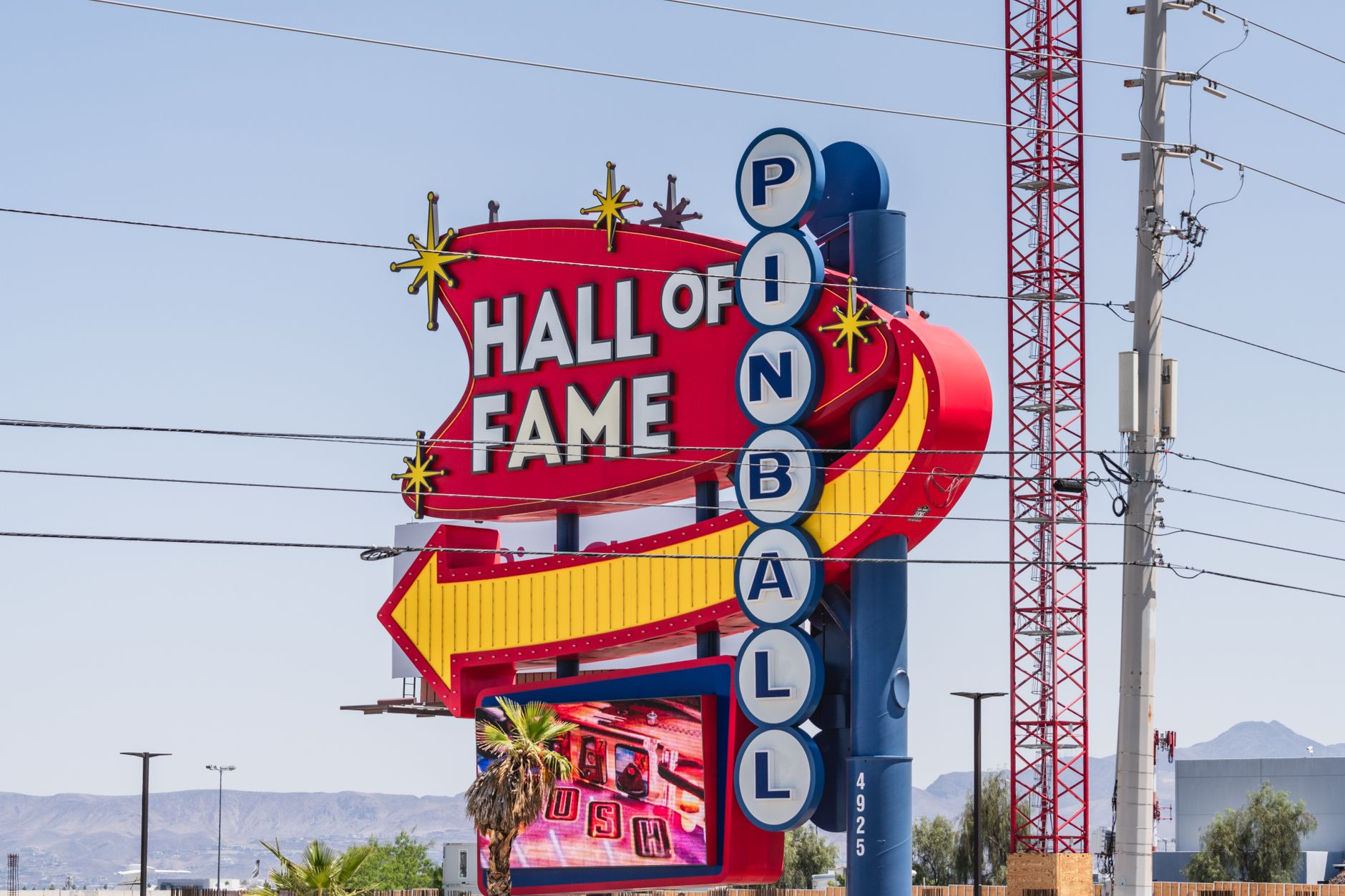
Vintage pinball machines glowing inside the Hall of Fame.
Pinball Hall of Fame
Located right next to the “Welcome to Fabulous Las Vegas” sign, this massive non-profit warehouse holds over 400 playable vintage pinball and arcade games. Entry is completely free—you only pay to play (25c to 75c per game). Bring a roll of quarters to skip the change machine lines.
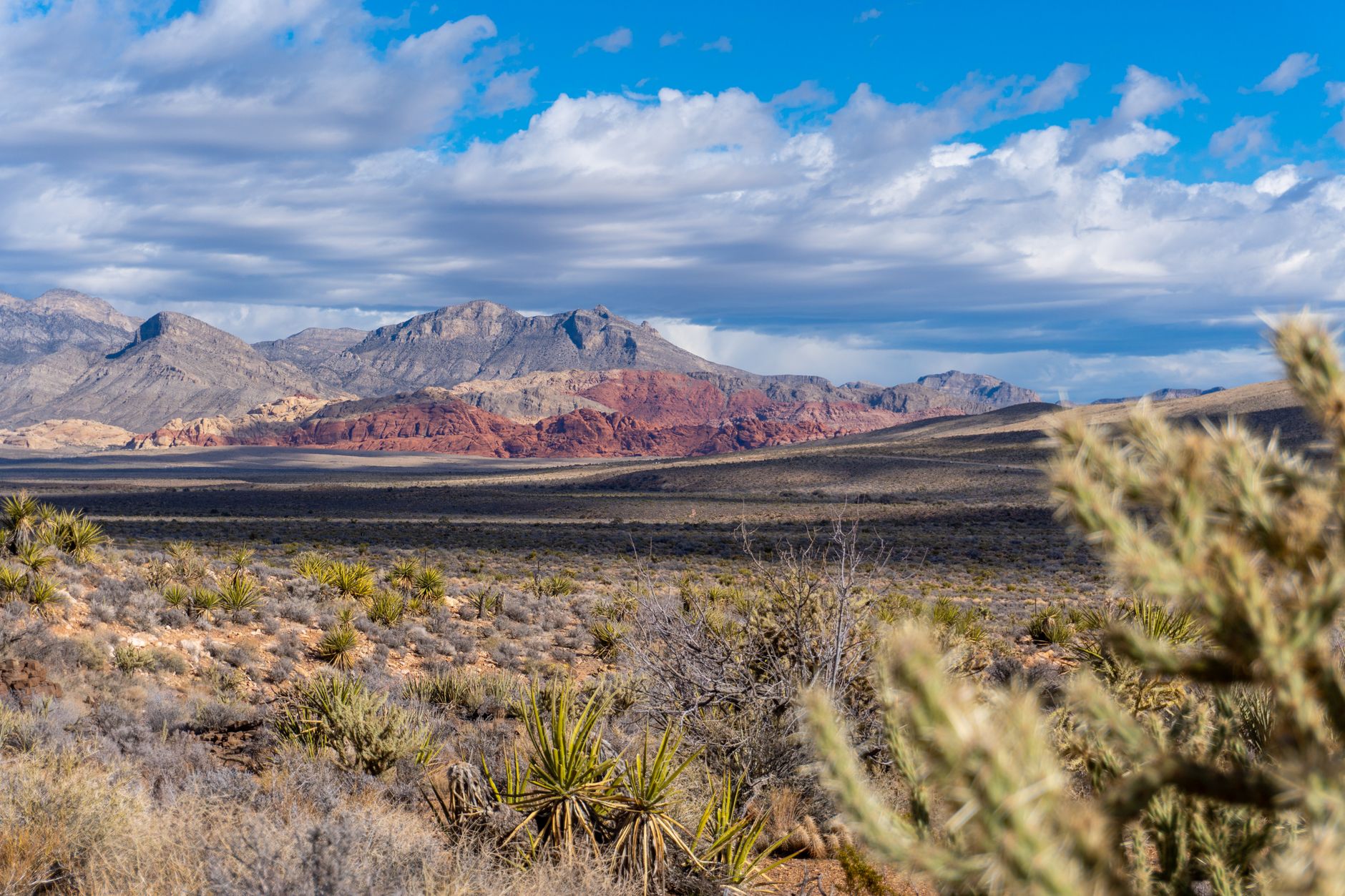
Stunning red sandstone peaks in Red Rock Canyon.
Red Rock Canyon
Just 15 miles west of the Strip sits a landscape of towering red sandstone peaks and ancient petroglyphs. If you are visiting between October and May, you must book a timed-entry reservation online to access the 13-mile Scenic Drive. Arrive by 8:00 AM to beat the desert heat.
Where to Eat Off the Strip
Strip dining is incredibly expensive, and half of it is overhyped celebrity chef vanity projects. Get off the main boulevard for the real culinary highlights.
Lotus of Siam: This legendary spot serves the best Northern Thai food in the country. Order the Crispy Duck Khao Soi ($25–$40) at their Sahara Avenue location.
Fukuburger: Head to Chinatown for Japanese-American fusion burgers topped with wasabi mayo and furikake. Pair it with garlic Fuku Fries topped with “crack sauce” ($10–$15).
Esther’s Kitchen: Located in the Arts District downtown. They serve incredible handmade pasta and seasonal sourdough bread with anchovy butter ($20–$35).
Smart Transit: Save Your Feet
Walking the Strip looks easy on a map, but the hotels are massive and set far back from the road. You will easily clock 20,000 steps a day if you are not smart.
Use the three free trams on the west side of the Strip to cut down on walking: Mandalay Bay to Excalibur, Bellagio to Park MGM, and Treasure Island to Mirage. For longer trips, use “The Deuce,” a 24/7 double-decker bus that runs the entire length of the Strip down to Fremont Street. A 24-hour pass costs $8, and you can buy it on the rideRTC app to skip the physical ticket lines.
If you take a taxi from Harry Reid International Airport (LAS), know that fares are flat-rated by zone ($22.25 to $30.25). Drivers might try to take the I-215 tunnel to run up a metered fare. Explicitly tell them “no tunnel, please” before you set off.
Frequently asked questions
How do I get a free Nevada visitor guide?
You can order a physical copy of the official Nevada Magazine & Visitor Guide to be mailed to your home for free. Alternatively, you can download a printable PDF version directly from the official Travel Nevada tourism website.
Why is my phone not working inside the casinos?
The massive concrete and steel structures of the casino resorts act as natural Faraday cages. You will often lose cellular signal entirely once you step deep onto the casino floor, so make sure to coordinate meeting spots with your group beforehand.
Is it better to take a taxi or Uber from the airport?
Taxis use flat-rate zones to the Strip, but drivers often try to add unauthorized fees or credit card charges. Rideshare apps like Uber and Lyft offer upfront, guaranteed pricing that is usually cheaper and avoids the airport tunnel scam.
If you are visiting during major events like the high-octane Las Vegas Grand Prix on November 19, 2026, expect massive network congestion. If you are planning to attend, check out our Las Vegas Grand Prix Travel Guide: How to Experience the F1 Night Race. Buying a local SIM card at the airport will cost you $50 to $60 due to heavy markups. Skip the airport kiosks and download a United States eSIM from Galactic Roam before you fly. You will get instant, reliable 5G data the second you land, letting you call an Uber and bypass the taxi lines entirely.
Austin City Limits Travel Guide: How to Navigate ACL Festival Like a Pro
Zilker Park absorbs 75,000 people a day during ACL, turning Austin’s green jewel into a dusty, chaotic human gridlock.
Winging it without a solid plan is a rookie mistake that will eat you alive in the Texas heat. I’ve spent weeks navigating Austin’s festival madness to write this Austin City Limits travel guide, so you don’t end up stranded, broke, or pickpocketed. Here is how to survive the 25th anniversary of the festival starting October 2, 2026, like a seasoned local.
450k
Total Fans
$557M
Economic Impact
68°F
Barton Springs Temp
25th
Anniversary
How to get to Zilker Park without losing your mind
Austin traffic is notoriously bad on a regular Tuesday. During ACL, it’s a parking lot. Don’t even think about calling an Uber directly to the gate—you’ll sit in gridlock while the meter runs, only to be dropped off a mile away anyway.
Ann and Roy Butler Hike-and-Bike Trail
Instead of fighting the gridlock on Barton Springs Road, rent a CapMetro Bikeshare bike and ride this scenic 10-mile gravel loop to the MoPac Pedestrian Bridge. It leads directly to the Stratford Drive entrance on the north side, which typically has much shorter security lines than the main east gate.
If you use the bikeshare, don’t worry about finding an empty dock near the crowded park. Use the official CapMetro Bikeshare Valet located at 1732 Toomey Road, where staff will manually check in and secure your bike for you.
The ultimate midday escape: Barton Springs Pool
By 2:00 PM, the Texas sun will make you question your life choices. The best-kept secret of seasoned festival-goers is taking a break at Barton Springs Pool, a massive three-acre natural spring right next to the festival grounds that stays a constant 68 degrees Fahrenheit year-round.
Barton Springs Pool
Do not try to enter through the main north gate on Barton Springs Road during the festival—it is closed to swimmers. Walk half a mile down Azie Morton Road to the south entrance; it is the only gate open to swimmers during ACL, and it is the perfect way to wash off the dust before the headliners start.
What to eat at ACL Eats
Festival food is usually overpriced cardboard, but Austin takes its culinary reputation seriously. Skip the generic chicken tenders and head straight for the local legends.
Hot ‘N’ Crunchy Chicken Cone ($12–$15)
A warm flour tortilla rolled into a cone, filled with crispy chicken breast coated in a sesame-and-cornflake batter, topped with mango-jalapeño slaw and ancho aioli. It was invented specifically for the inaugural ACL Fest in 2002. Find it at The Mighty Cone booth.
Mexico City-Style Street Tacos ($10–$15)
Traditional, small-format street tacos served on double corn tortillas with slow-cooked meats like suadero (brisket) or longaniza (spiced pork sausage), topped with fresh cilantro and onions. Grab them from the Cuantos Tacos booth.
Two festival traps that will ruin your weekend
Zilker Park is generally safe, but crowds of 75,000 people attract professional opportunists. Keep your wits about you, especially when the headliners start and when the gates close.
Organized Phone Pickpocketing Rings
Thieves work in teams near the main Lady Bird and T-Mobile stages. One will bump into you while another slips your phone out of your pocket, immediately dropping it into a signal-blocking Faraday bag. Never keep your phone in your back pocket—use a front-facing zipped fanny pack or a heavy-duty phone tether.
Pedicab Price Gouging
When the gates close at 10:00 PM, pedicab drivers target exhausted fans on Barton Springs Road, quoting predatory rates of $100 to $200 per person for a short ride downtown. Always negotiate and agree on a firm price before sitting down. If they won’t budge, walk 15 minutes toward South Lamar before trying to hail an Uber.
Crucial logistics to set up before you go
ACL is a 100% cashless festival. Activate your wristband online and link it to your credit card via “ACL Pay” before arriving to avoid pulling out your wallet in crowded areas.
Important Small clutches and fanny packs must be 6″ x 9″ or smaller with only one pocket to bypass the clear bag rule. Anything larger (up to 12″ x 6″ x 12″) must be fully clear plastic, vinyl, or PVC.
Cellular networks get so congested during headliner sets that data becomes completely unusable. Force your phone to 4G/LTE or even 3G/Edge in your settings to send basic texts, and always screenshot your daily lineup and map to use as your lock screen background. Set a highly specific, time-stamped meetup spot with your group before entering the park rather than relying on “Where are you?” texts that won’t deliver.
Frequently asked questions
Can you swim in Barton Springs Pool during ACL?
Yes, but you must enter through the south entrance on Azie Morton Road. The main north entrance on Barton Springs Road is closed to swimmers due to extensive festival road closures.
What is the bag policy for Austin City Limits?
Small bags under 6″ x 9″ with a single pocket are allowed. Any larger bag up to 12″ x 6″ x 12″ must be completely clear plastic, vinyl, or PVC. Hydration packs do not need to be clear but must be empty upon entry.
How do I get back downtown after the festival ends?
Avoid the pedicabs charging $100+ near the gates. Walk 15 to 20 minutes away from Zilker Park toward South Lamar or South First Street before trying to hail an Uber, or use the free official CapMetro shuttle departing from Republic Square.
While you are sorting out your festival schedule and packing your clear bags, do not forget your digital connection. Local physical SIMs in the US can cost anywhere from $10 to $40 and require waiting in line at retail stores. Skip the hassle entirely by grabbing a United States eSIM from Galactic Roam before you even land in Austin, giving you instant data so you can coordinate your rides and post your festival stories without missing a beat.
Austin F1 Travel Guide: How to Survive the US Grand Prix at Cota
On the Monday after the race, over 45,000 passengers will try to squeeze through Austin-Bergstrom International Airport. If you don’t plan your exit, the post-race logistics will eat you alive. I’ve navigated the madness of the Circuit of the Americas (Cota) and put together this realistic Austin F1 travel guide so you don’t make the same rookie mistakes.
Winging your trip to the 2026 United States Grand Prix—which kicks off on October 23, 2026—is a recipe for logistical failure. Much like navigating the city’s massive music festival with our austin city limits travel guide, dealing with 440,000 weekend attendees flooding a city of one million requires a concrete strategy. Here is what’s actually worth your time and money, and what you should skip.
440k
Weekend Fans
15mi
Downtown to Cota
84%
Airbnb Markup
$480M
Local Spending
The Track: Where to Watch and What to Skip
Cota is a massive, sprawling beast of a circuit. If you bought General Admission tickets, your entire weekend hinges on one spot: Turn 1 Hill.
Turn 1 Hill (General Admission)
This is the absolute best General Admission vantage point on the F1 calendar. The 133-foot uphill climb gives you views of the start/finish straight, Turn 1, and Turn 2. To secure a spot on the grass, arrive at the gates by 7:30 AM (60-90 minutes before they open) on Friday, Saturday, and Sunday. Bring a collapsible lawn chair, a tarp, and heavy-duty sunscreen—there is zero shade.
If you want a different perspective, head to the middle of the track. Just don’t make the mistake of trying to do it on race day.
Cota Observation Tower
Standing 251 feet tall, the tower offers a 360-degree panoramic view of the entire 3.4-mile track and the Texas Hill Country. Do not attempt to visit the tower on Sunday. Instead, buy a $35 ticket on Friday morning during the practice sessions when the lines are virtually non-existent. The glass-floor viewing platform at the top is worth every penny.
The Food: Fueling Your Weekend
Austin is a world-class food city, but during F1 weekend, the popular spots get slammed. Airbnb prices spike by an average of 84% (climbing from $423 to $780 a night), and restaurant wait times follow a similar trajectory. Skip the tourist traps and eat like a local.
Slow-Smoked Texas Brisket
This is oak-smoked beef brisket with a heavy black pepper and salt bark, cooked low and slow for up to 16 hours. Head to Micklethwait Craft Meats to avoid the infamous 4-hour line at Franklin Barbecue. Expect to pay $30 to $45 per pound for melt-in-your-mouth perfection.
Migas Originales Breakfast Tacos
A quintessential Austin breakfast featuring scrambled eggs mixed with tortilla chips, cheese, pico de gallo, and fresh avocado. Get them at Veracruz All Natural (located at Radio Coffee & Beer) for $4 to $6 per taco. They are the ultimate morning fuel.
The Bob Armstrong Dip (Queso)
This legendary Tex-Mex dish consists of warm, melted yellow cheese dip layered with guacamole, seasoned ground beef, and sour cream. Grab a bowl at Matt’s El Rancho for $12 to $18. It is a local institution for a reason.
Logistics & Safety: How to Avoid the Scams
Cota is 15 miles from downtown Austin. On race day, that short drive can easily take up to 2 hours. If you try to hail an Uber or Lyft from Cota’s McAngus Road lot after the race, expect to wait over 2 hours and pay upwards of $150 in surge pricing.
Pro Tip Ditch the rideshares and buy a 3-day official Cota Shuttle pass. It costs around $160 from Waterloo Park in Downtown or $92 from the Travis County Expo Center. These shuttles use dedicated, restricted-access bus lanes to bypass the gridlock entirely.
If you do decide to drive, watch out for the fake parking lot scams. Locals along Elroy Road and McAngus Road will wave you into their grass yards charging $40 to $50 cash. Many of these lots are illegal, lack security, and can result in your car being blocked in for hours or towed by the county for blocking emergency routes. Stick to official parking.
Important Cota is a completely cashless venue. All food, drinks, and merchandise must be paid for via credit card, debit card, or mobile payment. Leave your cash in your hotel room.
Keep your wits about you during the post-race concerts at the Germania Insurance Super Stage and on 6th Street (“Dirty Sixth”). Organized pickpocket rings target smartphones in these dense crowds. Thieves work in teams to bump into you and slide phones out of front pockets. Keep your phone on a wrist tether or in a zippered fanny pack worn tightly across your chest.
Also, understand the local tipping culture before you pay. In Austin, tipping is highly expected. For sit-down restaurants, tip 18% to 20% of the pre-tax bill. At food trucks, coffee shops, and counter-service spots, it is customary to tip $1 to $2 per drink or 10% to 15% on the digital screen.
The Connectivity Quirk You Can’t Ignore
Austin has exceptional 5G coverage, but the sheer density of 440,000 fans at Cota will severely congest local towers. Hotel and cafe WiFi in downtown Austin is incredibly fast (often 100+ Mbps), but the track’s public WiFi is notoriously choked and practically unusable during peak race hours.
Watch Out You must download your digital F1 tickets to your Apple Wallet or Google Wallet before leaving your hotel. Cellular networks at the Cota gates are so congested that loading tickets online at the entrance is often impossible. Don’t be the person blocking the turnstile.
Frequently Asked Questions
How far is Cota from downtown Austin?
It is about 15 miles (24 km) southeast of downtown. On a normal day, it is a 25-minute drive, but on race weekend, expect it to take anywhere from 1 to 2 hours due to heavy traffic.
Can I bring my own food and drinks into Cota?
No outside food or beverages are allowed through the gates, except for one factory-sealed plastic water bottle per person. There are plenty of food vendors inside, but remember that the venue is entirely cashless.
What should I wear to the United States Grand Prix?
Wear comfortable walking shoes, loose clothing, and a hat. Cota requires miles of walking on gravel and asphalt, and the Texas sun in late October can still be incredibly intense with very little shade.
Is Austin safe to walk around at night?
Downtown Austin is generally very safe, but areas like 6th Street can get rowdy and chaotic after midnight. Stick to well-lit streets, stay with your group, and keep a close eye on your belongings to avoid pickpockets.
Navigating the logistics of a massive race weekend is hard enough without worrying about how you’ll stay connected. While local SIM cards are available for $10 to $60, queuing at a retail store after a long flight is the last thing you want to do. Instead, grab a United States eSIM from Galactic Roam before you even pack your bags. It installs in seconds, gives you instant data the moment you touch down in Texas, and lets you focus on the track action rather than hunting for a signal.
During October, over 1.2 million people descend on a coastal New England town of just 44,000 residents. That is not a festival—it is a month-long siege, and if you arrive without a plan, Salem will eat you alive. I’ve navigated the chaotic streets of this historic witch city during peak season. This Salem Haunted Happenings guide will show you how to bypass the worst tourist traps, secure impossible tickets, and escape without a triple-digit parking fine. Let’s get into how you can actually enjoy the chaos starting October 1, 2026.
1.2M
October Visitors
44K
Local Residents
$16
Train Round-Trip
3x
Parking Fines
Ditch the Car: The Only Way to Arrive
Do not drive to Salem in October. Just don’t. Parking garages charge up to $50 a day and routinely fill up by 9:00 AM, leaving you to circle residential streets where parking is strictly forbidden for tourists. Salem actively deploys automated license plate readers and will tow your car instantly if you park in resident-only zones. To make matters worse, parking fines are tripled during October.
Instead, take the Mbta Commuter Rail from Boston’s North Station directly to Salem Station. The trip takes only 30 minutes and costs $16.00 for a round-trip ticket. If you want a more scenic route, board the Salem Ferry from Boston’s Long Wharf to Blaney Street. It costs $25.00–$30.00 one-way, takes 45 minutes, and drops you off just a short walk from the historic waterfront.
What is Actually Worth Your Time
The festival officially kicks off on Thursday, October 1, 2026, with the Grand Parade. Most tourists assume the parade is a Halloween night finale, but it’s actually the opening act. Here is where you should spend your time—and where you shouldn’t.
The Witch House (Jonathan Corwin House)
This is the only remaining structure in Salem with direct, physical ties to the 1692 Witch Trials. Tickets are not sold weeks in advance. Instead, they are released online daily at exactly 8:00 AM for same-day entry. You must be on the website with your payment info ready at 8:00 AM sharp, as they sell out within 2 to 3 minutes.
Chambers of Terror
Salem’s premier walk-through haunted house features movie-quality sets and live actors. While open on Halloween night, the regular line can exceed three hours. Buy a VIP ticket online to skip the main queue entirely, or call ahead to book their late-night ‘Fireside Ghost Stories’ which run after the main haunt closes at 10:30 PM.
Charter Street Cemetery & Witch Trials Memorial
The oldest cemetery in Salem contains the graves of trial judges, adjacent to the solemn memorial featuring 20 granite benches. To manage the massive October crowds, the city requires free timed-entry reservations on October weekends. Book the earliest slot at dawn or visit just before dusk when the long shadows fall over the stone benches.
The Salem Heritage Trail
This 1.5-mile self-guided trail is marked by a painted red line on the sidewalk connecting Salem’s major landmarks. Most tourists blindly follow the line during the crowded afternoon. Instead, start at the National Park Service Visitor Center on New Liberty Street at 9:00 AM to grab a physical map, and walk the trail in reverse to bypass the wave of tour groups.
Witch City Eats: Historic Sugar and Fusion Gravy
Salem’s food scene during October is as chaotic as its streets. Skip the sit-down restaurants with two-hour waits and grab these local specialties instead.
Chop Suey Sandwich
A unique mid-20th-century Chinese-American fusion dish consisting of chicken or pork stir-fried with celery, onions, and bean sprouts in a thick, salty soy-gravy, served on a hamburger bun. Grab one at Sage’s Fusion Kitchen at Salem Willows for $6.00–$10.00.
Salem Gibraltars
The first commercially manufactured candy in the United States, dating back to 1806. These are rock-hard, pillow-shaped candies flavored with lemon or peppermint that soften as they dissolve. Pick up a bag for $5.95–$8.95 at Ye Olde Pepper Candy Companie on Derby Street.
Safety, Scams, and Local Laws to Avoid
With massive crowds comes a wave of opportunistic street hustles. Keep your wits about you and watch out for these common traps.
The Curse Removal Scam
Be wary of unlicensed psychic shops and street readers around Hawthorne Boulevard and Essex Street who claim you are “cursed” or “full of evil” and demand hundreds of dollars to perform a cleansing. Under Salem city ordinances, fortune-tellers are legally only allowed to forecast the future or read the past—charging to remove curses is illegal. Always check if the psychic has a valid, city-issued Fortunetelling License.
Aggressive Street Performer Photo Traps
On the Essex Street Pedestrian Mall, street performers dressed as movie characters (like the Joker, Batman, or Pennywise) will eagerly pose for photos with you, but will aggressively demand tips immediately afterward. If you take a photo of or with them, expect to tip $5–$10. If you don’t want to pay, keep your camera down.
The ‘Hocus Pocus’ House Trap
The private residence at 4 Ocean Ave is located in an active residential neighborhood. The city strictly bans non-resident vehicles here in October and deploys automated license plate readers to instantly ticket and tow tourists who crowd the street. Walk from downtown or skip it entirely.
Strict Prop Weapon Laws
Salem police strictly enforce a ban on real or realistic-looking weapons as part of costumes. If your costume includes a sword, gun, or knife, it must be obviously fake (plastic or foam) and cannot be carried in a threatening manner. Batarangs, metal swords, and realistic replica firearms will be confiscated, and you may face a hefty fine.
The October Cell Tower Collapse
During October weekends, Salem’s cell phone towers experience extreme network congestion from over 100,000 daily visitors. Major carriers deploy temporary mobile cell towers (COWs) in Riley Plaza and Hawthorne Boulevard, but cellular data speeds still frequently drop to zero. This makes it nearly impossible to load maps, call rideshares, or use digital payment apps.
Do not rely on finding public municipal WiFi, as it is virtually non-existent or completely overwhelmed by crowds. Before you arrive downtown, download offline Google Maps and screenshot all of your tickets, train passes, and reservations. If you are traveling from abroad, a local physical SIM card will cost you $10–$30 at retail stores, but you can bypass the retail queues entirely by setting up your connection beforehand.
Frequently Asked Questions
Does Salem have a Halloween parade?
Yes, but it is not on Halloween night. The Salem Haunted Happenings Grand Parade takes place on the first Thursday of October (October 1, 2026) to kick off the month-long festival.
Are the haunted houses in Salem open on Halloween night?
Yes, major haunts like Chambers of Terror are open on Halloween night, but lines can easily exceed three hours. Buying a VIP ticket online is highly recommended to skip the wait.
Why is Salem so famous for Halloween?
Salem’s Halloween fame stems from its dark history with the 1692 Witch Trials. Over the decades, the city embraced this identity, transforming into a global hub for spooky events, historical tours, and autumn festivities.
Can I drive and park in Salem during October?
You can try, but you will regret it. Parking garages charge up to $50 a day and fill up by 9:00 AM, residential parking is strictly off-limits to tourists, and fines are tripled. Take the commuter rail instead.
Navigating Salem during its busiest month requires some tactical planning, especially when it comes to staying connected. While local prepaid SIMs cost between $10 and $30, they won’t save you from the network congestion unless you plan ahead. To keep your maps and tickets handy without dealing with physical SIM cards, grab a United States eSIM from Galactic Roam before you board the train. It keeps you connected to the strongest available network so you can navigate the crowds without a hitch.
Surviving Burning Man 2026 (August 30 – September 7) requires strict self-reliance: you must pack 1.5 gallons of water daily, secure a $165 vehicle pass, and prepare for alkaline dust that chemically burns bare skin. This burning-man-survival-guide covers the essential rules, hidden traps, and survival gear you actually need to survive Black Rock City.
Everyone told me Burning Man was a lawless, drug-fueled playground where money doesn’t exist and anything goes. The reality is that Black Rock City is a highly regulated, physically punishing desert grid where a single survival mistake can land you in a federal holding cell or a medical tent. I’ve spent years navigating the dust, and I’m here to tell you that preparation isn’t optional—it’s the difference between a life-changing experience and a miserable evacuation.
The 2026 art theme is “Axis Mundi,” which explores the connection between heaven and earth. But before you can contemplate the cosmos, you have to survive the dust. Let’s get into what actually happens out there.
80,000
Peak Population
$775
Standard Ticket
13.5 gal
Min. Water Needed
15-20
Historic Deaths
Black Rock City logistics: the hard truths
Before a single road is mapped or fence is built, a survey crew drives a single point called the “Golden Spike” into the dry lakebed on August 1st. Everything in Black Rock City is measured from this spot. It’s a marvel of temporary engineering, but getting there is its own kind of punishment.
If you want to bypass the infamous “Gate Road” traffic queue—which can easily trap you in your car for 6 to 12 hours—take the Burner Express Bus. It costs $150–$350 round-trip from Reno or San Francisco, but it gets its own dedicated lane. That alone is worth every penny.
You must bring at least 1.5 gallons (5.7 liters) of water per person, per day. For a standard 9-day stay, that’s 13.5 gallons. No one will sell you water on the playa. When you leave, you must pack out all your trash, including greywater. Local waste stations along Route 447 charge $5–$10 per bag to take your garbage.
Important If you must leave the event and return, you have to purchase a $60 re-entry wristband at the Gate before you exit. Your original vehicle pass is single-use, so leaving in a personal vehicle requires careful coordination.
What to see: deep playa and the sacred spaces
The Temple is a non-denominational, sacred space built by a different artist collective each year. It serves as a solemn sanctuary for grief, remembrance, and letting go, covered in hand-written memorials and photos before being burned in complete, absolute silence on the final Sunday night. Skip the emotional, crowded daytime visits. Instead, go between 4:00 AM and 6:00 AM when the pre-dawn hours offer a deeply quiet, spiritual atmosphere.
The vast, open desert beyond the outer streets is the Deep Playa. It houses massive, interactive, and experimental art sculptures that aren’t bound by the city grid. Take a bicycle ride out to the trash fence—the pentagonal boundary of the event—at sunrise. The morning light hitting the remote sculptures is surreal, and you’ll often stumble upon intimate, unannounced acoustic performances or art cars playing ambient sunrise sets.
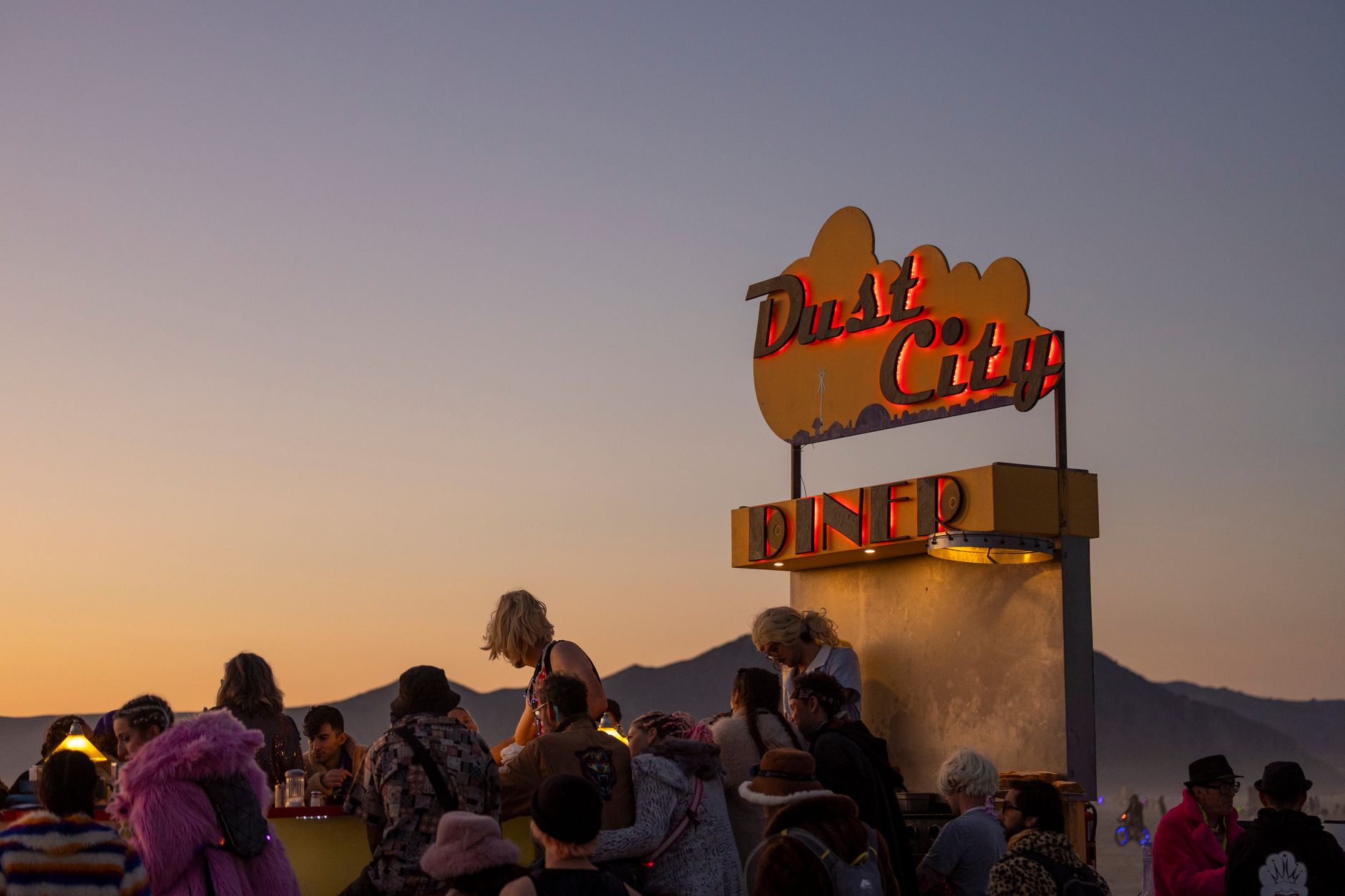
The iconic Dust City Diner glowing in the deep playa under the twilight sky.
Center Camp Plaza used to be where you’d buy your morning latte. But the Center Camp Cafe permanently stopped selling coffee and beverages in 2022 to align with the Principle of Decommodification and eliminate the massive environmental footprint of hauling 10,000 gallons of diesel and generating 25,000 gallons of greywater. Now, it’s a civic space for performance art and yoga. Bring your own reusable mug and explore the radial streets nearby—roughly 10% of theme camps have stepped up to offer free, gifted coffee to keep the community caffeinated.
What to eat: the gift economy in action
You can’t buy food out here. Everything is gifted. But if you know where to look, you won’t starve.
Midnight Poutine
Hot, fresh french fries topped with squeaky cheese curds and rich gravy, gifted to cold, exhausted burners in the middle of the night. Look for the long queue on the radial streets at 2:00 AM at the Midnight Poutine Camp. It costs $0, but you must bring your own reusable bowl and fork.
Dust City Diner Grilled Cheese
A fully functioning, retro 1950s diner that mysteriously appears in the Deep Playa in the middle of the night. Sassy, costumed waitresses serve hot grilled cheese and black coffee for $0—but only if you trade a good joke, a secret, or a song.
Playa Pancakes
Freshly griddled pancakes served with bacon, syrup, and morning beats. You’ll find them scattered throughout the 3:00 and 9:00 sectors. Bring your own plate and cup.
Safety and hazards: how to avoid the medical tent (and jail)
The desert is beautiful, but it’s also actively trying to break you. Here are three high-stakes pitfalls you must prepare for.
The “Dark Wad” Hazard
Never walk or bike at night without active illumination. You must wear head-to-toe LEDs, glow wire, or bright lights. Unlit participants are called “dark wads” and are highly vulnerable to being struck by heavy, moving art cars or speeding bicycles.
Federal Drug Citations by BLM Rangers
The playa is federal land. Even though marijuana is legal in Nevada, federal law applies here. Undercover Bureau of Land Management (BLM) rangers frequently cite or arrest burners for open consumption or possession. Keep all prescription medications in their original pharmacy bottles with your name clearly printed.
Playa Foot (Chemical Alkaline Burns)
The playa dust is highly alkaline (pH of ~10), which chemically dries out and eats away at bare skin, causing painful cracking. Never walk barefoot. Wash your feet daily with a weak acid solution (water mixed with a splash of apple cider vinegar or lemon juice) to neutralize the pH, dry them thoroughly, apply a heavy moisturizer, and put on clean socks.
Connectivity: surviving the digital blackout
If you think you’ll be posting Instagram stories from the dust, think again. While a temporary cell tower is active near Gerlach, the sudden influx of 80,000 people completely congests the network, making calls and data transmission nearly impossible on the playa. There is no public WiFi, and the few camps with Starlink keep their passwords locked down for camp logistics.
Treat this as an intentional offline experience. Download offline navigation and event apps like iBurn or Time to Burn before leaving Reno, because you won’t have internet access to download them on-site. Don’t rely on your phone to find friends. Establish a physical home base or use the analog message boards at Center Camp to leave notes.
Before you head into the dust, and as soon as you return to civilization in Reno or San Francisco, you’ll want a reliable connection to coordinate your ride, check flights, and let your family know you survived. A local prepaid physical SIM in Reno can cost anywhere from $15 to $40 and requires finding a store. Instead, grab a United States eSIM from Galactic Roam before you go. It activates instantly when you hit the tarmac, giving you seamless data the second you leave the playa’s dead zone.
Frequently asked questions
How many stages are there at Burning Man?
There are zero official stages or scheduled musical lineups. The event organizers do not book any acts; instead, all music is 100% participant-driven, hosted by independent sound camps and mobile mutant vehicles.
What is not allowed at Burning Man?
Single-ply cardboard, feathers, loose sequins, glitter, and plastic cable ties (zip ties) are heavily discouraged or banned. They easily break apart in high winds and become Moop (Matter Out of Place), violating the event’s strict Leave No Trace policy.
How much does it cost to go to Burning Man?
Standard ticket prices for 2026 range from $550 to $3,000 depending on the tier, with $775 being the standard “Pay Your Way” tier that covers the actual cost per participant. You also need a $165 vehicle pass, plus the cost of your water, food, and survival gear.
Do you have to stay at Burning Man the whole time?
No, but leaving and returning is highly discouraged. If you must leave, you have to purchase a $60 re-entry wristband at the Gate before you exit. Your original vehicle pass is single-use, so leaving in a personal vehicle requires careful coordination.
Propane burners roar in the freezing dark, smelling of fuel and wet grass. If you aren’t prepared, the world’s largest ballooning event will leave you shivering, stuck in traffic, and deeply frustrated. I’ve navigated the chaotic launch fields to bring you this practical Albuquerque Balloon Fiesta travel guide. You’ll learn how to beat the crowds, avoid parking nightmares, and eat like a local. Here is your ruthless strategy for surviving and enjoying the spectacle.
Key Takeaways
Best time to visit: October 3–11, 2026, during the 54th annual event celebrating Route 66’s centennial.
Must-book logistics: Buy Park & Ride tickets weeks in advance. Avoid driving yourself at all costs.
What to pack: Heavy layers for 40°F (4°C) mornings and waterproof shoes for the wet launch grass.
Safety alert: Lock your vehicle. Albuquerque has a severe vehicle burglary issue during Fiesta week.
The Main Events: What to See
The 54th Albuquerque International Balloon Fiesta is scheduled for October 3–11, 2026. The theme for 2026 is “The Scenic Route,” celebrating the 100th anniversary of Historic Route 66, which means you’ll see plenty of special Route 66-themed balloons. But to actually enjoy them, you need to know where to stand and when to show up.
Dawn Patrol & Mass Ascension
Dawn Patrol starts in the pitch black around 6:00 AM to test wind conditions. Shortly after, the Mass Ascension begins, launching hundreds of hot air balloons into the high-desert sky. It’s a spectacular sight, but the logistics can be brutal if you’re unprepared.
Bring your own camp chairs and a warm blanket. There are only a few dozen picnic tables for tens of thousands of visitors, so you’ll be standing on your feet for hours otherwise. Also, wear waterproof shoes. The 78-acre launch field is equivalent to more than 59 football fields, and it’s covered in freezing morning dew and active sprinklers before sunrise. Wear mesh sneakers and you’ll be squelching around in freezing wet socks all day.
Hundreds of colorful hot air balloons inflating and launching during the morning Mass Ascension.
Anderson-Abruzzo International Balloon Museum
Located right next to Balloon Fiesta Park, this museum offers a fascinating look into the history and science of ballooning. It’s also the perfect place to escape the midday heat or sudden bad weather.
If you want to do this right, book tickets for the Observation Deck VIP experience. It overlooks the launch field, includes a full breakfast buffet and drinks, and lets you watch the balloons without fighting the massive crowds on the grass. Tickets sell out fast, so don’t wait until the last minute.
Balloons drifting past the Anderson-Abruzzo Museum grounds in Albuquerque.
Sandia Peak Tramway
This is the world’s third-longest single-span passenger tramway, offering panoramic views of the Rio Grande Valley from an elevation of 10,378 feet. On a clear day, you can see the balloons drifting far below.
Go during the midday “gap” between the morning launch and the evening glow. This is when most tourists head back to their hotels to nap, meaning shorter lines for you. You must book tickets online weeks in advance, as they sell out completely during Fiesta week.
New Mexican Fuel: What to Eat
New Mexican cuisine is defined by its chiles. You will be asked “red or green?” at almost every meal. If you can’t decide, just say “Christmas” to get a mix of both.
Green Chile Breakfast Burrito
A massive flour tortilla stuffed with eggs, hash browns, cheese, and bacon or chicharrones, smothered in spicy, smoky roasted green chile. Get yours at Tia Betty Blues or Golden Pride for $8–$15.
Sopapillas with Honey
Puffy, hollow fried dough served warm. Bite off a corner and drizzle honey directly into the steaming pocket to soothe the burn of spicy chile. Try them at Sadie’s of New Mexico or El Modelo for $3–$6.
Christmas-Style Enchiladas
Corn tortillas stacked with cheese and meat, smothered half in earthy red chile and half in bright green chile. This style was coined by waitress Martha Rotunno at Tia Sophia’s in the 1970s to help waffling customers. Grab a plate at Duran’s Central Pharmacy or Monroe’s for $12–$18.
Crucial Logistics & Safety Warnings
Driving to the park yourself is a rookie mistake. You will sit in gridlock for hours and pay $20 cash for parking. Instead, buy a Park & Ride ticket online for about $32.59, which includes round-trip bus transit and park admission. Shuttles use dedicated lanes to bypass the traffic.
But there’s a catch. The Park & Ride shuttle does not operate on Monday, Tuesday, or Wednesday of the Fiesta. On those days, you must drive, rideshare, or bike.
Dress in layers due to the “Albuquerque Box” temperature swing. It can be a freezing 40°F (4°C) at 4:30 AM but climbs to the mid-70s°F (24°C) once the sun rises over the Sandia Mountains. Wear layers you can easily shed and carry in a backpack.
Hotel Parking Lot Burglaries
Thieves actively target out-of-state vehicles and trailers along I-25 and Central Avenue during Fiesta week. They even steal entire trailers containing hot air balloons, prompting the event to provide GPS trackers to pilots. Never leave anything of value in your car, park in well-lit areas with active security cameras, and use heavy-duty hitch locks if towing gear.
Third-Party Ticket Scams
Only buy tickets directly from the official website (balloonfiesta.com). Scammers frequently sell fake PDF tickets or inflated-price contracts on Craigslist and Facebook Marketplace to unsuspecting tourists.
Altitude Sickness & Dehydration
Albuquerque sits at 5,100 feet, and Sandia Peak reaches over 10,300 feet. Drink double the amount of water you normally would, avoid heavy alcohol on your first night, and wear high-SPF sunscreen to combat the intense high-desert UV rays.
Staying Connected in the Crowds
The 2025 event saw an estimated 852,000 total visits over its nine-day run, generating a massive $216.33 million economic impact for New Mexico. With that many people crammed into a 365-acre park, local cell towers get heavily congested. Data speeds drop to a crawl for about two hours every morning from Dawn Patrol to the end of Mass Ascension.
Because of this extreme network congestion, you should download your digital tickets, parking passes, and offline maps before arriving at the park. Cellular providers deploy temporary “COWs” (Cells on Wheels) using laser-based backhaul, but connectivity remains spotty during peak launch hours. To avoid paying exorbitant roaming fees while traveling through the US, grab a United States eSIM before you land. It lets you connect to local networks instantly without hunting down a physical SIM card at the airport. If you are planning a trip to Texas for the race, our austin f1 travel guide is another essential resource for your checklist.
Yes, but only if you plan ahead. If you show up late or try to drive yourself during peak hours, you’ll spend the entire morning staring at the brake lights of a rental car on Interstate 25.
What should I wear to the balloon fiesta?
Wear warm layers and waterproof shoes. Temperatures can hover around 40°F (4°C) before sunrise but quickly climb to 75°F (24°C) by midday, and the grass field is incredibly wet with morning dew.
Can you buy tickets at the gate?
While some tickets may be available, it is highly recommended to buy them in advance from the official website to avoid long lines and potential sell-outs. Avoid third-party resellers.
How do I avoid traffic at the Balloon Fiesta?
Use the official Park & Ride shuttle service on Thursday, Friday, Saturday, and Sunday. The buses use dedicated lanes to bypass the gridlock that traps regular passenger vehicles.
By the summer of 2026, the United States will face its largest tourism surge in a generation. Between the 48-team Fifa World Cup and the country’s 250th anniversary celebrations, millions of travelers are about to crowd already packed corridors. I’ve spent years navigating the United States, and visiting without a clear strategy means spending your vacation stuck in lines or falling for obvious tourist traps. This practical United States travel guide will help you skip the chaos, avoid the scams, and eat like a local.
Quick Facts — United States
Currency US Dollar ($)
Language None official (English & Spanish de facto)
Time zone GMT-4 to GMT-10
Plug type Type A and B
Best time to visit May to September
Visa Esta (ePassport required)
2,800
Miles NYC to LA
66.5M
Visitors (2023)
$10k
Daily Hospital Cost
18%
Min. Restaurant Tip
Crucial Logistics You Can’t Ignore
First, let’s talk about entering the country. If you’re traveling under the Visa Waiver Program with an Esta, you must have an electronic passport with an embedded chip. Apply at least 72 hours before your flight.
When you hit customs, be incredibly careful with your words. State your purpose strictly as “tourism” or “vacation.” Carrying a resume or mentioning that you’re “looking for opportunities” is a fast track to immediate deportation.
Once you’re in, the financial culture shock begins. Tipping isn’t optional here; it’s how service workers survive. Expect to leave 18% to 22% at sit-down restaurants, $1 to $2 per drink at bars, and 15% to 20% for rideshares. If you are planning a trip to the Nevada desert for the ultimate festival experience, our burning-man-survival-guide is essential reading.
Important Outside of transit-heavy hubs like New York or Boston, you will need to rent a car. When fueling up, prepay inside with cash or card; foreign credit cards almost always fail at the pump because they require a US billing ZIP code for verification.
Attractions Actually Worth Your Time
Most tourist landmarks in the US are crowded, overpriced, and underwhelming. But a few genuinely deliver if you know how to play the system. If you plan to experience New England’s spooky season, our salem haunted happenings guide is essential for surviving the massive October crowds. For motorsport fans heading to Texas, our austin f1 travel guide offers the perfect game plan for navigating Circuit of the Americas, while our austin city limits travel guide is a must-read for music lovers heading to Zilker Park. Meanwhile, those heading south can use our miami travel guide to experience the city’s legendary art festivals like a local.
Alcatraz Island, San Francisco
This former federal prison is chillingly historic. Skip the daytime rush and book the official Night Tour through Alcatraz City Cruises months in advance. It’s the only ticket that gets you into the dark, eerie hospital wing.
The High Line, New York City
This 1.45-mile elevated park on an abandoned rail line is brilliant, but it gets choked with tourists by noon. Enter at the Gansevoort Street stairs right at 7:00 AM. Walk north to the “Chelsea Thicket” for a quiet, forested escape in the middle of Manhattan.
Grand Canyon (South Rim)
The scale here is hard to comprehend, but Mather Point is a zoo at sunrise. Take the free Orange shuttle to Yaki Point instead. Or, hike down 0.9 miles on the South Kaibab Trail to Ooh Aah Point for an unobstructed 360-degree view.
What to Eat: True Regional Classics
Forget generic fast food. The US has incredibly distinct regional food scenes that are worth traveling for.
Hatch Green Chile Cheeseburger
A classic beef patty elevated with smoky, roasted green chiles native to New Mexico. Grab one at Sparky’s in Hatch or Santa Fe Bite in Santa Fe for $12 to $18. If you are visiting the Southwest in October, check out our Albuquerque Balloon Fiesta Guide: Tips for First-Time Visitors to make the most of your trip.
New Haven-Style Apizza (White Clam Pie)
This coal-fired, thin-crust masterpiece features fresh clams, garlic, olive oil, and pecorino Romano. Get the original at Frank Pepe Pizzeria Napoletana in New Haven, Connecticut for $20 to $35.
Chicago Italian Beef
Thinly sliced roast beef simmered in rich gravy, served wet on an Italian roll, and topped with spicy giardiniera. Head to Johnnie’s Beef in Elmwood Park or Al’s #1 in Chicago ($8 to $12).
Scams to Dodge in Major Cities
American cities are generally safe, but tourist-heavy zones are prime hunting grounds for petty scammers. Keep your wits about you.
The CD/Mixtape Scam
In Times Square or the Hollywood Walk of Fame, street artists will hand you a “free” CD. Once you touch it, they’ll surround you and aggressively demand a $10 to $20 donation. Keep your hands in your pockets and walk past.
Unlicensed ‘Gypsy Cabs’
At JFK, LAX, or LGA, drivers in the arrivals hall will offer cheap rides. They are unlicensed and will hit you with massive, unregulated rates at your destination. Only use official taxi queues or rideshare apps in designated zones.
Aggressive Costumed Characters
People dressed as film characters in Las Vegas or Times Square will pull you in for a photo. Immediately after, they’ll demand tips of $10 to $20 per person. If you don’t want to pay, don’t take the photo.
Staying Connected Across the States
Buying a physical prepaid SIM card in the US is surprisingly annoying. Airports rarely sell them cheaply, meaning you have to hunt down a retail store in the city and pay $30 to $60. Even worse, some foreign phones lack the specific LTE/5G frequency bands (like Band 12 or 71) used by US networks, leaving you with terrible reception.
Public Wi-Fi is everywhere, but most networks require a US phone number to register. To avoid the headache, buy a United States eSIM before you fly. It connects automatically to local networks the second you land, giving you instant access to maps and rideshare apps without the retail store runaround.
Frequently Asked Questions
Is sales tax included in the displayed price in the US?
No. Sales tax is almost never included in the price tag. It is calculated and added at checkout, and the rate varies wildly depending on the state, county, and city you are in.
Do I need travel insurance for the United States?
Absolutely. The US healthcare system is entirely private and incredibly expensive. A single day in a hospital can easily exceed $10,000 for an uninsured patient, so do not travel without comprehensive medical coverage.
Is English the official language of the US?
Surprisingly, the United States has no official language at the federal level. While English is the de facto national language, Spanish is incredibly common and widely spoken across many states.
Planning your route across the Atlantic? Skip the airport lines and stay connected from coast to coast with a United States eSIM from Galactic Roam.
By late August 2026, thousands of coastal road-trippers will find themselves trapped in a 10-mile detour nightmare in Big Sur. The active Timber Fire has severed Highway 1, turning what should be a dream West Coast road trip itinerary into a frustrating exercise in backtracking. I’ve spent years navigating these coastal highways, and I know exactly how to bypass the bottlenecks, dodge the parking scams, and find the spots actually worth your time. Here is your battle-tested strategy to survive the drive and see the best of the coast.
656
Total Miles
10
Mile Closure
150
Parking Spots
60%
SF Break-in Drop
The 2026 Reality Check: Fire, Landslides, and Detours
The classic Pacific Coast Highway (State Route 1) spans approximately 656 miles along the California coastline, but driving it straight through is currently impossible. The active Timber Fire, which ignited on August 9, 2026, has forced the closure of a critical 10-mile stretch of Highway 1 in Big Sur from Julia Pfeiffer Burns State Park to south of Alila Ventana Resort. If you’re planning your drive for late summer 2026, you must monitor daily Caltrans updates and prepare to detour inland via US 101.
This isn’t the first time the road has buckled. The massive Regent’s Slide landslide on February 9, 2024, displaced over 300,000 cubic yards of material, closing the highway for over two years before its brief reopening. The truth is, the PCH is a fragile strip of asphalt that frequently merges with US 101, and it technically ends in Southern California anyway.
If you’re connecting from the east—perhaps driving historic Route 66 or Interstate 40 to the southern terminus in Dana Point—or timing your trip with the Albuquerque International Balloon Fiesta in October, you need a flexible plan. If your route includes a detour through Nevada, our las vegas travel guide can help you navigate the Strip and avoid the crowds. If you are planning to attend, check out our Albuquerque Balloon Fiesta Guide: Tips for First-Time Visitors. Always drive from north to south, starting in San Francisco and ending in Los Angeles. This keeps your car in the right-hand lane closest to the ocean, making it safer to pull into scenic turnouts without crossing oncoming traffic. If you are visiting from abroad, our united states travel guide offers more essential tips for first-time travelers.
Important Gas stations within Big Sur are sparse and charge double the state average, sometimes over $8 to $10 per gallon. Fill your tank completely in Carmel-by-the-Sea or Cambria before entering the remote coastal highway.
Three Coastal Stops Actually Worth the Detour
Some stops along the coast are tourist traps designed to separate you from your cash. Others are spectacular enough to justify the extra miles. These three are genuinely worth the effort, provided you know the local rules.
Point Lobos State Natural Reserve
Often called the crown jewel of the state park system, Point Lobos packs dramatic cliffs, hidden coves, and rich marine life into a compact, easily walkable area. But visiting requires precise timing.
The main parking lot only holds 150 vehicles and fills up by 9:00 AM. If you miss out, you can park along Highway 1 for free, but you must pay close attention to the white lines. If any part of your tire crosses the line onto the asphalt, you will get a hefty ticket. Be prepared for an extra 1-to-2-mile walk just to reach the trailheads from the highway.
Rocky coastal cliffs and crashing waves at Point Lobos State Natural Reserve.
Pfeiffer Beach
Famous for its Keyhole Arch and unique purple-hued sand created by manganese garnet washing down from the surrounding cliffs, this beach is a favorite for photographers. However, the purple sand is not always visible.
The color is most prominent immediately after a winter rainstorm or a heavy sea swell. There is absolutely no signage on Highway 1 for this beach. You must look for the unmarked turnoff at Sycamore Canyon Road at mile marker MON 45.64 and bring $15 cash for the day-use parking fee.
The sun shining through the Keyhole Arch at Pfeiffer Beach.
Elkhorn Slough (Moss Landing)
This is one of California’s largest wetlands, offering an unparalleled opportunity to kayak alongside hundreds of southern sea otters, harbor seals, and migrating seabirds. It is a quiet alternative to the crowded Monterey aquarium.
To see the sea otters at their most active, plan your kayak launch during low tide, when they gather in massive rafts to nap wrapped in eelgrass. Always launch between 7:00 AM and 10:00 AM. By midday, strong afternoon winds of 10 to 20 knots kick up, making the paddle back to the harbor incredibly exhausting.
A harbor seal resting on the muddy banks of Elkhorn Slough.
What to Eat Along the Route
You can’t live on gas station snacks alone. The Central Coast has two distinct culinary specialties that you should not skip.
Santa Maria-Style Tri-Tip Sandwich
This is a triangular cut of beef seasoned simply with salt, pepper, and garlic salt, then grilled hot and fast over native red oak wood on an adjustable iron grate. It is smoky, tender, and deeply satisfying.
You can find the real deal at Jocko’s Steak House in Nipomo or The Hitching Post in Casmalia, both located just off Highway 101. Expect to pay between $15 and $25 for a sandwich that will keep you full until dinner.
A classic grilled beef sandwich served on crusty bread.
Olallieberry Pie
The olallieberry is a rare hybrid of blackberry, raspberry, and dewberry grown locally on the Central Coast. It has a distinct sweet-tart flavor that is perfect in a pie.
Stop by Linn’s Easy As Pie Cafe in Cambria to grab a slice. It costs $8.00 per slice, or $33.00 if you want to take a whole pie back to your hotel room.
A slice of freshly baked berry pie being served.
Safety & Local Laws: How to Avoid Tickets and Scams
California is beautiful, but it has its share of hazards. From city thieves to strict traffic laws, you need to keep your wits about you.
Car Break-ins (“Bipping”)
In San Francisco hotspots like the Palace of Fine Arts, Alamo Square, and Fisherman’s Wharf, thieves use spark plug porcelain to quietly shatter windows in under two seconds. Leave absolutely nothing visible in your car—not even a charging cable. If driving an SUV, remove the trunk cover entirely to show the cargo area is empty.
Fake Parking Attendant Scam
Near Pier 39 in San Francisco (specifically Seawall Lot 314), scammers in high-visibility vests wave flashlights and demand $20 to $40 cash to park. Real municipal lots are strictly self-service via automated machines or mobile apps. Never pay cash to an individual unless they are operating from an official, branded physical booth.
The Slow-Moving Vehicle Turnout Law
Under California Vehicle Code Section 21656, if you are driving slowly to sightsee and have 5 or more vehicles trailing behind you, you are legally required to pull over at the next designated turnout to let them pass. Failing to do so can result in a costly traffic ticket and aggressive tailgating from frustrated locals.
Connectivity: Preparing for the Big Sur Dead Zone
Don’t rely on active cellular service for your entire drive. Big Sur is a notorious 40-to-50-mile cellular dead zone for all major US carriers. You’ll need to download offline maps and save your hotel details before leaving Carmel (heading south) or San Simeon (heading north), as your GPS routing will fail without pre-loaded data.
While cities like San Francisco and Los Angeles have excellent 5G coverage, remote coastal lodges rely on satellite internet like Starlink, which slows down significantly during heavy coastal fog or winter storms. Buying a local physical SIM card at retail stores like Walmart or Target will cost you $30 to $60, while airport kiosks are heavily marked up and can charge up to $82 for basic data packages.
To avoid the hassle of queuing at the airport or dealing with physical cards, getting a prepaid United States eSIM before you land is the easiest way to stay connected. It allows you to activate a local data plan instantly, ensuring you have maps ready before you hit the coastal dead zones.
Local SIM
Galactic Roam eSIM
Cost
$30 – $82
From $8
Activation
Physical swap
Instant, pre-arrival
Registration
ID required at retail
None
Ready on arrival
No (must find shop)
Yes
Data options
Fixed tiers
Flexible plans
Frequently asked questions
How many days do I need for a West Coast road trip?
For the classic San Francisco to Los Angeles stretch, you should focus strictly on a 5-day or 7-day itinerary to avoid rushing. If you have 10 to 14 days, you can comfortably extend the drive north to Redwood National Park or south to San Diego. A 21-day trip allows you to add inland loops like Yosemite and Death Valley.
Can I drive the entire Pacific Coast Highway right now?
No. As of August 2026, a 10-mile section of Highway 1 in Big Sur is closed due to the active Timber Fire. You must plan to detour inland via US 101 between Carmel and Cambria to bypass the active fire zone.
What is the best direction to drive the California coast?
Always drive from north to south (San Francisco to Los Angeles). This keeps your vehicle in the right-hand lane closest to the ocean, which gives you unobstructed views and makes pulling into scenic turnouts significantly safer.
Before you load up the car and head out onto the open road, make sure your digital logistics are sorted. Grab a United States eSIM from Galactic Roam to keep your maps running, bypass the spotty coastal lodge WiFi, and avoid paying extortionate airport prices for local data packages.