

France Travel Guide: How to Escape the Crowds and Plan the Perfect Regional Itinerary
France welcomed 102 million international visitors in 2025—making it the most crowded playground on the planet. If you show up in 2026 without a precise strategy, you’ll spend half your vacation standing in security lines or staring at the back of someone’s head. Having spent years navigating the country’s regional quirks, I’ve put together this realistic France travel guide to help you bypass the bottlenecks, dodge the classic tourist traps, and actually enjoy your trip.
Quick Facts — France
Euro (€)
French
Central European Time (CET)
Type C and E
May to June, September to October
Biometric EES registration required as of April 2026
Key Takeaways
- Best time to visit: Shoulder seasons (May or September) keep you out of the worst summer heat and peak crowds.
- Budget needed: Expect to spend around €150–€250 per day for mid-range travel, though the average visitor spends about €760 total per stay.
- Must book ahead: Notre-Dame de Paris requires a timed app reservation, and regional trains (TER) require physical ticket validation.
- Getting around: High-speed TGV trains connect major hubs, while local TER trains handle regional routes.
The New Rules of Entry for 2026
If you haven’t been to Europe recently, the border crossing is going to look very different. The European Union’s Entry/Exit System (EES) went fully live on April 10, 2026. This means non-EU travelers now undergo digital biometric registration—facial scans and fingerprints—at French border crossings instead of getting a manual ink stamp in their passports.
Expect some initial bottlenecks at major hubs like Charles de Gaulle Airport or the Eurostar terminals. Give yourself an extra hour of buffer time on arrival. Once you’re through, the system makes tracking your 90-day Schengen limit automatic, so don’t try to stretch your stay.
Top Regional Attractions: What’s Worth It and How to Do It Right
With international tourism revenue reaching a record €77.5 billion, the country’s main sites are more commercialized than ever. Some are overhyped traps. Others are absolutely worth the journey if you know how to navigate them.
Notre-Dame de Paris Cathedral
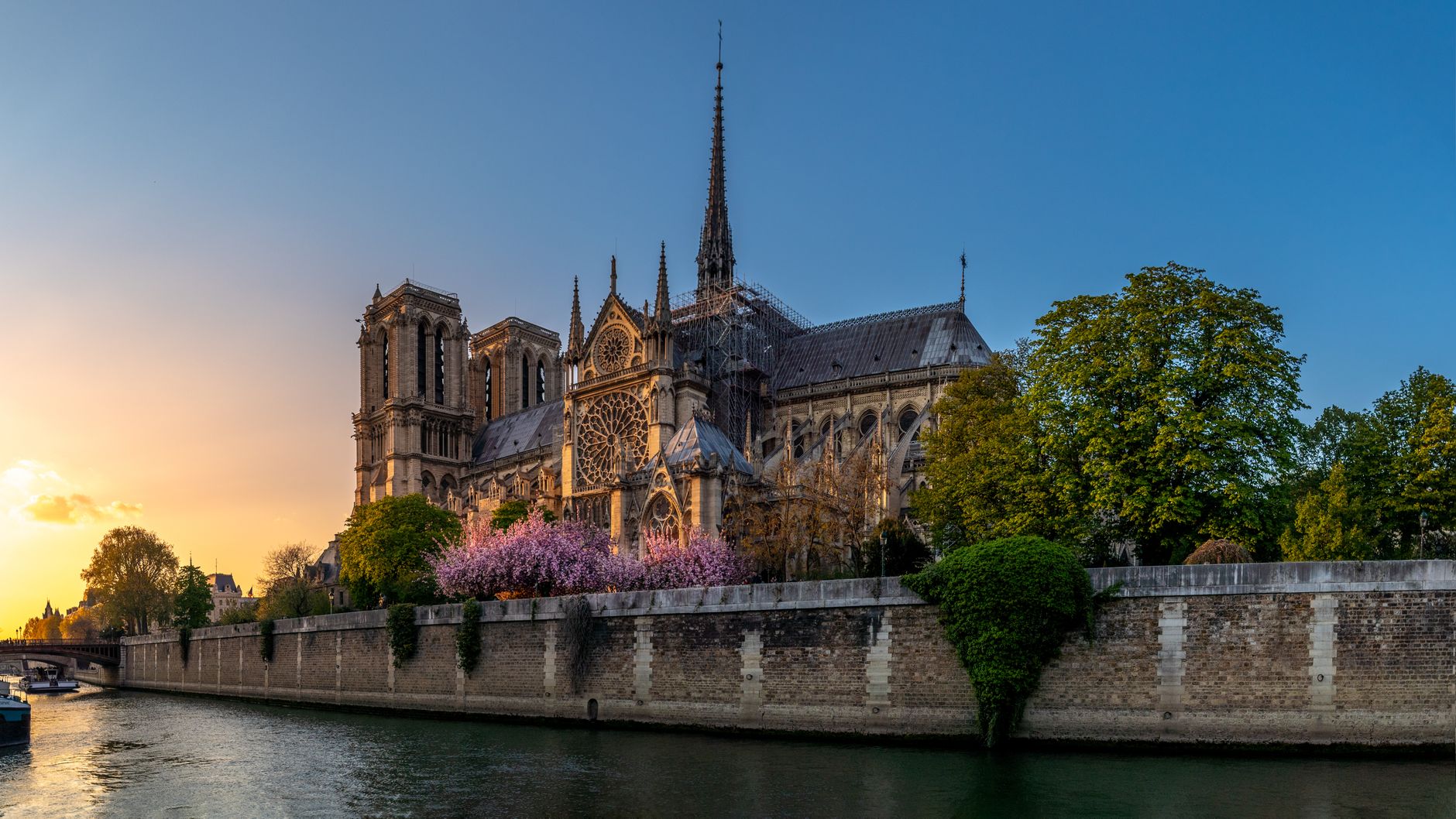
2026 marks the first full travel year where Notre-Dame is settling into its new visitor rhythm after its grand reopening. The restoration is meticulous. The interior limestone walls glow with their original blonde warmth, the cleaned stained glass of the Rose Windows filters light with sharp clarity, and the 8,000-pipe Great Organ is back in perfect voice.
But do not just show up expecting to walk in. You must download the official Notre-Dame app to book a free timed entry slot. These slots are highly competitive and are released in two waves: exactly 3 days in advance at 7:45 AM local time, and again on the morning of your visit. If you want to climb the Bell Tower, that requires a separate paid ticket managed by the Centre des monuments nationaux.
Mont Saint-Michel (Normandy)
This medieval abbey perched on a rocky tidal island in Normandy is a UNESCO World Heritage site that looks like a floating mirage when the high tide rolls in. It is undeniably striking. It is also a victim of its own popularity, turning into a claustrophobic bottleneck by 11:00 AM daily.
Most tourists visit as a rushed day trip from Paris, arriving at midday when the narrow stone streets are packed shoulder-to-shoulder. Skip the day trip. Instead, stay overnight in a nearby manor or on the island itself. The abbey is best experienced at dusk or dawn when the crowds vanish, leaving you to watch the tide roll in in absolute peace.

Château de Chenonceau (Loire Valley)
Known as the “Château des Dames,” this Renaissance castle literally spans the River Cher, offering sharp reflections and beautifully manicured gardens. While everyone else is jostling for a photo on the crowded viewing platforms, you can get a much better perspective from the water.
Rent a kayak or canoe from the nearby village of Civray-de-Touraine and paddle right under the arches of the castle. It is a completely different, crowd-free experience that most tourists miss entirely. Plus, it gets you away from the tour buses and lets you appreciate the architecture at your own pace.

Regional Culinary Specialties: What to Eat and Where
French food is highly regional. If you only eat croissants and steak frites in Paris, you’re missing the point. Here are three regional specialties that are actually worth the journey.
Socca (Nice)
This is a savory, crispy-on-the-outside, soft-on-the-inside pancake made from chickpea flour, olive oil, and water. It is baked in a massive copper pan inside a wood-fired oven and heavily seasoned with cracked black pepper. It is naturally gluten-free and unique to Nice and the French Riviera.
Grab a plate at Chez Pipo in Nice, or buy it hot from a vendor at the Cours Saleya flower market. It should only cost you €3 to €6 and makes the perfect mid-afternoon snack while wandering the old town.
Quenelles de Brochet (Lyon)
Lyon is the culinary capital of France, and this is its signature dish. These are light, airy dumplings made of creamed pike fish, eggs, and breadcrumbs, shaped like rugby balls and baked in a rich, creamy Nantua sauce—a decadent crayfish butter sauce.
To get the real deal, head to a traditional “Bouchon” (a classic Lyonnais tavern) like Café des Fédérations. Expect to pay between €15 and €25. It is incredibly rich, so don’t plan on doing any heavy walking immediately afterward.
Bouillabaisse (Marseille)
Do not buy the €15 “bouillabaisse” advertised on tourist menus near the Old Port of Marseille—it is a watery, frozen-fish trap. Authentic bouillabaisse is a highly seasoned, rich fish stew made with at least four types of local rockfish, simmered with saffron, fennel, and garlic. It is served with croutons and “rouille,” a spicy garlic-saffron mayonnaise.
Because of the strict requirements for fresh, local catch, a real bouillabaisse is expensive, usually running between €50 and €80. Book a table at Chez Fonfon to experience the real thing. It is a serious meal, often served in two courses: first the broth, then the fish.
Scams and Safety: How to Keep Your Cash
France is generally safe, but its high tourist numbers attract highly professional scammers. If you know what to look for, they are easy to avoid. Here are the three most common traps operating right now.
The ‘Friendship Bracelet’ Scam
Location: The steps leading up to the Basilica of Sacré-Cœur in Montmartre, Paris. Aggressive men will try to grab your wrist to tie a colorful thread around your finger, quickly braiding it and demanding €10–€50. Avoid the central staircase entirely; walk up the side stairs or take the funicular, keep your hands in your pockets, and make no eye contact.
The ‘Fake Petition’ Scam
Location: Near the Eiffel Tower, the Louvre, and Notre-Dame Cathedral. Young people pretending to be deaf or mute will wave clipboards in your face, asking you to sign a petition for a fake charity. While you are distracted, an accomplice will pick your pockets. Simply say a firm “Non, merci” and keep walking.
Pickpocketing on Public Transit
Location: Paris Métro Line 1, Line 4, and the RER B train from Charles de Gaulle Airport. Teams of pickpockets operate by crowding the doors as people board or exit, or by staging an “accidental” bump. Keep your backpack on your front, zip up all pockets, and never keep your phone in your back pocket.
Essential French Logistics You Need to Know
Navigating France is straightforward once you understand the unwritten rules. Get these wrong, and you’ll face immediate, non-negotiable fines from transit officers who have zero sympathy for tourists.
Navigating French Transit — step by step
When traveling from CDG Airport to central Paris, you must buy a specific RER B ticket (approx. €11.80). A standard Métro ticket (T+) is NOT valid for the RER outside zone 1. Always keep your ticket until you exit the station, as transit agents (“contrôleurs”) conduct random checks, and you will face an on-the-spot fine of €35–€50 if you can’t produce it.
If you buy a physical paper ticket for regional trains (TER), you Must validate it in the yellow machines (“composteur”) at the platform entrance before boarding. Failure to do so results in a hefty fine from the conductor. Digital tickets on your phone do not need to be stamped but must be ready to scan.
France is highly digitized; Visa and Mastercard are accepted almost everywhere, even for a €1.20 baguette. Keep €10–€20 in cash for small market stalls. Tipping (“pourboire”) is not mandatory as a 15% service charge (“service compris”) is legally included in restaurant bills; leave €1–€2 per €20 spent only if the service was exceptional.
Staying Connected in France
France has excellent digital infrastructure, with widespread 4G and 5G coverage across all major cities and high-speed train routes. However, if you venture deep into the valleys of the Loire Valley or the Alps, expect the signal to drop to 3G or H+ occasionally. WiFi is highly reliable and widely available in hotels, cafes, and restaurants.
There is a legal quirk you should know: under French law, public WiFi networks are legally required to log user connection data for one year. This means you must provide an email address or phone number to register for municipal WiFi in parks and plazas. There are no major app blocks or VPN restrictions in the country.
| Local SIM | Galactic Roam eSIM | |
|---|---|---|
| Cost | €10–€40 | From $8 |
| Activation | Physical swap in store | Instant, pre-arrival |
| Registration | ID/Passport required | None |
| Ready on arrival | After queuing | Yes |
| Data options | Fixed tiers | 1 GB / 3 GB / 5 GB / 10 GB |
Frequently Asked Questions
What is the best way to spend 5 days in France?
What are the current entry requirements for France?
How do I avoid the crowds on the French Riviera?
Is tap water safe to drink in France?
Planning a trip to France takes some coordination, but getting your phone connected shouldn’t be part of the headache. Instead of standing in line at CDG to buy a physical SIM card or dealing with public WiFi registration laws, you can set up a France eSIM before you even leave home. It takes about two minutes to activate, connects automatically when you land, and keeps you online from the streets of Paris to the beaches of Nice without any hidden roaming fees. If you are staying in the capital, be sure to read our paris neighborhood guide to find the best area for your trip. If your European itinerary also takes you north, don’t miss our comprehensive netherlands travel guide to help plan your next adventure. Heading to the Alps next? Read our switzerland travel guide to plan your mountain escape.