Connect Globally

Trusted by Millions

Harbin Ice and Snow Festival Guide: How to Plan Your Winter Trip

Harbin freezes 400,000 cubic meters of river ice all summer just to build a city that melts in March. If you’re planning to brave the -30°C cold for the 28th Harbin Ice and Snow Festival starting with the soft opening on December 20, 2026, you need a survival strategy, not a generic travel brochure. I’ve spent weeks navigating the frozen streets of Northeast China to figure out how to dodge the predatory scams and booking chaos. Here is your realistic, boots-on-the-ground Harbin Ice and Snow Festival guide to surviving the freeze.

1.25M
Square Meters
400K
Cubic Meters of Ice
3.56M
Annual Visitors
-30°C
Average Temp

The Survival Playbook: Cash, Metro, and Frozen Phones

China is almost entirely cashless, and your foreign credit cards are useless at local shops. Before you fly, download WeChat and Alipay and link your international Visa or Mastercard. You’ll need them to buy metro tickets, scan table QR codes to order food, and pay for taxis.

When the sun goes down, the temperature drops to -30°C, and your smartphone battery will die in minutes. Keep your phone in an inner pocket close to your body heat, stick a chemical hand warmer directly to the back of your phone case, and carry a high-capacity power bank. If your phone dies, your money and your way home go with it.

Forget flagging a taxi in the freezing wind when the park closes. Harbin Metro Line 2 is your lifeline, connecting Harbin Railway Station, Central Street, and the dedicated “Ice and Snow World” station. Take Exit 3 to get within 50 meters of the ticket hall, or Exit 4 to walk straight inside for 2 to 7 RMB ($0.28–$1.00 USD).

What is Actually Worth Your Time

Super Ice Slide (超级冰滑梯) China
The massive scale of the Harbin Ice and Snow World from above.

Super Ice Slide (超级冰滑梯)

This is a 521-meter-long slide starting from a 20-meter-high platform that rockets you down solid ice in under a minute. Riders must be between 15 and 60 years old and over 160 cm tall. To ride, you must book a highly competitive reservation slot on the official WeChat mini-program (released every even hour) immediately after your entry ticket is verified.

Snowflake Ferris Wheel (雪花摩天轮) China
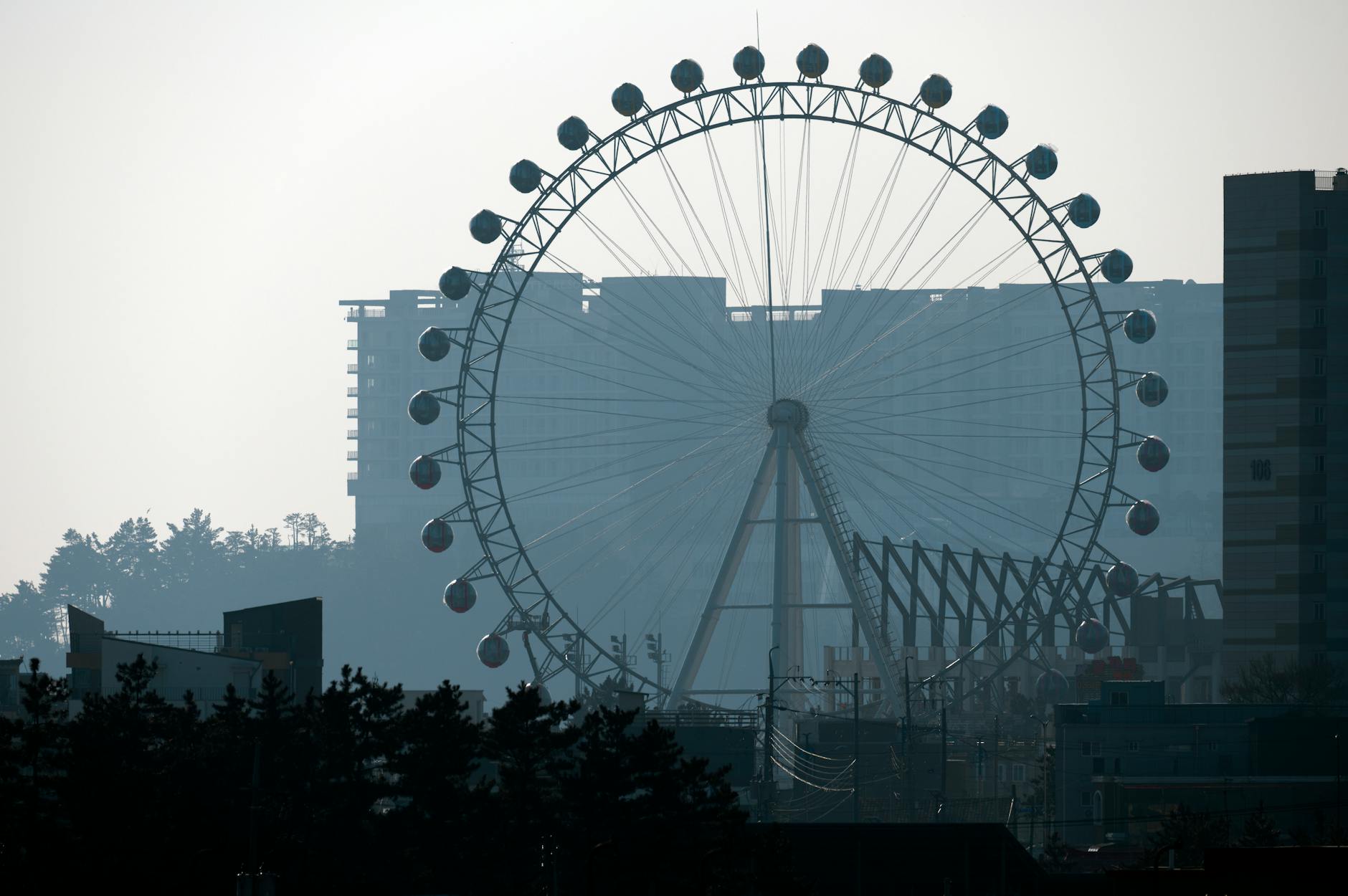
The Snowflake Ferris Wheel illuminated at dusk.

Snowflake Ferris Wheel (雪花摩天轮)

A 120-meter-tall giant wheel offering views of the frozen Songhua River and the entire illuminated ice kingdom. Book your slot on WeChat on the hour and aim to ride between 3:30 PM and 4:00 PM to watch the twilight transition into the neon glow of the sculptures.

Old Daowai Chinese Baroque Block (老道外) China
Intricate Chinese Baroque architecture in Old Daowai.

Old Daowai Chinese Baroque Block (老道外)

While tourists crowd Central Street, head here to see European Baroque facades fused with traditional Chinese courtyards. It is the best place to find authentic, un-marked-up local food and explore historic alleyways without the crushing crowds.

What to Eat: Fueling Up in the Freeze

Guobaorou (锅包肉 - Sweet and Sour Pork) China food
Crispy Guobaorou served fresh at a local Harbin restaurant.

Guobaorou (锅包肉)

Crispy, double-fried pork slices coated in a tangy sweet-and-sour ginger sauce. Invented right here in Harbin, you can get the original version at Laochujia on Jingwei Street for about 40 to 60 RMB ($5.50–$8.50 USD).

Modern (Madieer) Ice Cream (马迭尔冰棍)

Eating a rich, egg-and-milk-based popsicle in -20°C weather is a mandatory local rite of passage. Grab one from the original window at the Modern Hotel on Central Street for 5 to 10 RMB ($0.70–$1.40 USD).

Northeast Iron Pot Stew (铁锅炖)

A massive, slow-cooked table-side stew of pork ribs, corn, and potatoes with cornmeal flatbreads steamed directly on the sides of the iron pot. Head to Shanhetun Stewed Dish in Iron Pot; a massive shared pot costs 100 to 180 RMB ($14–$25 USD).

Scams to Dodge in Harbin

Black Cabs (Hei Che)

Touts at the airport, train stations, and park exits will offer flat rates 2 to 3 times higher than metered fares. Ignore them and walk to the official taxi queue, or use the DiDi app which accepts foreign credit cards. When the park closes, regular taxis are impossible to find—take Metro Line 2 instead.

Central Street Markups & Fake Specialties

Restaurants directly on Central Street charge a 30% to 50% premium for mediocre food. Walk a block or two away to Jingwei or Zhaolin Street for local prices. Also, avoid buying Harbin red sausage from tourist stalls here; buy them from reputable local supermarkets like Qiulin Lidaosi.

Cheap Tour Scams to Snow Town

Avoid street agencies offering multi-day trips to Yabuli Ski Resort or China Snow Town for a few hundred RMB. These are bait-and-switch operations where you will be forced into expensive mandatory upgrades, overpriced gear rentals, or high-pressure shopping stops. Book only through verified international platforms.

Frequently Asked Questions

When does the Harbin Ice and Snow Festival actually start?

The official opening ceremony is usually on January 5, but the soft opening starts around December 20, 2026. Going during the soft opening means fewer crowds, though some sculptures might still be getting their final touches.

How cold does it actually get in Harbin?

Temperatures routinely drop between -20°C and -30°C in January. You need thermal base layers, a heavy down coat, windproof pants, insulated boots, and plenty of heat packs to survive more than an hour outdoors.

Can I use Google Maps to get around Harbin?

No, Google Maps has a severe GPS offset issue in China that will show you in the wrong place. Use Apple Maps or download Amap (Gaode) for accurate navigation.

Staying Connected Behind the Great Firewall

While Harbin has excellent 4G and 5G coverage, China’s Great Firewall blocks Google, WhatsApp, Instagram, and Facebook. You can buy a local SIM at the airport for 30 to 150 RMB ($4 to $21 USD), but it requires passport registration, a facial scan, and won’t bypass the blocks unless you have a reliable VPN. A much simpler workaround is using a China Mainland eSIM from Galactic Roam. It routes your mobile data outside the firewall so your apps work natively without a VPN, though keep in mind this bypass only works on cellular data—the moment you connect to local hotel WiFi, you’ll be blocked again.


Get your China Mainland eSIM


China Travel Guide: Essential Tips for First-Time Visitors

Everyone told me navigating China was a bureaucratic nightmare of paper forms and visa queues. If you try to tackle this massive country without a plan, you’ll end up overwhelmed, overpaying, and staring at the backs of tour groups. I’ve spent years navigating East Asia’s transit networks, and these practical China travel tips will keep you ahead of the crowds. Here is how to experience the real soul of the country without the headache.

Quick Facts — China

Currency
Renminbi (CNY / ¥)
Language
Mandarin Chinese
Time zone
China Standard Time (GMT+8)
Plug type
Type A, C, and I
Best time to visit
April–May & September–October
Visa
Visa-free for 45+ countries through 2026

The Big 2026 Update: Frictionless Entry

The travel landscape here changed dramatically in late 2025. China has extended its unilateral visa-free entry policy through December 31, 2026. Ordinary passport holders from over 45 countries—including France, Germany, Italy, Australia, New Zealand, Japan, South Korea, and Sweden—can enter completely visa-free for up to 30 days.

Paper arrival cards are also mostly a thing of the past. The digital arrival card system launched on November 20, 2025, lets you register online at s.nia.gov.cn or via WeChat before you even board your flight. Do this before landing to bypass the chaotic paper-form desks at immigration.

One critical date to keep in mind is the Mid-Autumn Festival on September 25, 2026. If you travel during this week, expect massive domestic crowds. Book everything months in advance or avoid this specific window entirely. For those visiting during the colder months, our Harbin Ice and Snow Festival Guide: How to Plan Your Winter Trip provides everything you need to know to stay warm and beat the crowds.

350
Train Speed (km/h)
15
Ticket Window (Days)
80%
Mobile Payments
30
Visa-Free Days

Getting Around: High-Speed Rail & Ride-Hailing Hacks

China’s G-series high-speed trains travel at a top operating speed of 350 km/h, connecting Beijing and Shanghai in just 4.5 hours. It is easily the best way to travel, but booking is a sport. Tickets go on sale exactly 15 days before departure at 12306.cn or via the Railway 12306 app. Set an alarm; they sell out in minutes during holidays.

For city travel, skip traditional taxis and use DiDi, which is integrated directly into Alipay. Unlike Uber, DiDi does not always automatically charge your card when the ride ends. You must manually click ‘Pay’ in the app after exiting, or you won’t be able to book your next ride. Also, drivers will almost always ask for the last four digits of your registered phone number before they let you in to confirm your identity.

Attractions: What is Worth It and How to Hack It

Some of the world’s most famous sights are in China, but visiting them requires a tactical approach. Here is how to handle the heavy hitters.

The Forbidden City (Beijing) China

The Forbidden City (Beijing)

You cannot buy tickets at the gate; they must be booked 7 days in advance at 8:00 PM Beijing Time. Bypass the brutal security queues at Tiananmen Square by entering Zhongshan Park via its West Gate, walking through, and exiting directly near the Meridian Gate. Drop heavy bags at the entrance for their free luggage transport service, and they will move them to the north exit for you to collect when you leave.

The Terracotta Warriors (Xi'an) China

The Terracotta Warriors (Xi’an)

To beat the massive tour groups, enter during the last slot of the day around 3:30 PM. Instead of rushing to Pit 1 first, do the smart route: start with the Bronze Chariots Hall, then proceed to Pit 3 and Pit 2, and finish at Pit 1 as the grand finale when the crowds thin out before the 6:00 PM closing time.

Bell and Drum Towers (Xi'an) China

Bell and Drum Towers (Xi’an)

Do not pay the 50 RMB entry fee to climb these towers. Instead, head to the 5th floor of the adjacent Kaiyuan Shopping Mall. Walk through one of the shops to their outdoor viewing platform to capture a perfect, unobstructed panoramic photo of the Bell Tower completely free of charge.

Where to Eat: Real Shaanxi Flavors

Food in China is regional, complex, and incredibly cheap if you step away from the hotel dining rooms. Xi’an is a food lover’s paradise, but you have to know where to look.

Sajin Qiao Street Food (Liang Pi & Rou Jia Mo) China food

Sajin Qiao Street Food

Located 200 meters west of the heavily commercialized main Muslim Quarter street. Try Liang Pi (cold skin noodles tossed in chili oil, vinegar, and garlic) paired with Rou Jia Mo (a stone-baked bun stuffed with slow-braised, fatty pork) for 10–25 RMB ($1.50–$3.50 USD).

Biang Biang Noodles China food

Biang Biang Noodles

Thick, wide, hand-pulled wheat noodles served with hot oil, red chili flakes, garlic, and black vinegar. Look for the massive, intricate 58-stroke Chinese character on the restaurant sign in local Shaanxi noodle shops. Expect to pay 15–30 RMB ($2.00–$4.00 USD).

Safety & Scams: What to Avoid

China is incredibly safe regarding violent crime, but tourist scams are highly sophisticated. Keep your guard up in major tourist zones.

The Tea House Scam

Common in Beijing (Wangfujing, Tiananmen) and Shanghai (East Nanjing Road, the Bund). Friendly “students” will approach you to practice English and invite you to a traditional tea ceremony. They will slip away, leaving you with a bill ranging from 500 to 3,000+ RMB, while intimidating staff block the exit.

The Fake Taxi Scam

At major airports and high-speed rail stations, ignore drivers who approach you inside the terminal shouting “taxi”. Only queue at the official, clearly marked taxi stands outside, or use DiDi. Legitimate Beijing taxis always have license plates starting with “京B”.

The Great Wall Bus Scam

At Beijing’s Dongzhimen Bus Station, scammers dressed in official-looking bus driver uniforms will tell you the Bus 916 Express to Mutianyu is canceled. Walk directly past them into the official terminal building to board the real bus for 12 RMB.

Logistics: Cashless and Registration Laws

China is a cashless society where over 80% of daily transactions are completed via mobile payments. Link your Visa or Mastercard to Alipay and WeChat Pay before leaving home. Transactions under 200 RMB have a 0% cross-border fee, while transactions over 200 RMB incur a 3% fee. Carrying physical cash is highly impractical in urban areas.

By Chinese law, all foreigners must register their temporary residence with the local police within 24 hours of arrival. Hotels do this automatically when you check in. However, if you stay in an Airbnb or with friends, you must visit the local police station with your host and passport to register, or face fines of 500 to 2,000 RMB.

Frequently Asked Questions

Do I need a visa to visit China in 2026?
If you hold a passport from one of the 45+ selected countries (including Australia, Germany, France, Italy, and Japan), you can enter visa-free for up to 30 days until December 31, 2026. Other nationalities still need to apply for a tourist visa in advance.
How do I pay for things in China as a tourist?
Download Alipay and WeChat before you arrive and link your international credit card. Cash is rarely accepted in major cities, and international credit cards are not supported at standard local shops without these apps.
Is the tap water safe to drink in China?
No, tap water is not safe to drink. Stick to bottled water, which is incredibly cheap and readily available at every convenience store, or use the boiled water provided in hotels.
How do I access blocked websites like Google and Instagram?
The Great Firewall blocks Google services, WhatsApp, Instagram, and YouTube. If you use local Wi-Fi or a local physical SIM, you must install a reliable VPN before landing, as VPN websites are blocked inside the country. Alternatively, using a roaming eSIM bypasses the firewall entirely.

Staying connected is the single most important part of navigating modern China. While a local physical SIM card costs 50–100 CNY ($7–$14 USD) for a 30-day package, it requires passport registration and subjects you to the Great Firewall. If you want to bypass the censorship and access Google Maps, WhatsApp, and Instagram without a finicky VPN, get a China Mainland eSIM from Galactic Roam before you fly. It works the second you land, saving you from the airport queue entirely.

Get your China Mainland eSIM