Everyone told me to skip Phuket because it’s an overdeveloped, tourist-choked nightmare. The island has a reputation for neon-lit chaos and overpriced taxis, but that’s only true if you follow the herd. Planning your travel to Phuket? This guide uncovers the top strategies to bypass the tourist traps, find the quiet corners, and actually enjoy Thailand’s largest island.
To experience Phuket without the crowds, skip Patong Beach entirely. Focus your stay on the quieter northern beaches like Nai Yang or the cultural hub of Phuket Town. Rent a scooter to explore, eat at local night markets, and always negotiate transport fares before getting in. This Phuket eSIM guide will help you navigate the island like a pro.
Quick Facts — Phuket
Currency Thai Baht (THB)
Language Thai
Time zone GMT+7
Plug type A, B, C, O
Best time to visit November to April
Visa 60-day exemption (Updated 2026)
Key Takeaways
Best time to visit: November to February, when the monsoon clears and the humidity drops to tolerable levels.
Budget needed: $40–$100 USD per day depending on whether you eat street food or dine beachside.
Must book ahead: Ferries to quieter islands like Koh Yao Noi during peak dry season.
Getting around: Rent a scooter if you have a motorcycle license, or use ride-hailing apps to avoid taxi cartels.
The Crowd Map: Where to Go, Where to Skip
Phuket is massive. At over 500 square kilometers, it doesn’t feel like an island; it feels like a province. If you plant yourself in Patong, you’ll spend your holiday dodging aggressive tailors, overpriced jet-ski operators, and crowds of tourists drinking cheap beer. It’s loud, dirty, and exhausting.
Instead, head north. Nai Yang Beach and Mai Khao Beach are part of Sirinat National Park, meaning they’re protected from massive resort developments. You can actually walk for a mile here without someone trying to sell you a selfie stick.
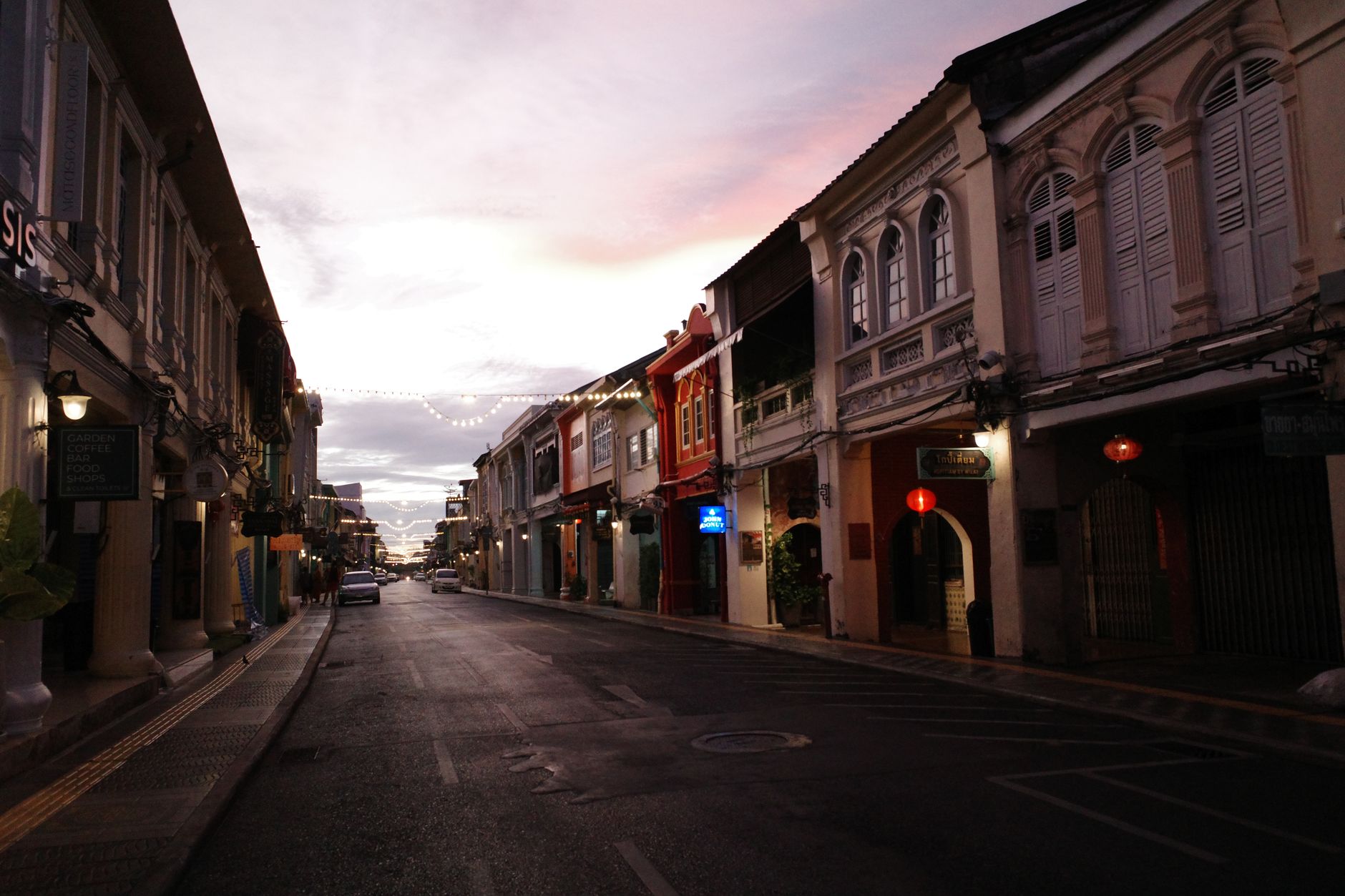
If you want culture instead of just sand, base yourself in Phuket Town. The historic center is filled with 19th-century Sino-Portuguese shophouses, excellent coffee shops, and some of the best southern Thai food on the island. It’s a real town where locals actually live and work.
An empty side street in Phuket Town showing the historic Sino-Portuguese architecture.
Why Stay in Phuket Town
Genuinely local atmosphere and lower prices
Incredible street food and historic cafes
Easy bus connections to the rest of the island
Why Skip Patong Beach
Aggressive street vendors and tourist scams
Overpriced restaurants serving bland food
Constant noise from bars and night clubs
The Phuket Transport Trap and How to Avoid It
Getting around Phuket is notoriously difficult. The island’s taxi and tuk-tuk drivers operate like a cartel, fixing prices at absurdly high rates. A 10-minute ride that would cost 80 THB in Bangkok will easily cost you 400 THB here. They know you have no other choice, and they exploit it.
Do not walk up to a parked taxi and ask for a price. They will quote you a ridiculous flat rate and refuse to use the meter. Instead, download Grab or Bolt. Even if the wait is slightly longer, the price is locked in the app, saving you from uncomfortable negotiations.
If you’re brave enough to ride a scooter, it’s the cheapest way to get around at about 250 THB per day. But be warned: Phuket’s roads are steep, winding, and highly dangerous. If you don’t have an international driving permit with a motorcycle endorsement, your travel insurance won’t cover you if you crash.
The Jet-Ski Damage Scam
You rent a jet-ski on Patong or Kata beach. When you return it, the operator points out scratches on the bottom and demands 30,000 THB for repairs. They will threaten to call the police, who often side with the locals. Avoid renting jet-skis entirely.
400 THB
Average Taxi Fare
250 THB
Daily Scooter Rental
100 THB
Smart Bus Ticket
30 mins
Boat to Koh Yao Noi
What to Eat: Real Southern Thai Flavor
Most tourists eat at beachside restaurants where the food is toned down for Western palates. It’s expensive and disappointing. Southern Thai food is famous for being incredibly spicy, sour, and rich with coconut milk and turmeric.
Phuket Town has a unique culinary heritage influenced by Chinese immigrants. Try Mee Hokkien, a dish of thick yellow wheat noodles stir-fried with pork, seafood, and a rich gravy. You can get a steaming bowl of this at local shophouses for around 60 THB.
Another local staple is Moo Hong, a sweet and savory braised pork belly dish flavored with black pepper, garlic, and coriander root. It’s slow-cooked until the meat literally melts in your mouth. Skip the beach clubs and head to the local markets for the real deal.
The historic Phuket Town clock tower, located near some of the best local noodle shops.
“If the restaurant has a menu with laminated photos of burgers and pad thai on the same page, walk away. You’re about to eat overpriced, mediocre food.”
Escaping the Mainland: Island Hopping Done Right
Everyone wants to see the dramatic limestone cliffs of Phang Nga Bay. But if you book a standard day trip to James Bond Island or Phi Phi, you’ll be sharing the water with dozens of speedboats and hundreds of tourists wearing matching orange life jackets.
For a quieter alternative, take a local ferry from Bang Rong Pier to Koh Yao Noi. The journey takes about 30 minutes and costs 300 THB. This island feels like Phuket did thirty years ago—quiet roads, rubber plantations, and empty beaches.
You can rent a scooter on the pier and ride around the entire island in a couple of hours. There are no mega-resorts here, just small guesthouses and quiet bays where you can watch the traditional longtail boats bobbing in the water.
Traditional wooden longtail boats moored in a quiet bay away from the main tourist beaches.
Phuket Travel FAQ
Is April a good time to visit Phuket?
April is the hottest month of the year, with temperatures regularly exceeding 35°C (95°F). It’s also when Thailand celebrates Songkran, the traditional New Year water festival. If you don’t mind the intense heat and getting splashed with water on the streets, it’s a fun time to visit, but for beach weather, January is much better.
How do I get from Phuket airport to the beaches?
The cheapest option is the Phuket Smart Bus, which runs hourly from the airport down the west coast to Rawai, costing 100 THB. A private taxi will cost between 800 and 1,000 THB depending on your destination. Always agree on the price before getting into an airport taxi if they refuse to use the meter.
Is tap water safe to drink in Phuket?
No, tap water is not safe to drink in Phuket. Always drink bottled water, which is cheap and readily available at any convenience store. Most restaurants use commercial ice made from purified water, which is safe, but avoid ice in very rural areas.
Do I need cash in Phuket?
Yes, cash is still king for daily transactions. While hotels and high-end restaurants accept credit cards, you will need cash for street food, local markets, tuk-tuks, and small beach vendors. Keep small bills handy, as drivers and market stalls often struggle to change 1,000 THB notes.
Navigating Phuket’s transport cartels and finding the best local noodle shops requires a working internet connection. Instead of queuing at the airport to buy an overpriced physical SIM card, get a Phuket eSIM from Galactic Roam before you fly. You can install it in seconds, connect to local networks the moment you land, and use ride-hailing apps to bypass the taxi scams immediately.
Everyone told me El Nido was an untouched paradise. The reality is a bit more complicated, involving massive tourist bottlenecks and some surprisingly strict local laws. I’ve spent weeks navigating these waters, dodging the tourist traps, and figuring out which tours actually deliver. Planning your travel to El Nido, Philippines? This guide reveals the top things to know before you book your boat.
Quick Facts — El Nido, Philippines
Currency Philippine Peso (PHP)
Language Filipino / English
Time zone GMT+8
Plug type Type A, B, and C
Best time to visit December to April
Visa Free 30-day visa on arrival for most nations
45
Islands in Bay
400 PHP
Eco Fee (Etdf)
888
Fish Species
4 Days
Coron Expedition
The Reality of Bacuit Bay
El Nido’s Bacuit Bay features 45 islands and limestone karsts sheltering over 447 species of coral and 888 species of fish. It’s undeniably beautiful. But the local government has standardized the experience into four options: Tour A, B, C, and D.
Before you even think about stepping onto a boat, you need to pay the Eco-Tourism Development Fee (Etdf). Under Municipal Ordinance 01 Series of 2024, this fee was increased to 400 PHP for non-residents. It is valid for up to 10 days and must be paid in cash. Keep the paper receipt with you; you cannot board without it.
The town’s name translates to “The Nest” in Spanish. It comes from the edible nests of cave swiftlets harvested from the sheer limestone cliffs. These nests are prized in Chinese cuisine and can sell for up to $3,000 per kilogram. Local climbers risk their lives scaling the rock faces to harvest them.
The Four Tours — What’s Actually Worth It?
Let’s break down the actual tours. Everyone wants to do Tour A and Tour C, which means those are the most crowded. But they also have the most dramatic scenery.
Big Lagoon is best visited early in the morning before the tour crowds arrive.
Tour A: Big Lagoon
This is the iconic postcard image of El Nido, featuring towering limestone cliffs framing a deep turquoise lagoon. Motorized boats are banned inside the lagoon to protect the environment. You must pay a 200 PHP premium entry fee and rent a kayak for 300 PHP to enter. To avoid the massive midday bottleneck of 100+ boats, book a private tour and request an early morning (7:00 AM) or late afternoon departure.
The dramatic karst peaks of Bacuit Bay hide secret beaches accessible only by swimming.
Tour C: Hidden Beach
This is a striking cove completely concealed behind a limestone wall, accessible only by swimming through a small keyhole opening. The entry point is surrounded by razor-sharp limestone rocks. You must wear aqua shoes (available to rent at the pier for 150 PHP) to avoid severe cuts on your feet while wading through the shallow water.
The S-shaped sandbar of Snake Island is fully visible only during low tide.
Tour B: Snake Island
Snake Island features a natural, S-shaped white sandbar that connects the mainland to Vigan Island, allowing you to walk “on water” between the two landmasses. Check the local tide charts before going. It is best visited during low tide when the sandbar is fully exposed; during high tide, the sandbar is submerged under waist-deep water, making the walk difficult and less scenic.
Cadlao Lagoon offers a peaceful alternative to the crowded tours.
Tour D: Cadlao Lagoon
This is a quiet lagoon surrounded by lush vegetation and dramatic karsts, offering the best crowd-avoidance experience. While everyone fights over Tour A and C, Tour D is largely ignored. It offers 80% fewer tourists, making it feel like a private paradise. Bring a snorkel to explore the colorful shallow coral gardens near the lagoon’s entrance.
What to Eat in El Nido
When you aren’t on a boat, you’ll need to eat. El Nido has some unique local dishes that you won’t find easily elsewhere.
Nido Soup is made from the harvested nests of cave swiftlets.
Nido Soup (Bird’s Nest Soup)
A savory, gelatinous soup made from the saliva nests of cave swiftlets harvested from El Nido’s limestone cliffs. It is considered a local delicacy and an aphrodisiac. You can try it at traditional Filipino restaurants in El Nido town proper, such as Bundatan, for ₱350–₱600.
Crocodile Sisig
A sizzling plate of minced crocodile meat seasoned with calamansi, onions, and local chilies. The meat is lean, high in protein, and tastes like a cross between chicken and pork. Grab a plate at Tambok’s El Nido or local grills in town for ₱350–₱500.
Tamilok (Woodworm)
Despite the name, this Palawan delicacy is actually a shell-less saltwater clam harvested from rotting mangrove logs. It is eaten raw and dipped in calamansi and vinegar, with a slimy texture similar to oysters. Find it at local seafood markets and native restaurants in El Nido for ₱150–₱300.
Safety & Scams to Avoid
El Nido is generally safe, but there are a few specific traps and health hazards you need to watch out for.
Food Poisoning from Tour Lunches
Because cooking on day-tour boats is banned, pre-packed buffet lunches are kept in plastic coolers under the hot sun for 4–5 hours before being served. To avoid E. coli or norovirus, bring your own non-perishable snacks (energy bars, canned tuna) and bottled water, and avoid eating lukewarm seafood from the buffet.
Niknik (Sandfly) Bites
At Nacpan Beach and Lio Beach, tiny sandflies (niknik) bite aggressively, especially during sunrise and sunset, leaving extremely itchy welts that can develop into painful skin sores (Cutaneous Leishmaniasis). Slather your skin in virgin coconut oil or baby oil; the oil traps the sandflies and prevents them from biting, whereas standard mosquito repellent is ineffective.
Tricycle Overcharging
Tricycle drivers at Lio Airport often try to charge tourists 500 PHP or more for a ride to El Nido town proper. The official rate is around 200–300 PHP. Always check the official fare matrix displayed inside the tricycle or agree on the price before boarding.
Logistics & Getting Around
Getting to El Nido requires some planning. You have a few options depending on your budget and tolerance for long road trips.
Direct Flights via AirSWIFT: The fastest way to reach El Nido is flying directly into Lio Airport (LIO) via AirSWIFT from Manila, Cebu, or Boracay. While flights are expensive, they save you a grueling 6-hour land journey. Ensure you pre-book your luggage allowance, as excess baggage fees at the gate are steep.
Land Transit from Puerto Princesa: If flying into Puerto Princesa (PPS), you can take a Cherry Bus (A/C VIP or Lazyboy class costs ₱650–₱1,000 / $11–$17 USD) or a shared minivan (₱700–₱800 / $12–$14 USD). The journey takes 5.5 to 6 hours and requires cash, as cards are not accepted.
Coron to El Nido Expeditions: For an unforgettable experience, book a 3-to-5-day island-hopping boat expedition between Coron and El Nido. Top-rated companies like Big Dream Boatman, Buhay Isla, and Tao Philippines offer these trips for $550–$650 USD, which includes all meals, drinks, and rustic island glamping. These multi-day boat expeditions typically take 4 days and 3 nights, costing around $599 USD.
Cash-Only Economy: El Nido is heavily cash-based. ATMs in town frequently run out of cash, lose power during brownouts, or fail to accept international cards. Always carry enough Philippine Pesos (PHP) to cover your tours, environmental fees, and daily meals.
How to get to El Nido — step by step
1
Book your flight to Lio Airport Fly directly via AirSWIFT from Manila or Cebu to avoid a grueling 6-hour van ride.
2
Secure cash before arrival Withdraw plenty of Philippine Pesos in Manila, as El Nido’s ATMs are notoriously unreliable.
3
Pay the environmental fee Pay the 400 PHP Eco-Tourism Development Fee in cash at the pier before boarding your first tour.
Connectivity in El Nido
Staying connected in El Nido is a challenge. Local SIM cards cost between ₱150 and ₱1,000 ($3–$17 USD) depending on the data package.
The 4G/LTE network is widely available in El Nido town proper, with Smart generally offering a stronger and more stable signal than Globe. However, cellular coverage drops completely once you enter the limestone karsts of Bacuit Bay or head to remote beaches like Nacpan.
Hotel and cafe WiFi is notoriously slow and unstable. Power outages (brownouts) are frequent in El Nido, and when the power goes down, local cellular towers and fiber nodes often lose power too, causing total internet blackouts unless the venue has a generator or Starlink.
There are no major VPN blocks or internet restrictions, but Starlink is increasingly being adopted by high-end resorts and co-working spaces to bypass the unstable local grid.
Frequently Asked Questions
How do I book an island hopping tour in El Nido?
You can book tours through almost any hotel, street-side agency, or directly at the pier. It is best to book a day in advance to secure your spot, especially during the peak dry season from December to April.
What should I bring on an El Nido boat tour?
Bring cash for the kayak rentals and environmental fees, a dry bag to protect your electronics, and a reef-safe sunscreen. You will also want to bring your own water and snacks to avoid the risky pre-packed boat lunches.
Is there a way to avoid the crowds on Tour A and Tour C?
Yes, by booking a private boat tour. This allows you to customize your departure time, meaning you can leave at 7:00 AM and arrive at the popular lagoons before the public tour boats arrive around 10:00 AM.
Can I pay with a credit card in El Nido?
Most establishments in El Nido do not accept credit cards, and those that do often charge a 3% to 5% transaction fee. ATMs frequently break down or run out of cash, so carrying plenty of Philippine Pesos is essential.
Before you set sail, make sure your digital logistics are sorted. If you are also heading to the surfing capital of the country, check out our siargao travel guide. While you can buy a physical SIM card at the airport, dealing with passport registration and long queues is a hassle you don’t need. Instead, grab an Philippines eSIM from Galactic Roam before you fly. It connects automatically to the strongest local network as soon as you land, keeping you connected in town without the fuss.
Ubud Travel Guide: Exploring Bali’s Cultural and Spiritual Heart
Updated July 20, 2026. Ubud is marketed as Bali’s spiritual heart, but the reality is a beautiful, chaotic contradiction. If you are looking for a raw, honest ubud travel guide, you need to know that behind the yoga studios and misty rice fields lies a town of aggressive taxi cartels, phone-snatching monkeys, and strict local decrees. You come for the quiet temple walks, only to find yourself dodging scooter traffic and negotiating with macaques for your own sunglasses. I’ve spent years navigating these winding roads, dodging the tourist traps, and finding the spots that actually live up to the hype.
Quick Facts — Bali
Currency Indonesian Rupiah (IDR)
Language Indonesian and Balinese
Time zone GMT+8 (Wita)
Plug type Type C and F
Best time to visit April to October (dry season)
Visa Visa on Arrival (VoA) for 30 days
Key Takeaways
Best time to visit: April to September avoids the heavy monsoon rains.
Budget needed: Plan for $40 to $80 USD per day for mid-range travel.
Must book ahead: Authentic Bebek Betutu requires a 24-hour advance order.
Getting around: Scooters are fastest, but private drivers are safest for day trips.
The Pre-Arrival Essentials: Logistics & Laws
Before you even board your flight, Bali has a few administrative hurdles. You must pay the mandatory Tourist Levy of IDR 150,000 (about $10 USD) per person, which applies to everyone, including infants. Use the official ‘Love Bali’ portal to pay this before your arrival to avoid the massive queues at the airport.
If you plan to visit in March, check the calendar carefully. Nyepi, the Balinese Day of Silence, completely shuts down the entire island for 24 hours. No lights, no noise, no travel — even the airport closes, and you will be forced to stay inside your hotel.
Also, watch your visa dates. Overstaying your Visa on Arrival (VoA) carries a brutal fine of IDR 1,000,000 (approx. $62 USD) per day. They do not negotiate, and they will make you pay before you can board your flight home.
Things to See & Do: The Truth About Ubud’s Attractions
Ubud has plenty of sights, but some are heavily commercialized. Here is what you need to know to navigate the top spots without getting frustrated.
Sacred Monkey Forest Sanctuary
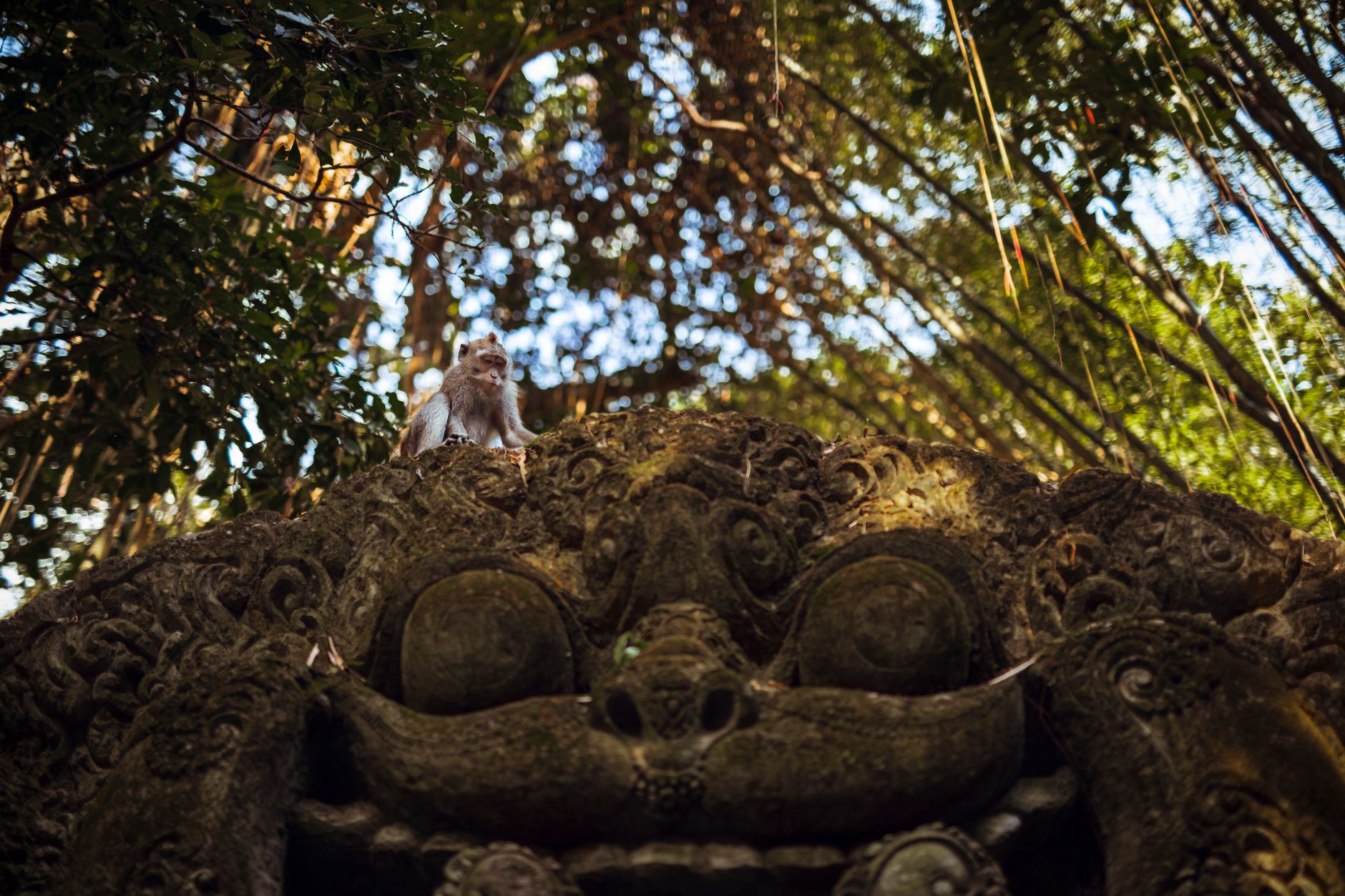
This 22-hectare jungle sanctuary is home to over 700 long-tailed macaques and three 14th-century temples. It is crowded, loud, and the monkeys are highly skilled thieves who will open your backpack zippers in seconds.
A stone statue covered in moss inside the Sacred Monkey Forest Sanctuary.
Monkey Forest Survival Tips
To get the famous ‘monkey selfie’ where the macaque appears to hold your phone, pay the IDR 50,000 voucher fee to a staff handler. They place a peanut right behind your phone’s camera lens so the monkey reaches toward it, snapping the photo at that exact moment. Never bring plastic bags into the forest — the rustling sound triggers aggressive food-snatching behavior.
Tegalalang Rice Terraces
These layered rice paddies showcase the traditional Balinese ‘Subak’ cooperative irrigation system. They are beautiful, but the commercialization has gotten out of hand with swings and photo booths blocking the views.
The layered green steps of Tegalalang Rice Terraces surrounded by palm trees.
Navigating the Donation Booths
While there is an official entrance fee of IDR 15,000–20,000, local landowners set up unofficial ‘donation booths’ every 50–100 meters along the walking paths. Carry a stack of small IDR 5,000 and 10,000 notes to pass these checkpoints without hassle. Alternatively, visit the far less commercialized Jatiluwih Rice Terraces where you pay a single entry fee and can walk freely.
Campuhan Ridge Walk
This is a scenic, car-free paved trail winding through rolling green hills and river valleys. It is one of the few places in central Ubud where you can walk without constantly looking over your shoulder for scooters.
A paved path cutting through the lush green hills of the Campuhan Ridge.
Beat the Heat
The path has absolutely zero shade and the stone paving reflects heat intensely. If you are not on the ridge by 7:30 AM, expect 30°C+ heat. The absolute best time is 5:45 AM to catch the sunrise and the morning mist sitting over the valley. Start the walk near the Warwick Ibah Villas entrance, following the path down toward Pura Gunung Lebah.
Where to Eat: Real Balinese Food vs. The Starbucks Illusion
Ubud has a strict local decree banning major fast-food chains like McDonald’s, KFC, and Burger King to preserve its cultural character. The only major global chain, Starbucks, had to blend in by occupying an old temple storehouse with a rustic wooden sign and no flashy neon branding. But skip the corporate coffee and head for the local warungs instead.
A traditional Balinese slow-cooked duck dish served on banana leaves.
Bebek Betutu
A whole duck stuffed with Base Genep (an 11-spice paste), wrapped tightly in banana leaves, and slow-baked or buried in hot coals for 8 to 10 hours until the meat falls off the bone. Get it at Betutu Ayam Pak Sanur or Tebesari Resto. Authentic versions require 24-hour advance ordering because of the long cooking process, costing between IDR 120,000 and 250,000 ($8 – $16 USD).
Spiced pork skewers and traditional sambal condiments on a wooden table.
Babi Guling
A young pig stuffed with a rich spice paste of lemongrass, turmeric, ginger, and galangal, then spit-roasted over an open fire for 6 hours. It is served with crispy crackling skin, tender meat, lawar, and blood sausage. Skip the famous Warung Babi Guling Ibu Oka (opposite Ubud Palace) and head to Babi Guling Bu Ari in Peliatan for a cheaper, more authentic local favorite costing IDR 40,000 to 90,000 ($2.50 – $6 USD).
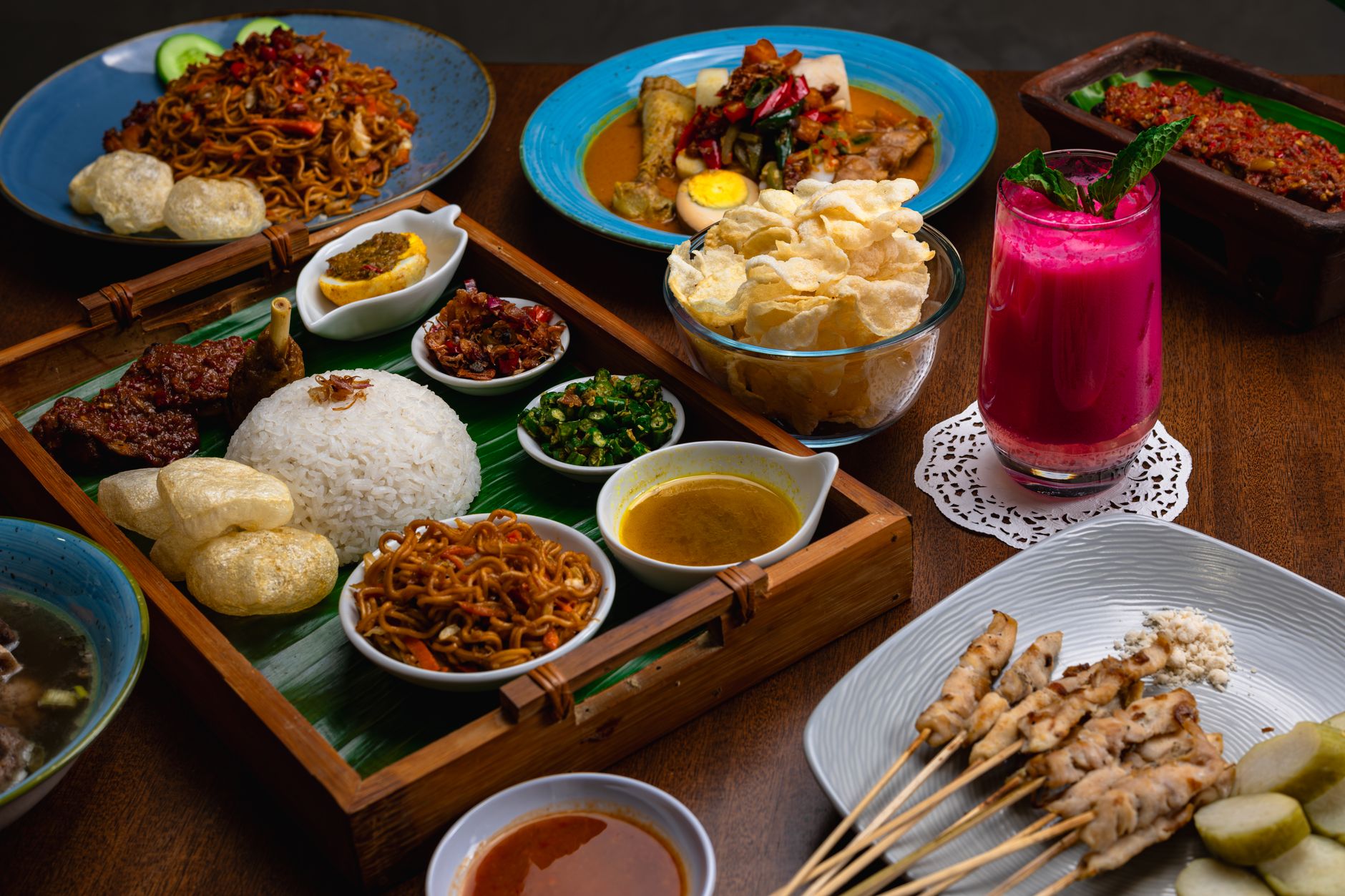
A plate of Nasi Campur featuring chicken satay, rice, and mixed Balinese side dishes.
Nasi Campur Bali
A scoop of white rice surrounded by small portions of various Balinese dishes, including sate lilit (minced meat skewers), lawar, shredded chicken, and fiery sambal matah. Head to Warung Makan Teges in Peliatan, which has been serving authentic Nasi Campur for over 40 years. Expect to pay IDR 25,000 to 50,000 ($1.60 – $3.20 USD) per plate.
Safety & Scams: How to Protect Your Wallet
Ubud is generally safe, but the influx of tourism has bred some highly organized local scams. Knowing how they operate is the best way to shut them down instantly.
The Taxi Mafia and App Pick-up Bans
In central Ubud (especially near the Traditional Art Market, Ubud Palace, and Monkey Forest Road), local transport cooperatives strictly ban ride-hailing apps like Grab and Gojek. They use aggressive intimidation tactics against app drivers who try to pick up passengers. Drop-offs are perfectly fine, but to get a ride out, walk 200–300 meters away from the main intersections to a quieter street or near a local minimart before booking your ride.
The Fake Temple Guide and Mandatory Donation Scam
Outside major temples near Ubud (like Tirta Empul, Goa Gajah, and Pura Besakih), scammers dressed in traditional sarongs will intercept you before the official ticket counter. They will claim a guide is ‘mandatory’ due to a ‘special ceremony’ or demand a ‘mandatory donation’ to enter. Ignore them, walk straight to the official, clearly marked ticket booth, and buy a printed ticket. Sarongs are almost always provided for free or a tiny nominal fee (IDR 10,000) at the official entrance.
Drive-by Phone Snatching
On the winding roads between Kuta/Seminyak and Ubud, especially at night, thieves on scooters target tourists who have their phones mounted on scooter handlebars for navigation. They will pull up alongside you, grab the phone, and speed off. Keep your phone in a secure pocket or bag, and if you must navigate, use audio cues through earphones or pull over safely to check your map.
Getting Around & Where to Stay
Ubud is located 35 to 40 kilometers from Ngurah Rai International Airport (DPS). Because of the narrow, winding roads and constant bottlenecks, the drive can easily take 1.5 to 2.5 hours. A pre-arranged private transfer costs around IDR 300,000 to 450,000 ($20 – $30 USD) and is highly recommended over airport taxis, which often quote inflated flat rates of IDR 600,000+.
When it comes to money, cash is king. While modern cafes and luxury hotels accept credit cards (often with a 2-3% surcharge), cash (Indonesian Rupiah) is absolutely mandatory for local warungs, traditional markets, temple entry fees, and parking. Tipping is not traditionally expected in Bali, but leaving a 5-10% tip at local restaurants or rounding up taxi fares is highly appreciated.
Choosing where to stay depends on your style. Stay in Central Ubud (near Jalan Hanoman or Monkey Forest Road) if you want to walk to cafes and attractions. For a quieter, more authentic vibe with rice paddy views, choose Penestanan or Nyuh Kuning (just south of the Monkey Forest). For luxury jungle resorts, look at Sayan or Tegallalang.
Connectivity & Censorship
Staying connected in Bali is relatively straightforward, but there are a few local quirks you must navigate. First, Indonesia blocks certain websites (like Reddit and some adult content) under its ‘Internet Positif’ censorship program. If you need to access these, you will need a VPN.
Second, any phone imported from abroad must have its Imei registered to work with a local physical SIM card. If you are staying under 90 days, you can bypass this complex customs process by purchasing an official ‘Telkomsel Tourist Prepaid Card’ (PraBayar) from an authorized airport or GraPARI store, which automatically registers your device temporarily. This local SIM will cost you between IDR 200,000 to 400,000 ($12 – $25 USD) for 18GB to 50GB of data.
While 4G and 5G coverage is excellent in central Ubud, signals can drop or become patchy as you head deeper into the jungle valleys, deep ravines, or northern mountainous areas. Fortunately, WiFi is highly reliable. Ubud is a major digital nomad hub, so almost all cafes, yoga studios, and hotels offer fast, stable fiber-optic WiFi (often 50–100 Mbps).
Feature
Local Physical SIM
Galactic Roam eSIM
Cost
IDR 200,000 – 400,000 ($12 – $25)
From $8
Activation
Queue at airport or GraPARI store
Instant, pre-arrival
Imei Registration
Required (handled at store)
None required
Ready on arrival
Only after queuing and setup
Yes
Data options
18GB to 50GB
1 GB / 3 GB / 5 GB / 10 GB
Frequently Asked Questions
What is the best way to get from Bali airport to Ubud?
Book a pre-arranged private transfer before your arrival. It costs around IDR 300,000 to 450,000 ($20 – $30 USD) and saves you from the aggressive airport taxi drivers who will try to charge you double. The drive takes 1.5 to 2.5 hours depending on traffic.
Is tap water safe to drink in Ubud?
No, do not drink the tap water in Ubud or anywhere else in Bali. It can cause ‘Bali Belly’ (severe stomach upset). Use bottled or filtered water even for brushing your teeth, and avoid ice at smaller, local street stalls.
How do I avoid the monkey forest scams and aggressive macaques?
Never bring food, plastic bags, or loose items like sunglasses and water bottles into the forest. If a monkey jumps on you, stay calm, do not scream, and do not try to pull away. Simply walk slowly until a staff member assists you, and pay the IDR 50,000 fee if you want a safe ‘monkey selfie’.
Do I need cash in Ubud or are credit cards widely accepted?
You absolutely need cash. While Western-style cafes, yoga studios, and hotels accept credit cards (often with a 2-3% surcharge), local warungs, traditional markets, taxi drivers, and temple entry fees require Indonesian Rupiah (IDR). Always carry small notes like IDR 5,000 and 10,000.
Before you pack your bags and head off to explore the misty ridges and temple ruins of Ubud, make sure your connectivity is sorted. Skip the long airport queues, the passport scans, and the complex Imei registration process by setting up your data beforehand. Grab a Bali eSIM from Galactic Roam before you fly, install it in seconds, and you will have reliable data the moment your plane touches down in Denpasar.