Connect Globally

Trusted by Millions

Prague Christmas Markets Guide: How to Experience the Festive Magic Like a Local

Updated November 20, 2026. The Prague Christmas markets run from November 28, 2026, to January 6, 2027. The best markets are at Old Town Square (for the iconic 26-meter tree) and Náměstí Míru (for lower prices and local vibes). Avoid the Wenceslas Square construction crowds by visiting early in the morning.

Everyone thinks the Prague Christmas markets are an unchanging, timeless fairy tale. But in late November 2026, a massive tramway reconstruction project at Wenceslas Square is forcing smart travelers to completely rewrite their holiday playbooks. I’ve spent years navigating Prague’s winter crowds, and this season requires a highly specific strategy to bypass the tourist traps and find the real magic. Here is how to navigate the city like a local who actually knows where to go.

8.3M
Annual Visitors
15%
Advent Revenue Share
25%
Metro Surge
45M
CZK Transit Budget

The 2026 Prague Christmas Market Playbook

Prague is undergoing a massive face-lift this winter. The upper part of Wenceslas Square is completely torn up for a major tramway reconstruction, meaning that market is crammed solely into the lower part of the square. It is going to be packed. You need to look elsewhere for breathing room.

Also, do not waste your time climbing up to Prague Castle looking for a traditional market. It was quietly discontinued years ago. Instead, you will find a “Christmas Stroll” and a festive labyrinth designed by the Forman Brothers Theatre—fun, but not the market experience you are likely after.
Old Town Square (Staroměstské náměstí) Czech Republic
Old Town Square hosting the main market beneath the Gothic Týn Church.

Old Town Square (Staroměstské náměstí)

This is the undisputed heavyweight, featuring a massive 26-meter spruce tree set against Týn Church. The synchronized light show kicks off on November 28, 2026, at 4:30 PM, repeating daily at 17:30, 18:30, 19:30, and 20:30. Skip the evening gridlock by climbing the central wooden viewing platform on a weekday morning instead.

Náměstí Míru (Peace Square) Czech Republic
Náměstí Míru market set in front of the neo-Gothic Church of St. Ludmila.

Náměstí Míru (Peace Square)

Opening early on November 20, 2026, this Vinohrady neighborhood favorite is where locals actually hang out. Prices are noticeably lower here—expect to pay around 75 CZK for mulled wine compared to 100 CZK in the center. Stalls here rarely accept cards, so bring small CZK cash notes.

Jiřího z Poděbrad Square (JZP) Czech Republic
The neighborhood market at Jiřího z Poděbrad Square.

Jiřího z Poděbrad Square (JZP)

Set in the Žižkov district, this spot blends a cozy Christmas market with a year-round farmers’ market. Skip the mass-produced wooden toys and head straight for the local bakers selling authentic Czech Christmas cookies like Linecké (buttery jam-filled flowers) and včelí úl (rum-infused bee hives).

What to Eat (and the Chimney Cake Lie)

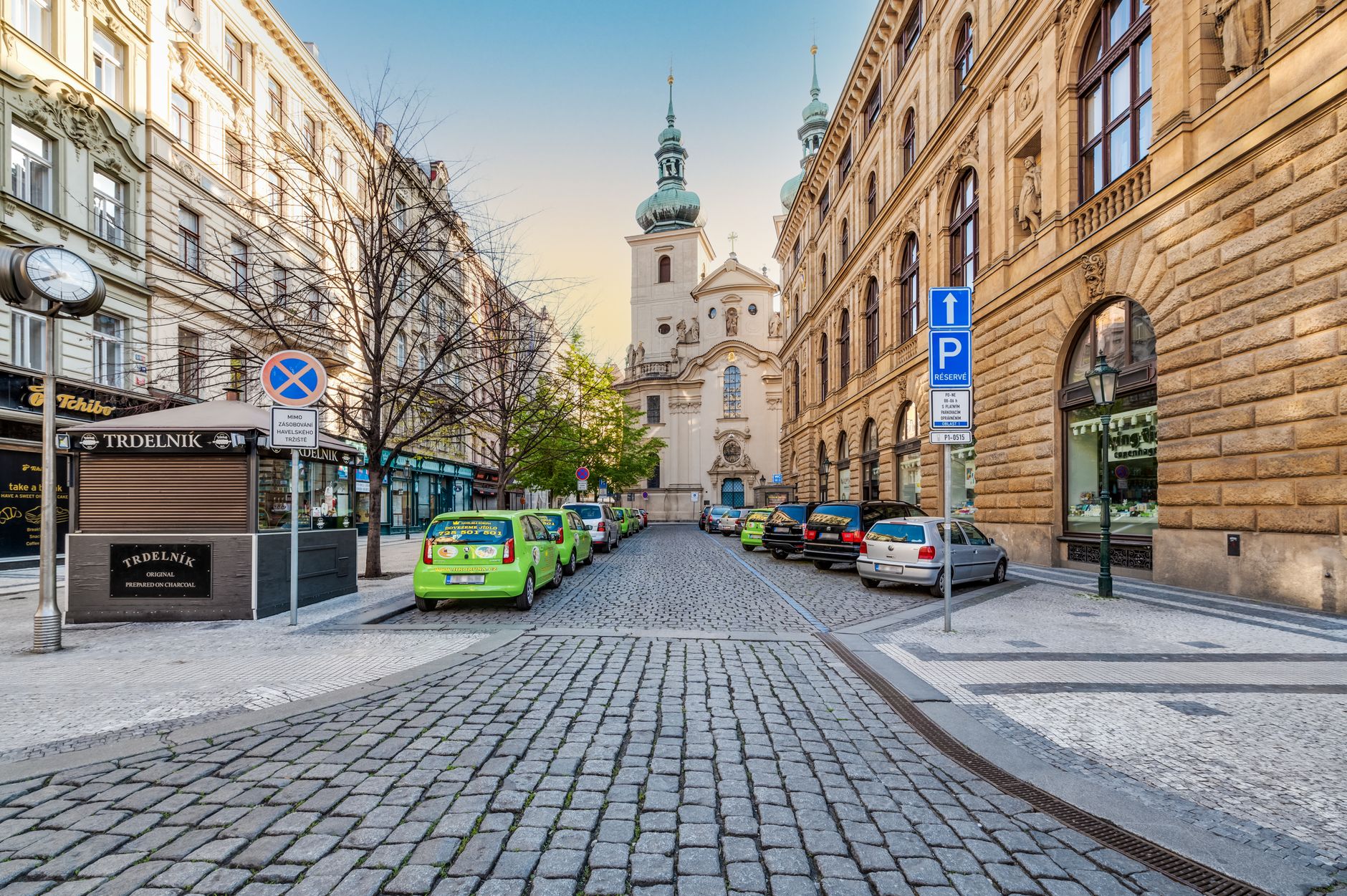
Let’s get one thing straight: the trdelník (that cinnamon-sugar chimney cake you see on every Instagram feed) is not Czech. It actually originated in Slovakia and Hungary, and its massive popularity in Prague is a modern tourist creation. If you want real Czech comfort food, skip the cake and look for these instead.
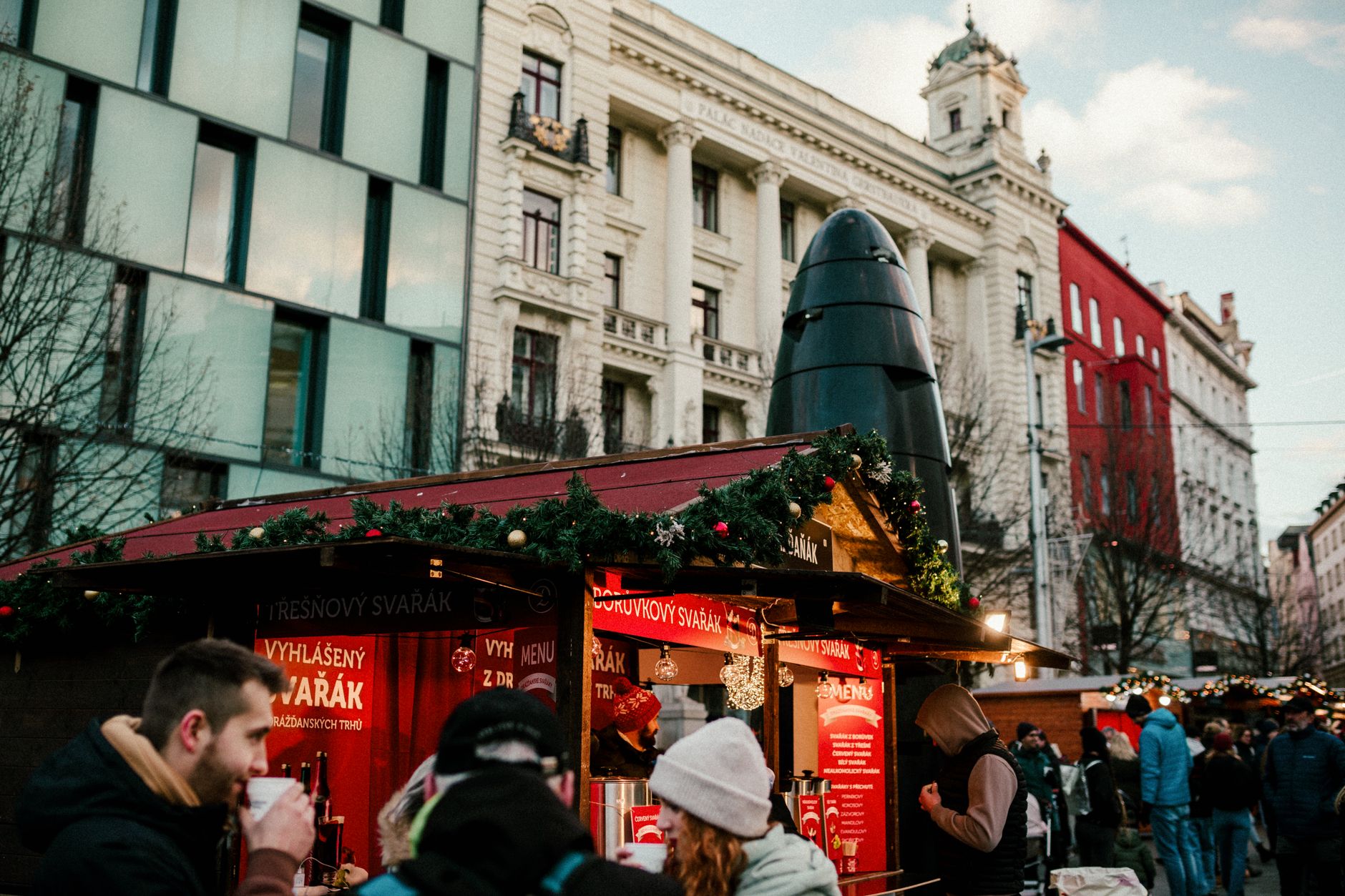
Svařák (Czech Mulled Wine) Czech Republic food
A steaming cup of traditional Czech svařák at a market stall.

Svařák (Czech Mulled Wine)

This hot, spiced red wine is less sweet and far more citrus-forward than German Glühwein. It ranges from 65 to 120 CZK (~$2.75–$5.00 USD) depending on where you buy; head to Marian Square (Mariánské náměstí) to snag a cup for 65 CZK instead of paying 100 CZK at Old Town Square.

Pražská Šunka (Prague Ham) Czech Republic food
Spit-roasted Prague ham cooking over an open beechwood fire.

Pražská Šunka (Prague Ham)

This heavily smoked, spit-roasted ham is cooked over open beechwood fires at Old Town and Wenceslas Squares. It costs 99 CZK per 100g, but watch out—vendors love to carve massive portions unless you explicitly state your limit.

Halušky Czech Republic food
A hearty pan of halušky dumplings mixed with sauerkraut and bacon.

Halušky

A mountain of potato dumplings tossed with warm sauerkraut, melted cheese, and thick chunks of smoked bacon. Sold at the Old Town Square “Ham Shacks” for 49 CZK per 100g, this is the ultimate cold-weather fuel.

Bramborák Czech Republic food
Crispy bramborák potato pancakes sizzling at a local market stall.

Bramborák

These shallow-fried, incredibly crispy potato pancakes are heavily seasoned with garlic and marjoram. Grab one fresh from the griddle at Republic Square or Peace Square for 50 to 80 CZK.

Prague Christmas Market Survival Strategies

Prague is generally very safe, but the massive influx of holiday crowds brings out professional opportunists. Knowing how they operate is the difference between a great trip and a ruined evening.

The Pay-by-Weight Food Trap

Where: Spit-roast ham (Pražská šunka) and Halušky stalls at Old Town and Wenceslas Squares.
The Scam: Prices are listed per 100g (e.g., 99 CZK). If you ask for “a portion,” vendors will carve a massive slab weighing 400g to 500g and demand 500 CZK (~$22 USD). Always specify the exact weight you want—say “sto gramů” (100g) or “dvě stě gramů” (200g)—and watch the scale closely.

Fake Plainclothes Police Scam

Where: Quiet side streets near Wenceslas Square, Karlova Street, or the Main Railway Station (Hlavní nádraží) at night.
The Scam: Men posing as plainclothes officers show a fake badge and demand to inspect your wallet for “counterfeit currency” or “drugs.” They will pocket your cash during the inspection. Real Czech police will never handle your cash on the street; politely refuse, do not hand over your wallet, and offer to walk to the nearest station or call 112.

Pickpocketing Teams

Where: Crowded areas around the Astronomical Clock on the hour, Charles Bridge, Tram 22, and Metro escalators (Můstek, Muzeum).
The Scam: Thieves work in small teams using distraction techniques like the “Rempel” jostle or spilling condiments on your coat. Keep your backpack on your front, zip all bags, and never keep your phone or wallet in your back pockets.

Logistics & Getting Around Prague

Getting from Václav Havel Airport (PRG) to the city center is simple if you avoid the taxi touts. There is no direct metro line, so take the public trolleybus Line 59 to Nádraží Veleslavín (Metro Line A) or Bus 100 to Zličín (Metro Line B). A standard 90-minute integrated transit ticket costs just 46 CZK via the Lítačka app, or 50 CZK if you buy a paper ticket.

When it comes to paying for your food, do not rely solely on plastic. While major markets accept credit cards, neighborhood stalls require cash. Withdraw Czech Koruna (CZK) from bank-owned ATMs like Komerční banka or Česká spořitelna, and always decline the Dynamic Currency Conversion (DCC) option to let your home bank set the rate.

Tipping is customary but modest—usually 5% to 10% for good service. In sit-down restaurants, do not leave coins on the table. Instead, when the server tells you the bill, state the total amount you want to pay (including the tip) before they process the transaction. For example, if the bill is 450 CZK, say “500” as you hand over your cash or card.

Staying Connected in the Crowds

Prague has excellent 4G and 5G coverage, even deep inside the underground metro stations and packed market squares. While you can buy a local physical tourist SIM for 300 to 600 CZK (~$12–$24 USD), Czech law requires physical passport registration for all prepaid SIM card purchases. This means you cannot buy a local SIM anonymously or quickly at a convenience store without standing in line and handing over your passport.

Public WiFi networks in crowded market squares are highly unsecured, and airport WiFi is limited to 30 slow minutes. To bypass the registration hassle and secure your data, grabbing a Czech Republic eSIM before you land is the easiest move. With active eSIM connections projected to reach 1.5 billion globally in 2026, the industry has transitioned to the modern SGP.32 standard. This enables seamless “push provisioning,” allowing you to activate your profile automatically through your carrier app without scanning QR codes. It works just like a universal adapter—you activate it instantly, skip the airport lines, and have secure data the moment your plane touches down.

Local Physical SIMGalactic Roam eSIM
Cost300–600 CZK (~$12–$24)From $4.50
ActivationIn-store queueInstant, pre-arrival (SGP.32 Push)
RegistrationPhysical passport requiredNone
Ready on arrivalNoYes
Data options10 GB / 20 GB1 GB / 3 GB / 5 GB / 10 GB / Unlimited

Frequently Asked Questions

What are the dates for the Prague Christmas markets in 2026?
The main markets at Old Town Square and Wenceslas Square officially open on November 28, 2026, and run daily until January 6, 2027. However, smaller neighborhood markets like Náměstí Míru open earlier on November 20, 2026, making them perfect if you arrive before the main festivities begin.
What is the best area to stay in Prague for the Christmas markets?
If you want to walk to the main markets, Staré Město (Old Town) is the most convenient but comes with premium hotel prices. For a quieter, romantic vibe with castle views, choose Malá Strana (Lesser Town), or opt for Nové Město (New Town) near the main train station for budget-friendly rates and excellent transit connections.
Do Prague Christmas markets accept credit cards?
The major markets at Old Town Square and Wenceslas Square widely accept credit cards, but smaller neighborhood markets and individual food stalls often require cash. Always carry some Czech Koruna (CZK) in small denominations like 200 CZK notes to avoid being turned away.
Is tap water safe to drink in Prague?
Yes, tap water is completely safe and clean throughout Prague. You can easily refill your reusable water bottle at your hotel or any public tap to save money and reduce plastic waste.

Get your Czech Republic eSIM


Czech Republic Travel Guide: How to Plan the Ultimate Central European Adventure

With Czechia experiencing an 18% surge in travel bookings heading into 2026, planning ahead is more critical than ever. The days of just showing up in Prague and winging it are officially over. If you are visiting during the winter, navigating the crowded prague christmas markets requires some preparation. I’ve spent years navigating this country’s cobblestones, dodging the tourist traps, and finding the spots actually worth your time. This practical Czech Republic travel guide cuts through the outdated blog advice to give you the real, fluff-free logistics. If you are also planning to visit neighboring countries, our poland travel guide and slovakia travel guide will help you explore like a local. Let’s get into what actually works.

18%
Booking Growth
140L
Beer Per Capita
11th
Most Peaceful
59.1M
Overnight Stays

The Airport Transit Hack

Prague has no direct rail link to its airport. Don’t fall for expensive taxis or sketchy private transfers at the terminal exit.

The default public transit route is the high-capacity Trolleybus 59, which connects directly to Metro Line A at Nádraží Veleslavín. A single 90-minute transit ticket costs 40 CZK (~$1.70 USD) and covers both the trolleybus and the metro ride into the city center.

You can buy your ticket via the PID Lítačka app or contactless on board. But here’s the law you must follow: you must validate physical paper tickets immediately upon boarding or entering the metro station by inserting them into the yellow validation machines. Plainclothes transit inspectors carry official badges and will hit you with a 1,000 CZK fine if you forget.

Attractions Actually Worth the Trip

Some historic sites are overrun traps. Others are genuinely worth the journey if you know how to time your visit.

Český Krumlov Castle (South Bohemia) Czech Republic

Český Krumlov Castle (South Bohemia)

This 13th-century UNESCO World Heritage castle sits in a tight loop of the Vltava River, featuring Renaissance courtyards covered in sgraffito art and a 400-year-old tradition of keeping bears in the castle moat. To beat the massive day-trip crowds from Prague, stay overnight. The streets empty out after 5:00 PM and are completely peaceful before 9:00 AM. Also, walk the path underneath the multi-story Cloak Bridge to appreciate the sheer scale of the massive stone arches.

Sedlec Ossuary (Kutná Hora) Czech Republic

Sedlec Ossuary (Kutná Hora)

A Roman Catholic chapel decorated with the artistically arranged bones of an estimated 40,000 to 70,000 people, including a massive bone chandelier and skull garlands. You cannot purchase tickets at the chapel itself. You must buy them online in advance or at the Sedlec Information Centre (Infocentrum) located at 279 Zámecká Street, about a 2-minute walk away. Visit right at opening (8:45 AM or 9:00 AM depending on the season) to experience the eerie silence before the tour buses arrive.

What to Eat (and How to Tip)

Czech food is heavy, comforting, and designed to go with beer. Traditional pubs are where you’ll find the best meals.

Chlebíčky (Czech Open-Faced Sandwiches) Czech Republic food

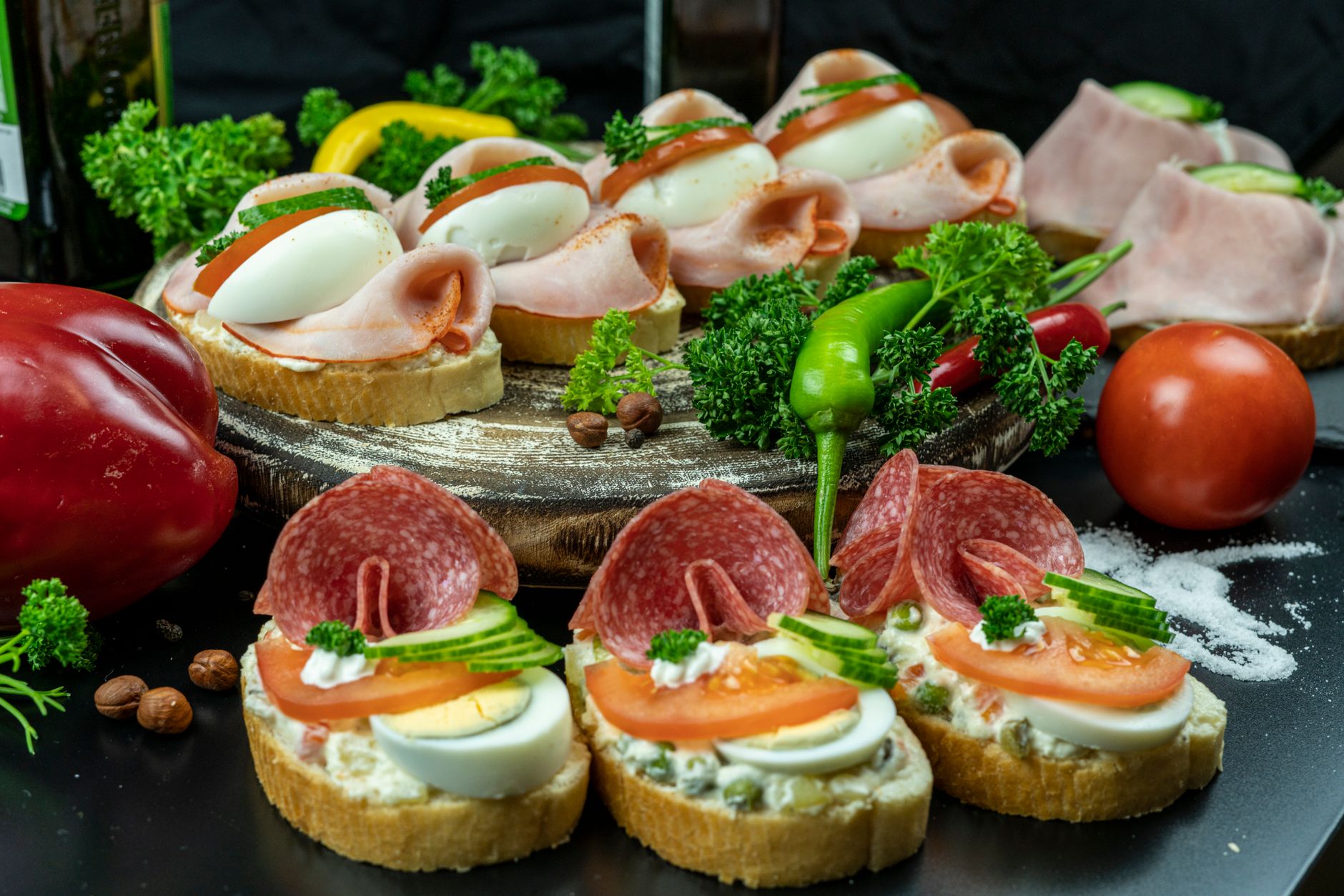
Chlebíčky (Czech Open-Faced Sandwiches)

A staple of Czech food culture, these are beautifully decorated open-faced sandwiches built on a slice of white or potato bread, topped with potato salad, ham, pickles, eggs, or modern gourmet toppings like beetroot carpaccio and goat cheese. Grab them at Sisters Bistro (Dlouhá 39, Prague 1) for 40–65 CZK (~$1.70–$2.80 USD) per sandwich.

Svíčková na smetaně Czech Republic food

Svíčková na smetaně

A classic Czech comfort dish consisting of beef sirloin marinated and braised, served with a thick, creamy vegetable sauce (made from root vegetables), topped with a dollop of whipped cream, cranberries, a slice of lemon, and bread dumplings (knedlíky). Try it at Lokál Dlouhááá (Dlouhá 33, Prague 1) or any Lokál branch for 220–320 CZK (~$9.50–$14.00 USD).

When paying, remember the tipping mechanics. In Czech restaurants, tipping is around 10% for good service, but you do not leave cash on the table after paying.

Instead, when the waiter brings the bill (e.g., 380 CZK), you state the total amount you want to pay including the tip (e.g., ‘420’) before they process your card or cash. If you hand over a note and say ‘Díky’ (thanks), it means ‘keep the change’.

And yes, the Czech Republic is the world’s highest consumer of beer per capita, averaging around 140 liters per person annually. That’s why a local draft beer (pivo) is often cheaper than bottled water in traditional pubs.

Scams and Predatory Traps to Avoid

Prague is incredibly safe, but predatory operators target tourists in the historic center. Here is how to protect your wallet.

The ‘Ruličkáři’ (Roll of Money) Exchange Scam

Outside currency exchange booths in tourist hotspots like Wenceslas Square and Old Town Square, shady individuals will approach you offering an ‘amazing’ exchange rate. If you agree, they will hand you a roll of cash that actually consists of worthless, out-of-circulation Belarusian rubles or counterfeit bills. Never exchange money on the street. Use official bank ATMs (ČSOB, Česká spořitelna, Komerční banka) or reputable exchange offices like Exchange on Kaprova 14.

Predatory Exchange Rates & Hidden Fees

Avoid independent exchange booths advertising ‘0% commission’ in Prague’s historic center, as they build massive markups (up to 20-30%) into their terrible exchange rates. Also, avoid independent ATMs (like Euronet) which charge high fees and use dynamic currency conversion (DCC) to lock in terrible rates. Always choose ‘Without Conversion’ (charge in local currency CZK) if prompted by an ATM or card terminal.

The Fake Petition Scam

On Charles Bridge, Wenceslas Square, and around the Astronomical Clock, individuals with clipboards will approach you asking to sign a petition for a deaf/mute charity or the EU. Once you sign, they will aggressively demand a cash donation, pointing to fake previous signatures showing large amounts. Politely but firmly say ‘No’ and keep walking.

If you do get ripped off at an exchange booth, you have a legal shield. Under Czech consumer protection law, tourists have the legal right to cancel any currency exchange transaction of up to €1,000 (or equivalent) within 3 hours of making it.

Frequently Asked Questions

Is the Czech Republic safe for solo travelers?
Yes, it is exceptionally safe. The country ranked as the 11th most peaceful country globally on the 2025 Global Peace Index and 6th safest on the Travel Safety Index. Just keep an eye on your pockets in crowded areas like Charles Bridge.
How do I avoid public transit fines in Prague?
Always validate your paper ticket immediately upon boarding a tram or bus, or entering the metro station. Insert it into the yellow validation machine until it beeps and stamps. Plainclothes inspectors carry official badges and will fine you 1,000 CZK on the spot if you forget.
Is tap water safe to drink in the Czech Republic?
Yes, tap water is completely safe and highly regulated across the country. However, traditional pubs often charge more for bottled water than a draft beer, so ordering a “pivo” is usually the cheaper choice.

Staying Connected

A local physical prepaid SIM card costs between 200 and 600 CZK (~$8 to $25 USD) depending on data allowance, but buying one at official operator stores or airport kiosks requires passport registration by law. If you have an active SIM from another EU country, EU ‘Roam Like at Home’ regulations apply, meaning you can use your data in the Czech Republic without extra roaming fees (though UK SIMs may no longer include this post-Brexit). To skip the queues and avoid handing over your passport at a kiosk, grab a Czech Republic eSIM from Galactic Roam before you fly. It activates instantly on arrival, letting you navigate the transit system without missing a beat.

Get your Czech Republic eSIM